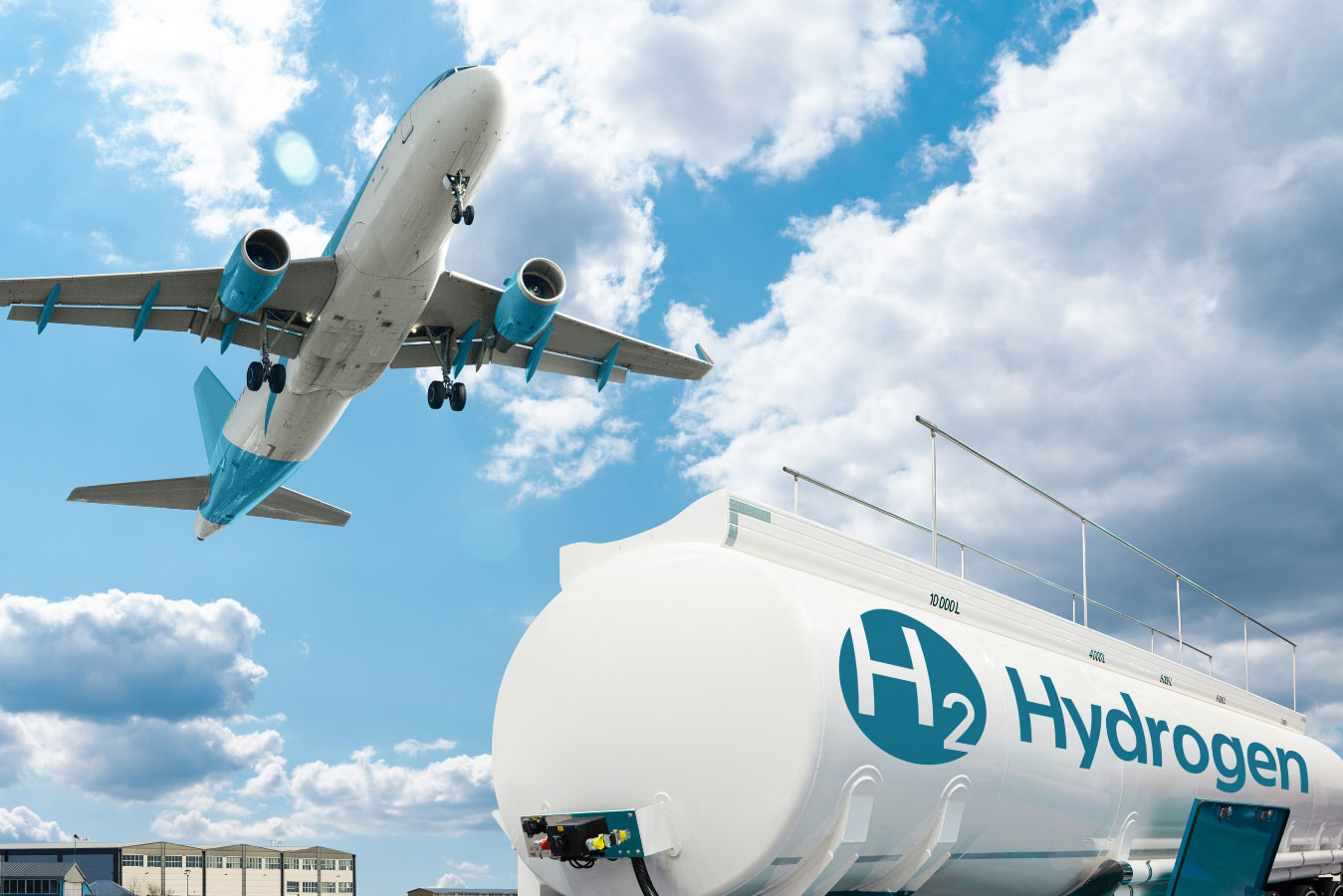
Hydrogen remains a promising candidate for decarbonizing the aviation sector due to its high specific energy and zero CO2 emissions when used appropriately. The technology's successful application in space exploration supports the potential for hydrogen-powered aircraft to become operational within the next decade. Both hydrogen combustion engines and fuel cells are under consideration, each with distinct advantages and challenges. Hydrogen combustion engines operate similarly to traditional internal combustion engines but require advanced storage solutions and produce small amounts of CO2 and nitrogen oxides. Fuel cells generate electricity from hydrogen, producing only water vapor, and are seen as a cleaner and more efficient alternative, despite managing excess heat being a challenge.
Airbus supports hydrogen fuel cells as a sustainable solution. The company's ZEROe project, launched in 2020, explores both hydrogen combustion and fuel cell technologies. The high energy-to-mass ratio of hydrogen makes it particularly attractive for aviation, but storing it at -253°C presents design hurdles. Conversely, fuel cells offer scalability and do not require significant aircraft modifications. Airbus's testing and prototypes have shown promising results, positioning fuel cells as the most promising option for future hydrogen-powered aircraft by 2025. A collaboration with MTU Aero Engines aims to advance fully electric, hydrogen-powered aircraft using fuel cell propulsion systems. This partnership focuses on developing a fuel cell engine for commercial aircraft, leveraging Airbus's ZEROe program and MTU’s Flying Fuel Cell concept.
The future roadmap involves maturing fuel cell technologies, integrating hydrogen systems, and developing dedicated engines to support the transition toward zero-emission aviation. Industry leaders predict these innovations will significantly impact aircraft design and operations, contributing to a sustainable aviation industry.

