Eindhoven Airport Temporarily Closed After Suspicious Drone Sightings
Eindhoven Airport Temporarily Closed After Suspicious Drone Sightings
Trending
|
11 months ago
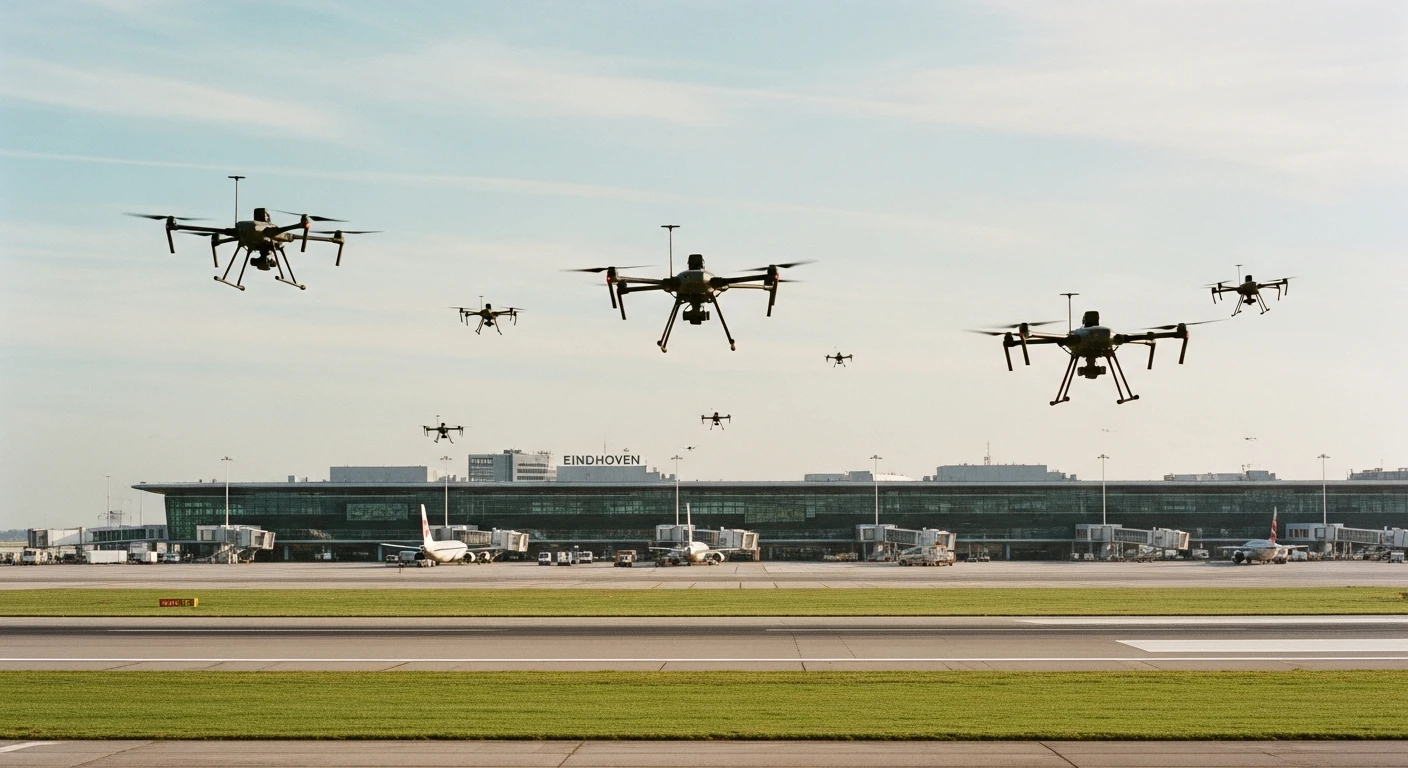
Unidentified Drones Cause Airport Shutdown
Eindhoven Airport was forced into an unexpected temporary closure after several drones were spotted flying inside restricted airspace. The incident resulted in halted departures and arrivals, creating significant disruption for both commercial passengers and military operations. Authorities responded swiftly, halting all air traffic until the airspace was confirmed safe. Even small drones pose major risks due to the possibility of engine ingestion or interference with critical navigation systems. The uncertainty surrounding the drones’ origin heightened concerns, as officials could not immediately determine whether the flights were accidental, unauthorized hobbyist activities or deliberate attempts to test security boundaries.
A Key Aviation and Military Hub
Eindhoven Airport plays a central role in both civilian aviation and defence logistics. It is the second-busiest airport in the Netherlands, serving millions of passengers annually while simultaneously functioning as an active military airbase. Originally established in the 1930s, the airport has a long military history. It played a significant role during World War II and later became an essential base for the Royal Netherlands Air Force. Over the years, the airport expanded to support commercial carriers, creating a unique dual-use infrastructure. This dual nature means that disruptions at Eindhoven have broader implications than delays alone. Military missions, transport operations and international cooperation initiatives can also be affected when the airspace is compromised.
Drone Activity: A Rapidly Growing Security Challenge
Drones have become increasingly accessible, capable and difficult to track. Modern consumer drones can fly long distances, operate at high altitudes and carry small payloads—features that complicate enforcement and rapid response. European airports have faced a growing number of drone-related closures in recent years. Counter-drone technology, such as signal jamming, radar detection and automated interception systems, is being deployed across major hubs, but identifying operators often remains a challenge. Drone incidents can range from harmless recreational misuse to more concerning scenarios involving espionage, smuggling or attempts to cause operational disruption. Each sighting must therefore be treated with maximum caution until proven benign.
The Push for Stronger Drone Regulation
The Eindhoven incident has added urgency to discussions about updating drone legislation. Regulators are examining options such as mandatory identification transmitters, stricter licensing rules and stronger enforcement penalties. Aviation experts emphasize that aircraft engines and windshields are not built to withstand impacts with drones. Even a small device can cause catastrophic damage during takeoff or landing, the most vulnerable phases of flight. Security analysts also highlight the rising risk of hybrid threats, where drones may be used in combination with other tactics to test defences or gather intelligence. This has led to closer cooperation between defence agencies, intelligence units and aviation authorities. As investigations continue, authorities aim to assess whether the drones were intentionally flown into restricted airspace or whether the incident stemmed from careless operation. The outcome may shape future policies across the Netherlands and the broader European aviation network.

Airspace Times Team
Aviation news desk
Published: 23 Nov 2025
Share to:
Latest news
Related airlines
Related airports
powered by We Do Dev Work 
We use cookies and similar technologies to enhance your Browse experience, personalize content and ads, provide social media features, and analyze our traffic. By clicking 'Accept All' or continuing to use our website, you consent to the use of cookies as described in our Cookie Policy