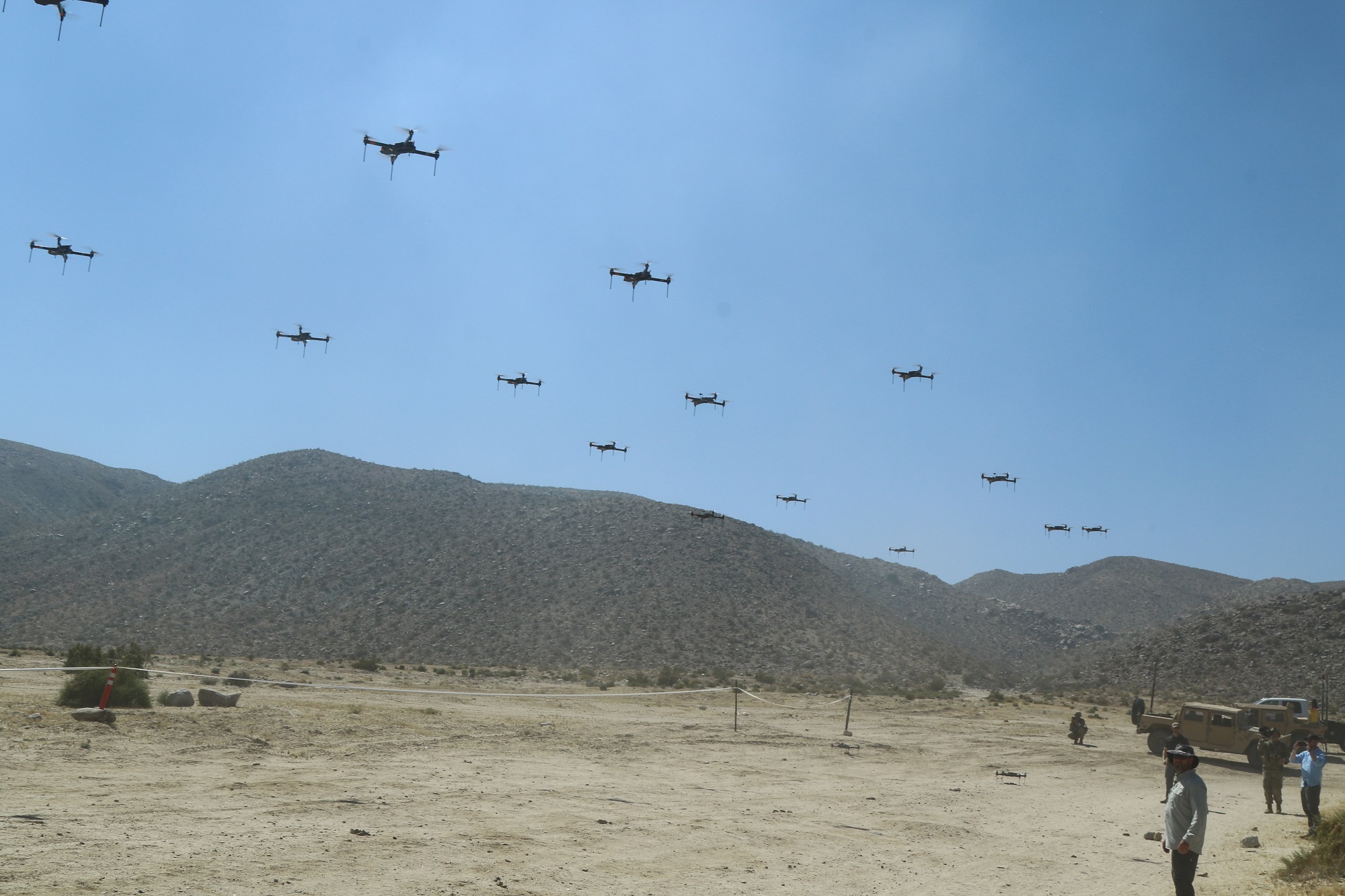
Recent advancements in unmanned aerial systems have emphasized the growing role of drone swarms—groups of coordinated drones sharing information to act collectively. These systems are poised to revolutionize both military tactics and civilian operations by providing persistent, resilient, and cost-effective solutions.
In defense, swarms threaten to overwhelm traditional air defenses, prompting the development of layered countermeasures such as directed-energy weapons. The UK’s DragonFire laser project and similar U.S. systems aim to disable numerous small drones simultaneously, addressing the challenge of affordability and endurance. Offensively, initiatives like the U.S. Pentagon’s Replicator program seek to produce large quantities of low-cost, expendable drones that can serve a variety of roles including decoys, sensors, and relays, significantly altering the nature of battlefield engagement.
Strategic investments by China and Russia underscore the importance of production capacity and battlefield experience. China focuses on rapid deployment and reconnaissance, leveraging its extensive commercial drone industry, while Russia emphasizes mass, redundancy, and battlefield resilience, based on recent combat data. These efforts demonstrate that future advantages will hinge on logistics, supply chains, and adaptability rather than purely technological superiority.
Outside the military sphere, drone swarms are increasingly applied in civilian contexts such as infrastructure inspection, wildfire monitoring, emergency rescue, and delivery logistics. Examples include coordinated inspections of aircraft, power lines, and turbines, as well as search-and-rescue operations in disaster zones, illustrating their potential to improve safety, efficiency, and operational continuity.
Overall, drone swarms are transforming future aviation and defense landscapes by offering scalable, resilient, and versatile capabilities. Their ongoing development and integration into strategic systems will shape the nature of conflicts and industrial operations in the years ahead.

