The Enduring Legacy: A History of China Southern Airlines
The Enduring Legacy: A History of China Southern Airlines
Trending
|
5 months ago
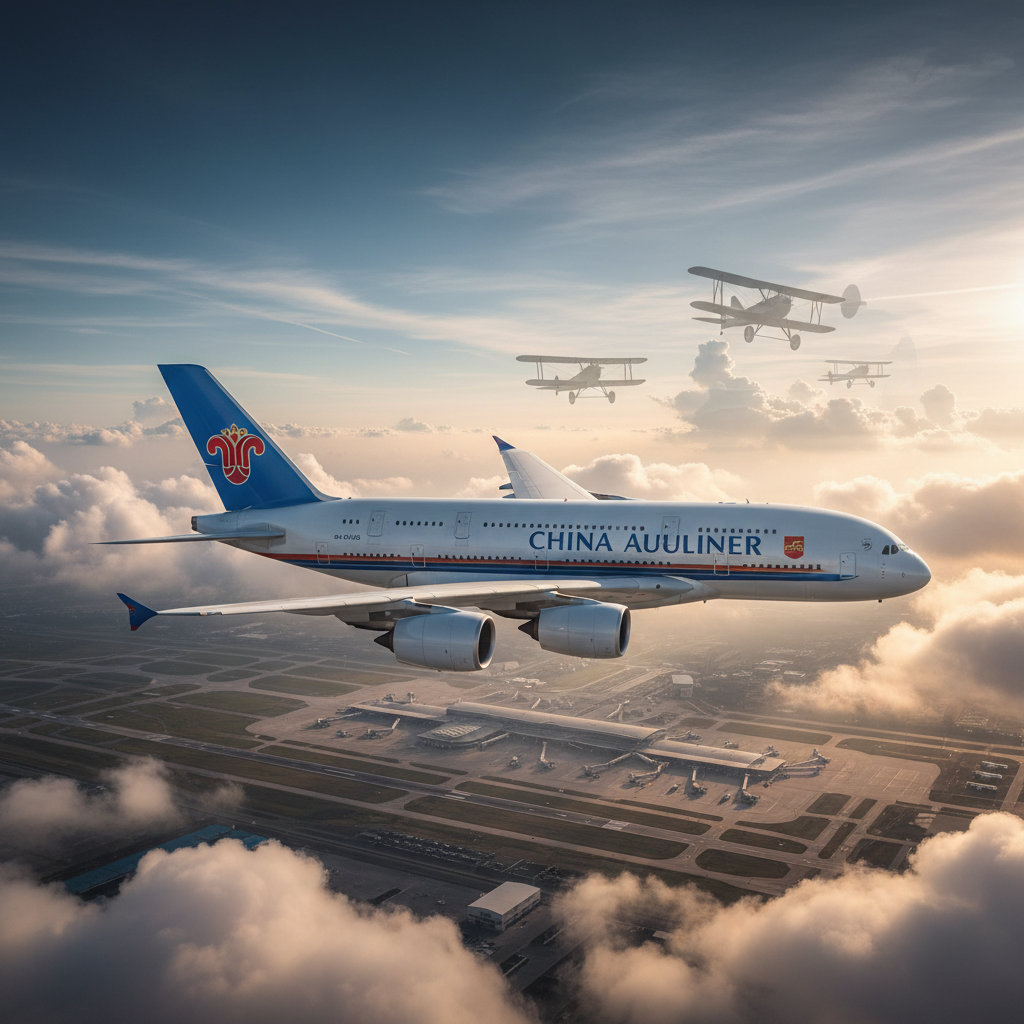
Founding
The story of China Southern Airlines, like so many Chinese aviation endeavours, is deeply intertwined with the nation's broader economic and infrastructural development in the latter half of the 20th century. While its direct lineage can be traced back to the establishment of the Civil Aviation Administration of China (CAAC) in 1949, the airline as we know it today truly began to take shape with the reforms of the 1980s. Prior to this, CAAC operated as a singular, monolithic entity overseeing all aspects of civil aviation within China – from regulatory functions to airline operations and airport management.
The push for modernization and efficiency led to the decision to break up CAAC's operational arm into distinct, regional airlines. It was from this pivotal policy shift that China Southern Airlines officially emerged on 1st July 1988, headquartered in Guangzhou, a vibrant economic hub in southern China. Its geographical base strategically positioned it to serve the rapidly developing Pearl River Delta region and to foster international connections.
Early Growth
The initial years for China Southern were marked by rapid expansion, mirroring China's economic boom. In its nascent phase, the airline inherited a diverse fleet from the CAAC, comprising both domestic and Soviet-built aircraft, gradually modernizing with Western models to meet the growing demand for air travel. The early focus was on establishing a robust domestic network, connecting major provincial capitals and burgeoning economic zones. Routes were steadily added, increasing accessibility across China, which fueled both business and leisure travel.
Internationally, China Southern cautiously began to spread its wings. Early international flights primarily connected Guangzhou to neighbouring Asian cities, serving the burgeoning trade and tourism routes. This period was characterized by a push for increased capacity, improved service standards, and the integration of more sophisticated operational procedures. The airline also began to invest in its infrastructure, including maintenance facilities and training programmes, laying the groundwork for its future ascent.
Modern Era
The turn of the millennium heralded a new chapter for China Southern Airlines. The early 2000s saw a significant consolidation within China's airline industry, with several smaller carriers being merged into the "Big Three": Air China, China Eastern Airlines, and China Southern Airlines. This restructuring further solidified China Southern's position as a major player, granting it a larger market share and an expanded network.
A key milestone in its modernization journey was its entry into the global airline alliance landscape. In 2007, China Southern officially joined SkyTeam, one of the world's leading airline alliances. This membership provided the airline with an extensive global network, allowing seamless connections for passengers and enhancing its international competitiveness. The alliance offered code-sharing agreements, reciprocal frequent flyer benefits, and shared lounge access, significantly elevating China Southern's global presence.
Fleet & Alliances
Over the decades, China Southern Airlines has cultivated one of the largest and most modern fleets in Asia, comprising a mix of narrow-body and wide-body aircraft from both Boeing and Airbus. The fleet strategy has consistently aimed for efficiency, passenger comfort, and capacity to serve its vast network. Aircraft like the Boeing 787 Dreamliner and Airbus A380 have been instrumental in its long-haul international expansion, offering state-of-the-art amenities and longer ranges.
As mentioned, its membership in the SkyTeam alliance greatly enhanced its global reach, enabling passengers to connect to hundreds of destinations worldwide through its partners. While China Southern departed SkyTeam in 2018 to pursue a more flexible and independent partnership strategy, it continues to maintain strong bilateral relationships with numerous airlines globally. This approach allows greater agility in forging codeshare agreements and interline partnerships that best serve its strategic interests and passenger needs.
Today
Today, China Southern Airlines stands as a colossus in the global aviation industry. It is not only one of the largest airlines in China but also consistently ranks among the top carriers worldwide by fleet size and passenger numbers. Its primary hubs in Guangzhou (Guangzhou Baiyun International Airport) and Beijing (Beijing Daxing International Airport) are crucial gateways connecting China to the rest of the world.
The airline continues to expand its network, with a particular focus on the lucrative Asia-Pacific region, North America, Europe, and Australia. It plays a vital role in connecting China's booming economy with international markets, facilitating trade, tourism, and cultural exchange. With a steadfast commitment to service excellence, operational efficiency, and sustainable growth, China Southern Airlines continues to shape the future of air travel, embodying the dynamism and ambition of modern China. Its journey from a regional offshoot of CAAC to a global aviation leader is a testament to shrewd management, strategic planning, and an unwavering dedication to connecting people across continents.

Airspace Times Team
Aviation news desk
Published: 11 May 2026
Share to:
Latest news
Related airlines
powered by We Do Dev Work 
We use cookies and similar technologies to enhance your Browse experience, personalize content and ads, provide social media features, and analyze our traffic. By clicking 'Accept All' or continuing to use our website, you consent to the use of cookies as described in our Cookie Policy