The Enduring Legacy: A History of Delta Air Lines
The Enduring Legacy: A History of Delta Air Lines
Trending
|
6 months ago
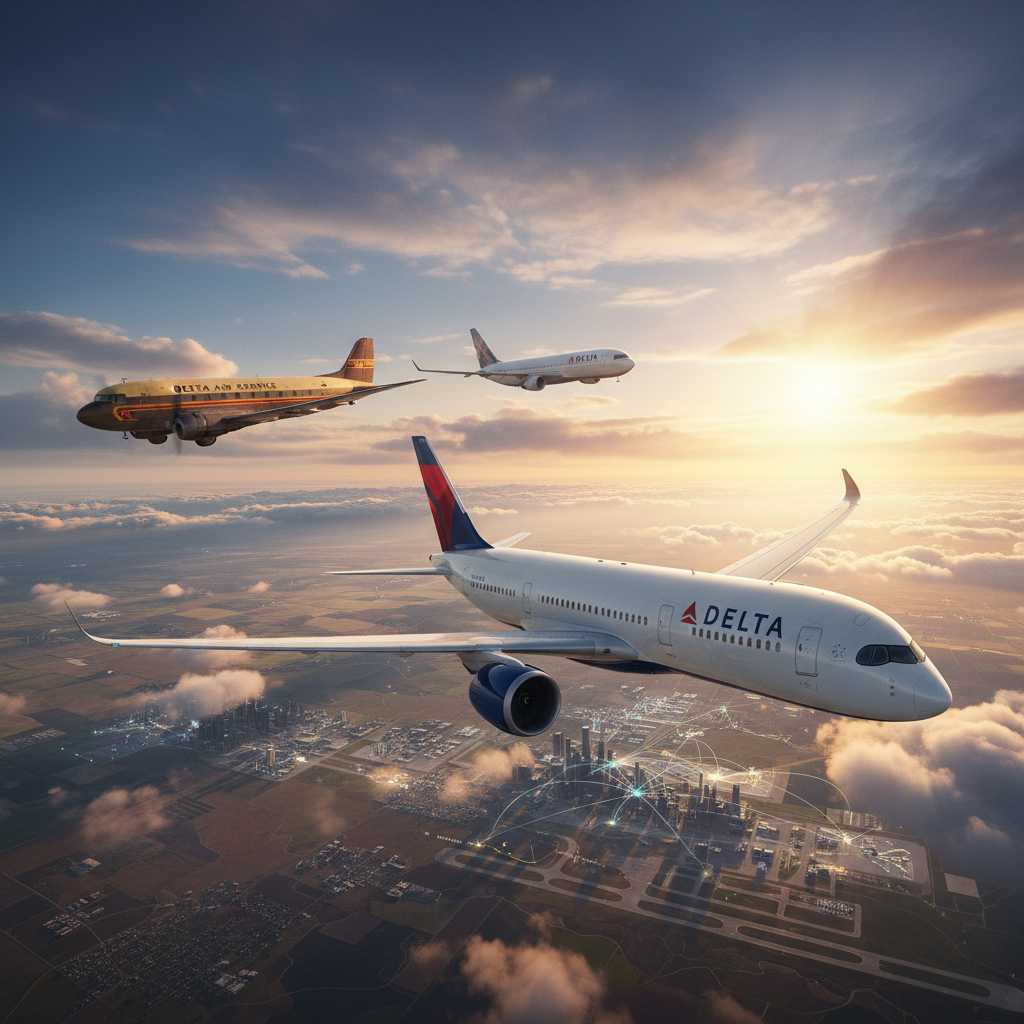
The Enduring Legacy: A History of Delta Air Lines
The story of Delta Air Lines is a captivating narrative of agricultural daring, pioneering spirit, and ultimately, a relentless pursuit of global connectivity. From its nascent days tackling the ravages of the boll weevil to its present-day standing as one of the world's largest and most influential carriers, Delta's trajectory mirrors the very evolution of American aviation itself.
Founding: From Dusters to Destinations
Our tale begins not in a bustling airport terminal, but amidst the cotton fields of Macon, Georgia, in 1924. Here, a visionary named C.E. Woolman established Huff Daland Dusters, a revolutionary aerial crop dusting operation. Woolman, an agricultural economist and entomologist, recognized the transformative power of aviation in combating the devastating boll weevil infestation that plagued Southern agriculture. This initial venture, though far removed from passenger travel, laid the foundational principles of innovation, efficiency, and service that would come to define Delta.
The economic winds of the late 1920s brought change, and in 1928, Woolman and his partners purchased the assets of Huff Daland Dusters, rebranding it as Delta Air Service. The name "Delta" itself was a nod to the Mississippi Delta region, the heartland of their crop-dusting operations. The transition to passenger service quickly followed, with Delta's inaugural passenger flight taking to the skies on June 17, 1929. This momentous flight connected Dallas, Texas, to Jackson, Mississippi, via Shreveport and Monroe, Louisiana, utilizing a six-seat Travel Air S-6000B monoplane. This marked Delta's definitive entry into the realm of commercial aviation, a bold leap from dusting fields to transporting people.
Early Growth and Wartime Contributions
The ensuing decades saw Delta steadily expand its network, navigating the economic challenges of the Great Depression and the burgeoning regulatory landscape of the Civil Aeronautics Board. Key to its growth was a strategic focus on serving the southern United States, connecting smaller cities to larger hubs. The 1930s and 40s brought further advancements in aircraft technology and an increasing demand for air travel.
During World War II, like many American airlines, Delta played a vital role in the national war effort. Its facilities were utilized for aircraft modification and maintenance, and its experienced personnel contributed significantly to military transport operations. This period not only showcased Delta's adaptability but also cemented its reputation for operational excellence and national service.
The Modern Era: Jet Age and Global Reach
The post-war era ushered in the exciting advent of the jet age, a period of unprecedented expansion and technological advancement for the airline industry. Delta was a proactive adopter of jet technology, investing in aircraft that would dramatically reduce travel times and increase capacity. This commitment to modernization allowed Delta to compete effectively in an increasingly competitive market.
The deregulation of the airline industry in 1978 proved to be a pivotal moment. While presenting new challenges, it also opened up immense opportunities for growth and route expansion. Delta embraced this new environment, expanding its domestic network significantly and beginning its foray into international markets. Strategic mergers and acquisitions, such as the major integration with Western Airlines in 1987, further solidified Delta's position as a national powerhouse. The acquisition of Pan Am's European routes and Frankfurt hub in 1991 was a particularly significant move, establishing Delta as a major transatlantic carrier and marking a profound step towards global reach.
Fleet and Alliances: Connecting the World
Throughout its history, Delta has operated a diverse and evolving fleet, from the early propeller-driven aircraft to the latest generation of fuel-efficient jets. Its fleet strategy has always focused on balancing operational efficiency with passenger comfort, incorporating aircraft from manufacturers such as Boeing, Airbus, and McDonnell Douglas.
In the modern aviation landscape, alliances are crucial for global connectivity. Delta was a founding member of the SkyTeam Alliance in 2000, along with Aeroméxico, Air France, and Korean Air. This strategic partnership significantly expanded Delta's global network, offering passengers seamless connections and a vast array of destinations through its alliance partners. This commitment to collaboration underscores Delta's understanding of the interconnected nature of contemporary air travel.
Today: A Global Aviation Leader
Today, Delta Air Lines stands as a testament to enduring vision and adaptability. With its primary hub in Atlanta, Hartsfield-Jackson Atlanta International Airport, Delta operates an extensive global network, serving hundreds of destinations across six continents. It continues to be a leader in customer service, operational reliability, and technological innovation. From its humble beginnings fighting agricultural pests, Delta has soared to become a global aviation giant, a truly remarkable journey in the annals of flight.

Airspace Times Team
Aviation news desk
Published: 25 Apr 2026
Share to:
Latest news
Related airlines
powered by We Do Dev Work 
We use cookies and similar technologies to enhance your Browse experience, personalize content and ads, provide social media features, and analyze our traffic. By clicking 'Accept All' or continuing to use our website, you consent to the use of cookies as described in our Cookie Policy