The History of Southwest Airlines: A Maverick of the Skies
The History of Southwest Airlines: A Maverick of the Skies
Trending
|
5 months ago
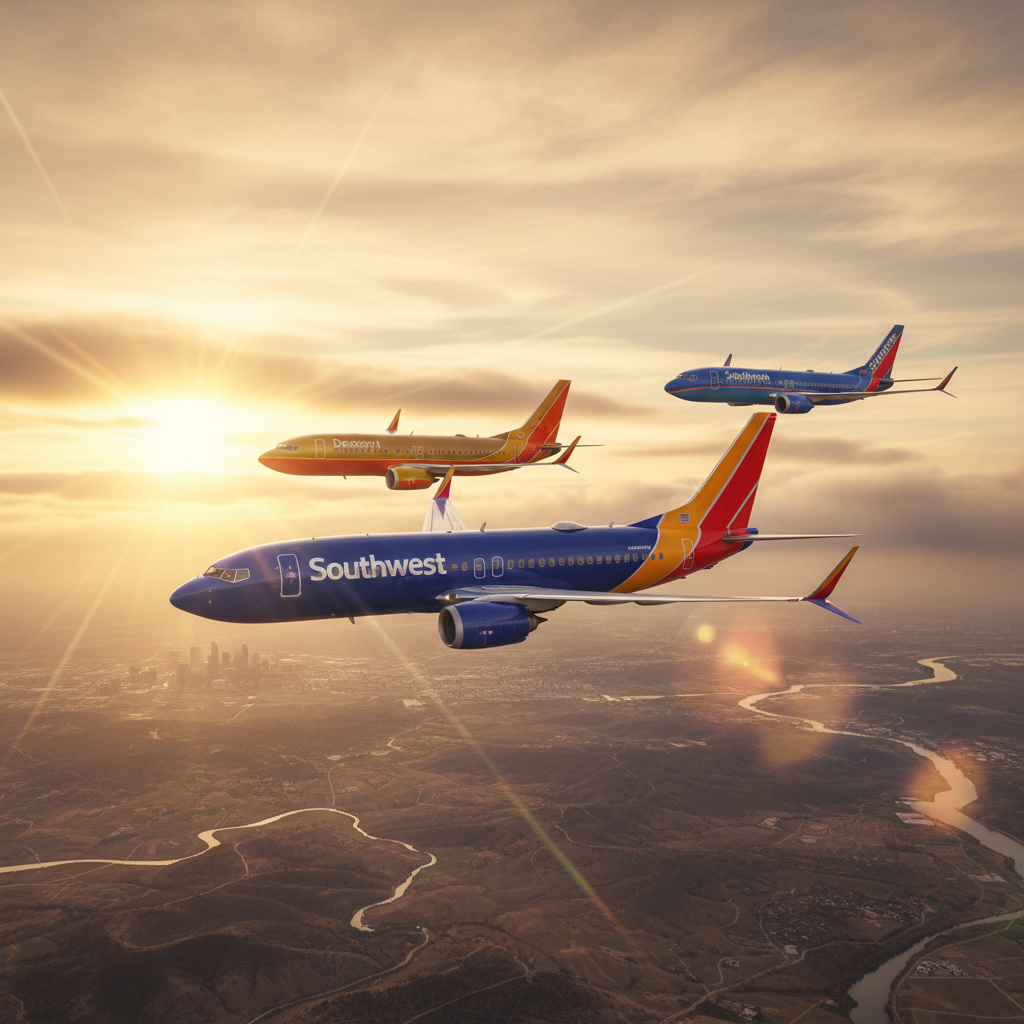
Founding: A Legal Battle and a Bold Vision
The story of Southwest Airlines begins not with a grand inauguration, but with a fierce legal skirmish. In the mid-1960s, a visionary businessman named Herb Kelleher, alongside his client Rollin King, conceived a revolutionary idea: a low-cost, high-frequency airline serving only the major cities within Texas. Their goal was to make air travel affordable and accessible to the common person, a stark contrast to the existing, more exclusive long-haul carriers.
This bold proposition, however, was met with heavy resistance from established airlines who viewed Southwest as an unwelcome disruptor. For several years, Kelleher and his team fought relentlessly in court, a saga that extended all the way to the Supreme Court. Their perseverance paid off, and on June 18, 1971, Southwest Airlines took to the skies, initially connecting Dallas, Houston, and San Antonio. This audacious beginning set the tone for an airline that would consistently challenge convention.
Early Growth: Democratizing the Skies
In its nascent years, Southwest carved out its niche by focusing on efficiency and a unique corporate culture. The airline eschewed the traditional hub-and-spoke model, opting instead for point-to-point service, which minimized layovers and delays. They pioneered the concept of "turnaround time," striving to get planes back in the air as quickly as possible, maximizing aircraft utilization and reducing costs. This lean operational model directly translated into lower fares for passengers, democratizing air travel for legions who had previously been priced out of the market.
Southwest’s irreverent and fun-loving culture, largely attributed to Kelleher's charismatic leadership, also played a crucial role in its early success. Flight attendants were encouraged to be entertaining, and the airline became known for its playful announcements and humorous approach to customer service. This distinctive brand personality fostered strong customer loyalty and created a joyful flying experience, further setting them apart from their more staid competitors.
Navigating Deregulation and Expansion
The Airline Deregulation Act of 1978 proved to be a pivotal moment for Southwest. Freed from government restrictions on routes and fares, the airline was ideally positioned to expand its successful model beyond Texas. While many established carriers struggled with the newfound competition, Southwest thrived, entering new markets strategically and consistently undercutting the fares of its rivals. This period saw steady, robust growth as Southwest continued to prove that its low-cost philosophy could succeed on a national scale.
Modern Era: A Continued Evolution
As the airline grew, it faced new challenges and adapted its strategies while remaining true to its core principles. Southwest continued to prioritize cost efficiency, a simplified fare structure, and outstanding customer service. Even in the face of economic downturns and industry crises, the airline maintained its profitability and reputation for reliability. Its single aircraft type strategy – primarily Boeing 737s – has historically contributed to operational simplicity, streamlined maintenance, and reduced training costs.
In recent decades, Southwest has embraced technological advancements, from online booking to mobile check-in, enhancing the customer experience. However, it has largely maintained its unique open-seating policy and eschewed baggage fees for the first two checked bags, a differentiator that continues to resonate with many passengers.
Fleet & Alliances: A Singular Focus
Southwest Airlines has famously operated a fleet composed almost exclusively of Boeing 737 aircraft. This standardization has been a cornerstone of their operational efficiency, simplifying maintenance, parts inventory, and pilot training. While other airlines often maintain diverse fleets, Southwest's singular focus on the 737 has long been a defining characteristic of its operational strategy.
Unlike many major global carriers, Southwest has historically chosen not to join any major airline alliances. Instead, it has focused on building its own extensive point-to-point network within the United States and to select international destinations. This independent approach allows Southwest to maintain tight control over its operations and customer experience, aligning with its pioneering spirit.
Today: A Lasting Legacy
Today, Southwest Airlines stands as one of the largest and most successful airlines in the world, consistently ranking high in customer satisfaction and profitability. Its pioneering low-cost model has inspired countless imitators, but few have managed to replicate its unique blend of efficiency, affordability, and beloved corporate culture. From its defiant beginnings, battling against entrenched interests, to its present-day status as a major player in global aviation, Southwest Airlines continues to embody the spirit of innovation and customer-centric service that defined its founders. Its impact on the aviation industry, in democratizing air travel, is immeasurable and enduring.

Airspace Times Team
Aviation news desk
Published: 01 May 2026
Share to:
Latest news
Related airlines
powered by We Do Dev Work 
We use cookies and similar technologies to enhance your Browse experience, personalize content and ads, provide social media features, and analyze our traffic. By clicking 'Accept All' or continuing to use our website, you consent to the use of cookies as described in our Cookie Policy