The conflicts in Iran and Ukraine have exposed significant flaws in the deployment and design of the United States' unmanned aircraft systems (UAS). American forces have lost approximately 25 percent of their MQ-9 Reaper fleet in Iran, each valued between $30 and $60 million, reflecting a substantial financial and operational loss. These costly assets are among the most capable UAS in the world, and their loss underscores the need for strategic reevaluation.
The core issue is not a lack of capability but a mismatch between current UAS designs and modern combat environments. For over twenty years, the U.S. optimized its drone operations for permissive environments, relying on long-endurance missions launched from fixed runways, supported by large crews, and operating in uncontested airspace. This traditional approach is no longer sufficient in today's contested battlespace, characterized by electronic warfare, targeted adversary systems, and widespread use of inexpensive drones and countermeasures.
Fortunately, technological breakthroughs are enabling a new class of UAS that better align with current warfare demands. Smaller UAS, particularly in the Group 2 class, now feature increased endurance driven by solid oxide fuel cell technology, allowing operations in extreme conditions and reducing reliance on vulnerable ground infrastructure. Advances in satellite communications, notably via low-Earth orbit constellations like Starlink, enable secure, high-bandwidth connectivity, extending operational range and resilience.
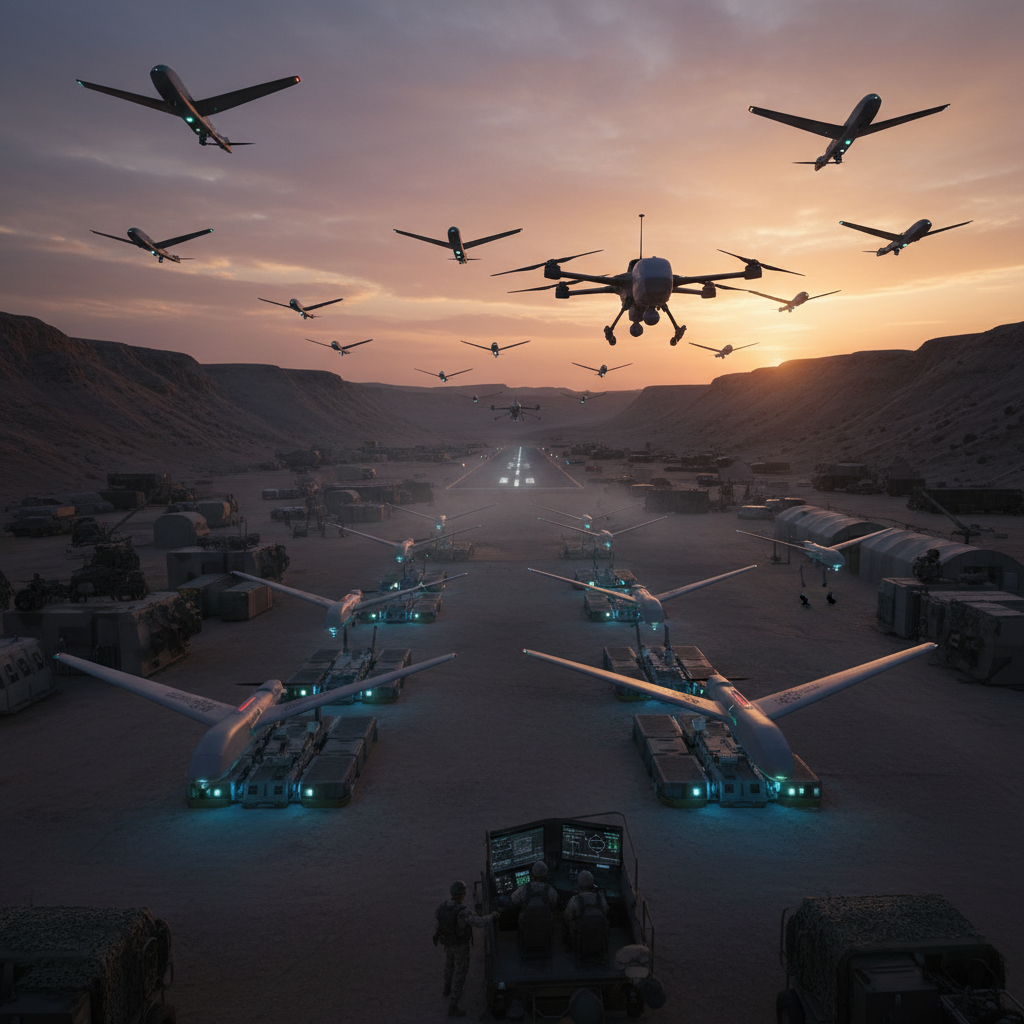
These innovations contribute to more distributed, redundant, and adaptable UAS architectures. Smaller, runway-independent systems can be rapidly deployed, recovered, and replaced, providing persistent coverage and intelligence even amid active disruption. This shift towards affordable, expendable systems changes the risk calculus, allowing commanders to operate deeper in contested zones and accept higher loss tolerances, ultimately enhancing mission success.
While larger systems like the RQ170 Sentinel and MQ-9 Reaper still possess valuable roles, especially in low-threat environments, the strategic emphasis is clearly moving toward versatile, distributed networks of smaller UAS. Such systems are more resilient, cost-effective, and capable of operating in complex environments, signifying a fundamental change in US military drone strategy.
This technological evolution emphasizes the importance of creating a flexible, distributed, and survivable drone infrastructure, moving beyond traditional paradigms. The technologies necessary for this transition are already available and should be integrated swiftly into operational doctrine to maintain tactical advantage in modern warfare.

