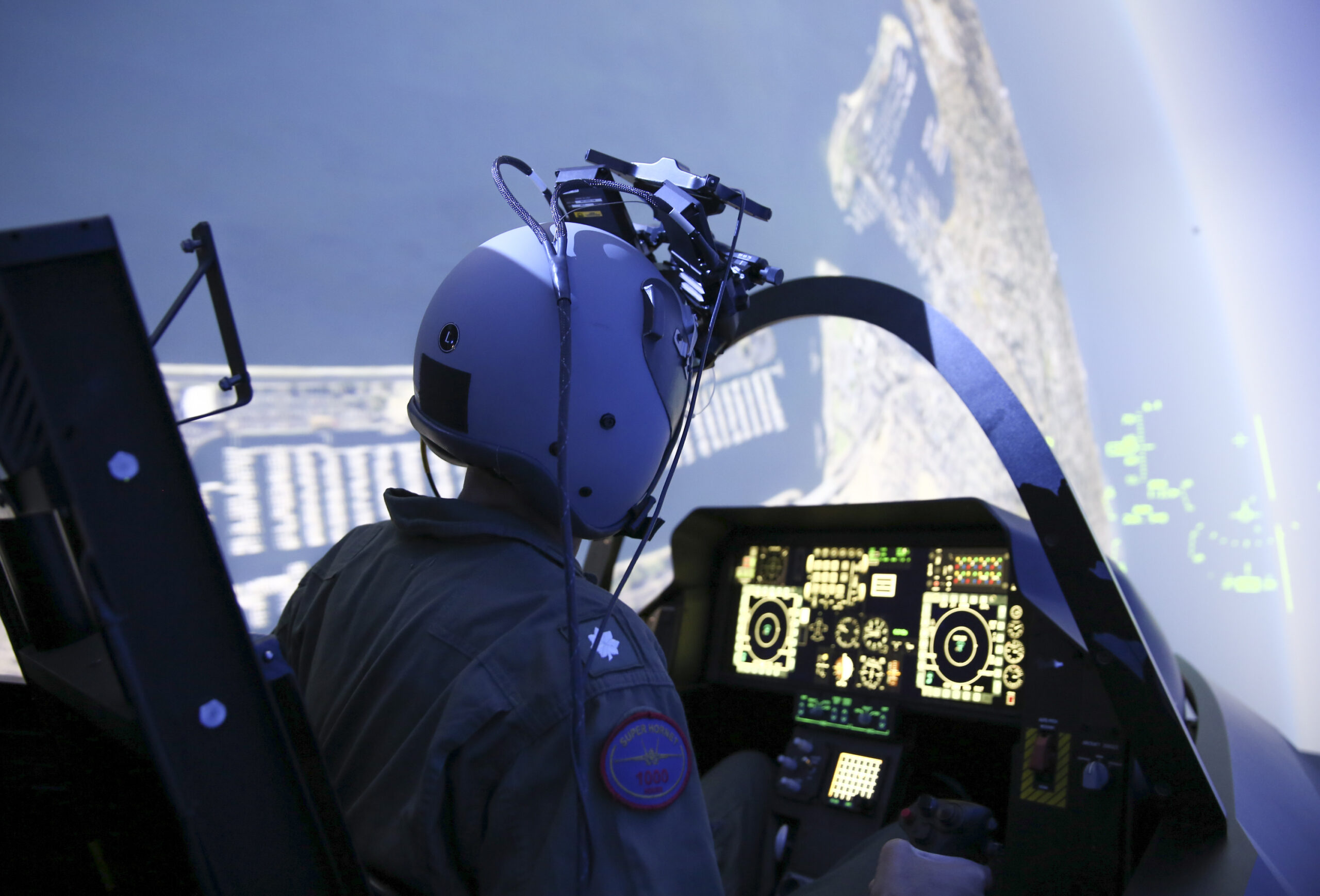
The Pentagon is leveraging artificial intelligence to enhance defense training and operational decision-making, according to retired Vice Adm. Sean Buck. As president of the National Training & Simulation Association, Buck emphasizes the importance of high-fidelity synthetic environments powered by advanced compute capabilities, which facilitate more effective and efficient training, particularly in military contexts.
Buck notes that the integration of AI into modeling and simulation is a transformative shift, enabling not only physical task training but also complex decision-making processes. He highlights the dual-use nature of automation, where human operators are still central, especially given the psychological and emotional factors involved in employing autonomous systems.
Addressing the future of aviation, Buck advocates maintaining human oversight in autonomous aircraft operations for the foreseeable future. He discusses the increasing sophistication of remotely piloted vehicles in undersea, surface, air, and space domains, stressing the need to monitor the emotional well-being of operators who interact with automated systems and employ weaponry against adversaries.
Moreover, Buck underscores the need to adapt pilot training to encompass ethical and psychological challenges posed by autonomous technology. He advocates for preparing operators to manage these nuanced human factors in conjunction with technological advances, ensuring safety and operational integrity in an increasingly autonomous aviation environment.

