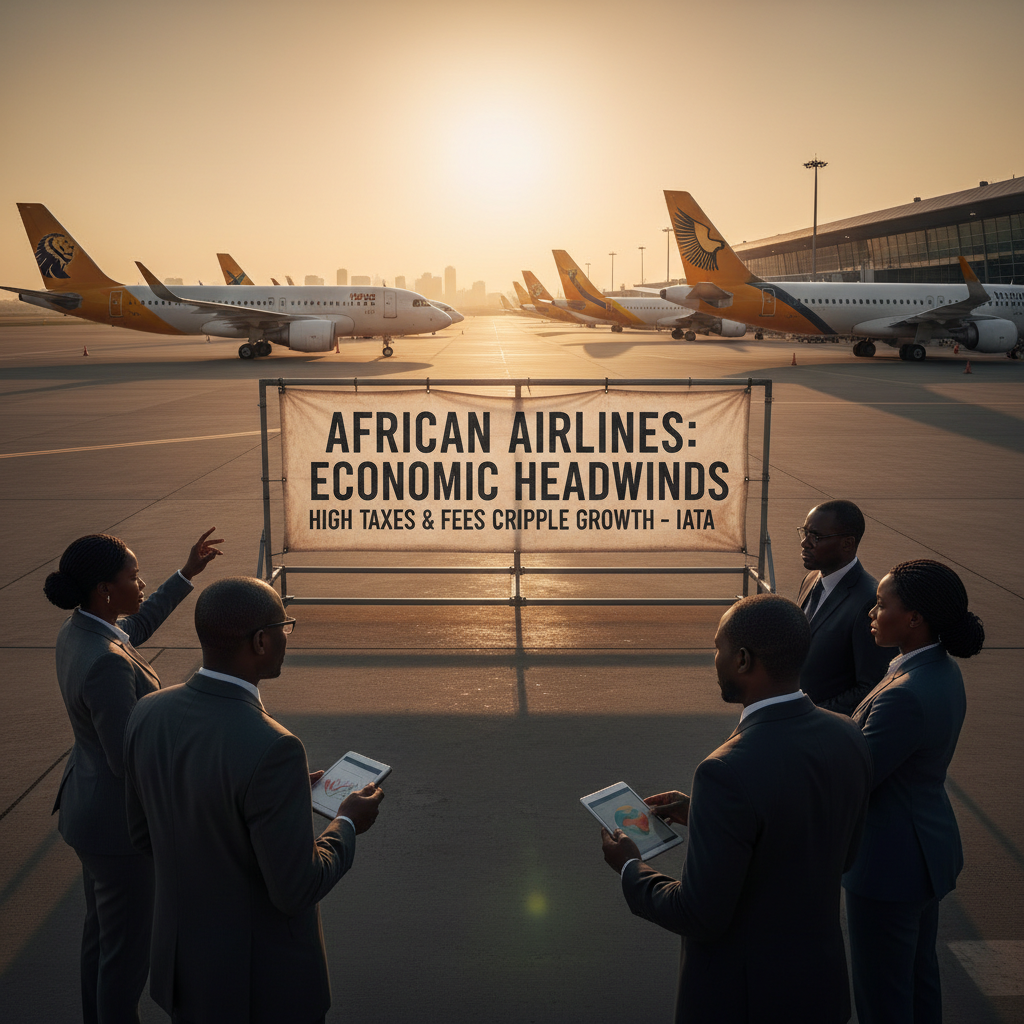
African airlines are experiencing increasing financial pressure due to high taxes and fees, according to Kamil Alawadhi, the Regional Vice President for Africa and the Middle East at the International Air Transport Association (IATA). Addressing delegates at Aviation Africa in Kenya, Alawadhi emphasized the need for governments to rethink policies that hinder industry growth.
He pointed out that while some progress has been made—such as the expansion of safety oversight programs with 47 carriers enrolled, and the reduction of blocked airline funds from $1.5 billion to $624 million—the fundamental challenges remain. These include unit costs that are approximately double the global average, taxes and charges exceeding the global norm by at least 15%, and fuel costs significantly higher than elsewhere, accounting for a substantial part of operating expenses in Africa.
Taxation and Infrastructure Challenges
Alawadhi highlighted the problematic nature of passenger levies imposed in countries like Tanzania, Gabon, and Equatorial Guinea, which charge up to $50 per sector. He urged governments to align with ICAO standards for passenger information systems to ensure sustainability. Additionally, the issue of blocked foreign exchange remains critical, impacting capacity growth and investment.
"The choice facing governments is clear: Should aviation be treated primarily as a source of revenue or as an engine of economic development?"
To address infrastructure needs, the development of new facilities such as Ethiopia's Bishoftu International Airport and the expansion of Casablanca's Mohammed V International Airport are examples of steps that must be taken with close airline consultation to ensure demand-driven and cost-efficient spending.
Alawadhi concluded with a call for decisive action, emphasizing Africa's potential and the industry’s role in economic growth. The key to future success lies in government willingness to implement supportive policies that foster sustainable aviation development.

