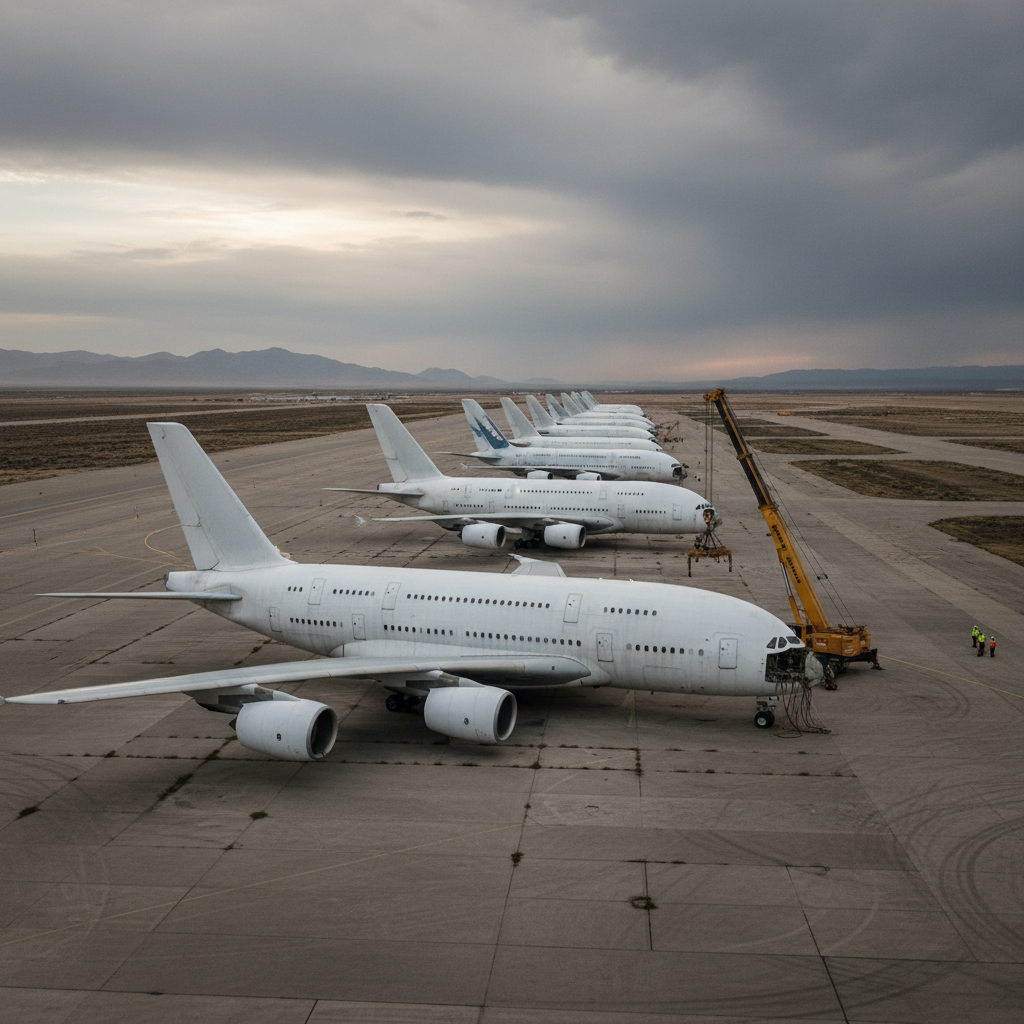
Airbus is advancing its retirement plans for the Airbus A380, reflecting shifting market dynamics and increasing pressure on the superjumbo fleet. The manufacturer’s decision aligns with recent industry trends, as airlines evaluate the costs and operational efficiencies of large wide-body aircraft amid emerging regional and point-to-point travel demands.
The A380, known for its capacity and long-haul capabilities, has faced challenges due to changing passenger preferences and the rise of smaller, more fuel-efficient twinjets like the A350 and Boeing 787. Several major operators are reportedly accelerating their retirement schedules, with some considering immediate phase-outs or early planesutz.
Industry Reactions and Future Outlook
Industry analysts note that this trend reflects a broader strategy shift among carriers aiming to optimize fleet utilization and reduce operating costs. While the A380 remains a symbol of capacity for flagship routes, its future in the airline fleets appears limited, with Airbus supporting the transition towards more versatile aircraft.
"The market now favors aircraft with lower operating costs and greater flexibility," said industry analyst John Doe. "Airbus's move to expedite the A380's retirement underscores this shift."
Airbus continues to support existing A380 operators but emphasizes that new sales are unlikely to be significant. The company’s focus is now on its more popular models and developing next-generation aircraft tailored for evolving market needs.

