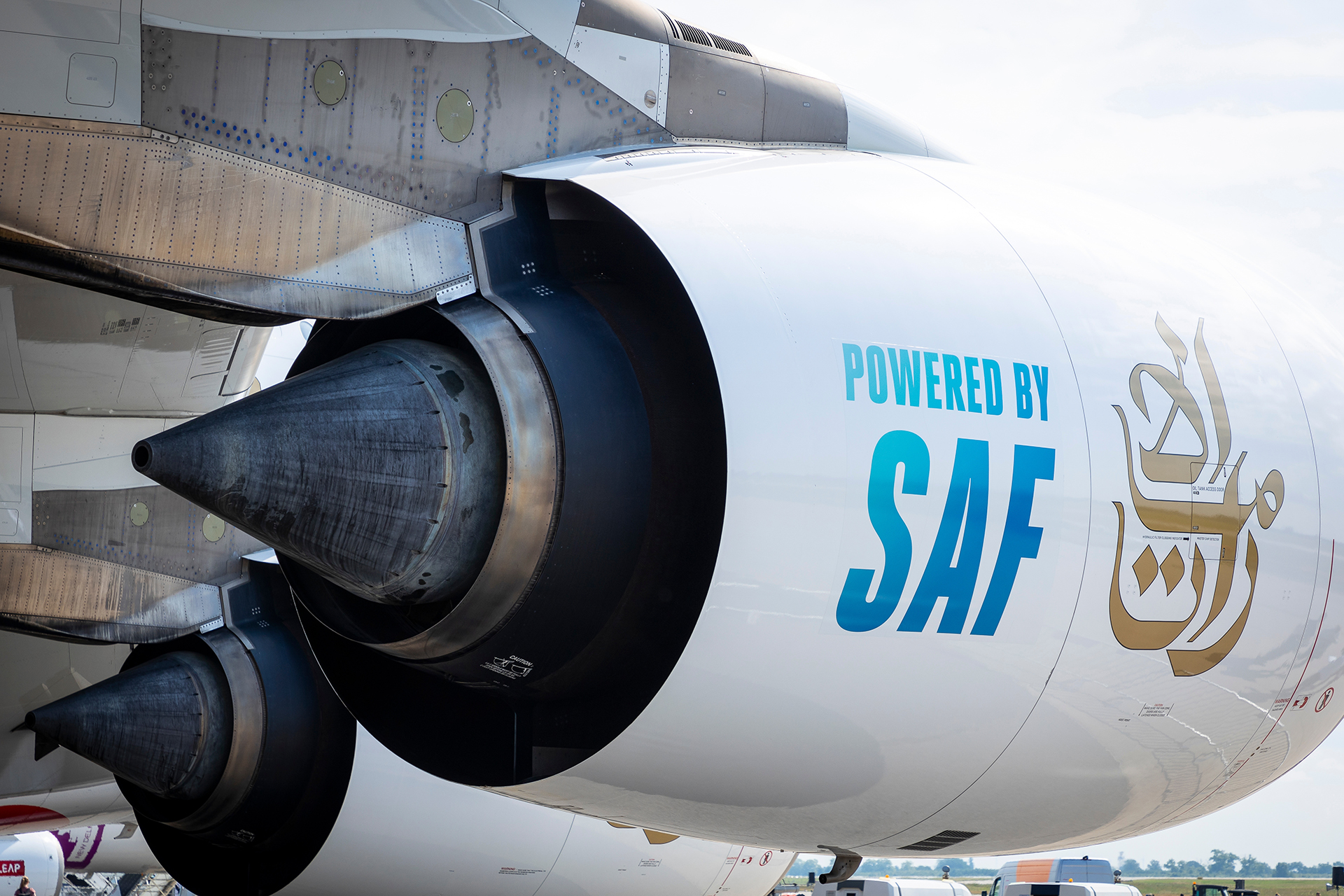
Airbus is taking significant steps towards decarbonising the aviation industry through the promotion and scaling of sustainable aviation fuels (SAF). The aerospace manufacturer emphasizes a multi-faceted approach, including fleet renewal, aircraft development, operational optimisation, and market-based measures such as carbon removal. The company’s latest aircraft models, including the A320neo and A350, are already more fuel-efficient, and future models aim for further reductions in fuel consumption.
Airbus recognizes SAF as a crucial operational lever capable of reducing lifecycle CO2 emissions by up to 80 per cent compared to conventional jet fuel. However, the market is still in its early stages, requiring large-scale investments, feedstock aggregation, and stable policy frameworks. The company acts as a catalyst, connecting various stakeholders—including airlines, airports, suppliers, and research institutions—and has formed partnerships to facilitate SAF supply in Asia, such as with Qantas and Cathay Pacific.
Regional demand, especially in the Asia-Pacific, is vital for realising SAF potential, which could account for a significant portion of global capacity. Airbus advocates for policies supporting long-term investment and the development of mechanisms like the "Book and Claim" to decouple environmental benefits from physical fuel supply, enabling broader participation. The industry also depends on collaborative investments and partnerships, as no single entity can lead these efforts alone.
Looking ahead, Airbus has set targets to reduce its operational emissions significantly by 2030 and aims for SAF to comprise at least 30 percent of fuel consumption in its fleet by that year. The company is also investing in renewable energy projects and seeking to achieve net-zero emissions by 2050, viewing SAF as an essential bridge towards that goal. Airbus positions itself as both a leader in aviation technology and a market facilitator, helping shape a sustainable future for the industry.

