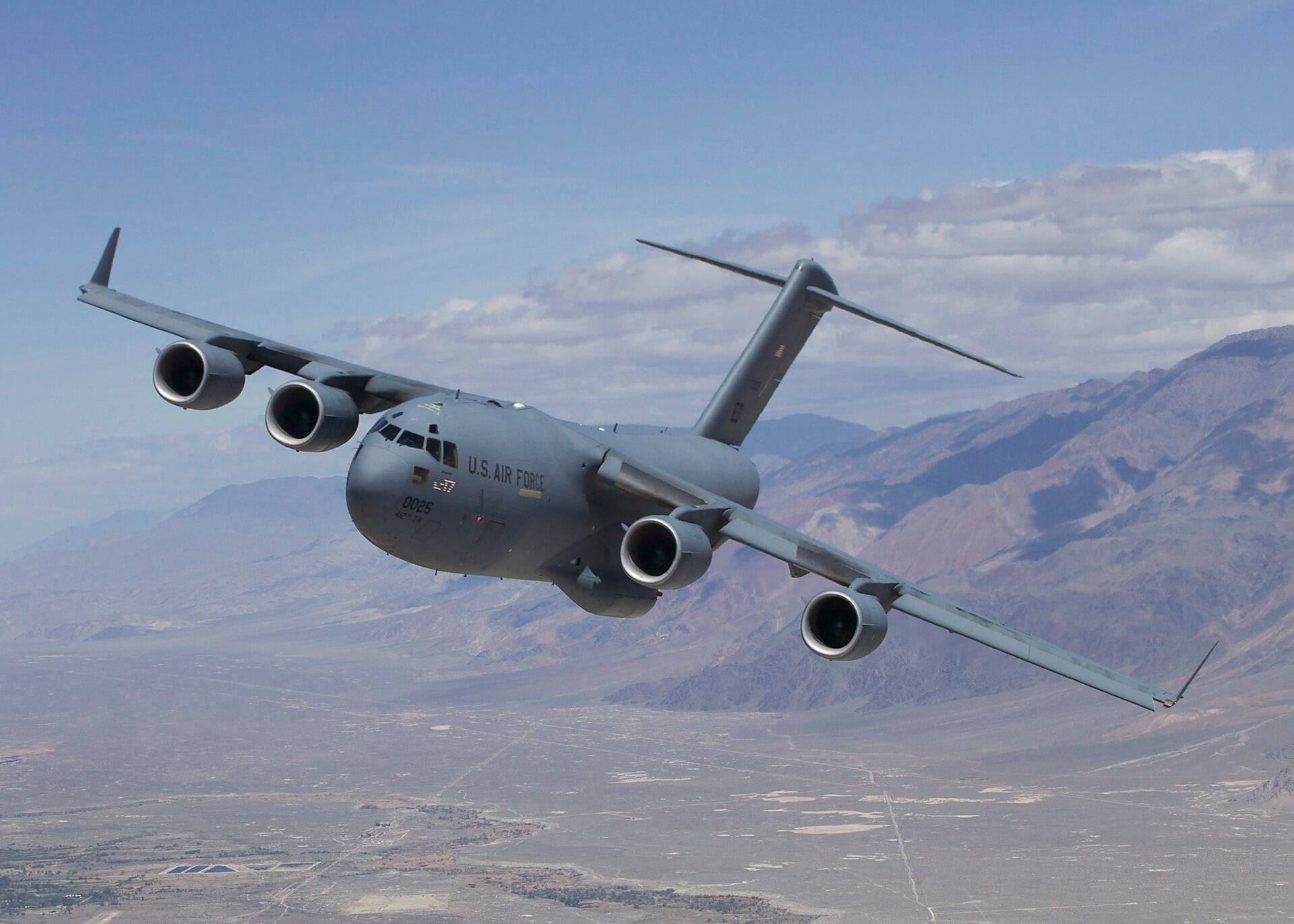
The Boeing C-17 Globemaster III is engineered to operate effectively from semi-prepared and unpaved runways, a capability crucial for modern military logistics. With a maximum gross weight of up to 585,000 pounds, the aircraft employs advanced aerodynamic features such as externally blown flaps to enable approach speeds around 130 knots, facilitating touchdown on rugged surfaces. Its landing gear, comprising 26 wheels in a distributed tandem arrangement, reduces ground pressure and supports operations on soft terrain.
Test programs conducted by the U.S. Air Force from 2006 to 2007 involved weighing the aircraft after semi-prepared landings, revealing an ingestion of approximately 1,200 to 1,500 pounds of dirt—an operational cost accounted for in maintenance routines.
Design Adaptations for Dirt Operations
The aircraft’s high-mounted engines aid in debris reduction, and approach strategies emphasize slow speeds to minimize dirt ingestion and optimize landing distances. On soft dirt, the landing distance can increase from 4,500 to 6,200 feet compared to concrete, underscoring surface condition importance.
This versatility allows the C-17 to deliver heavy payloads onto unpaved surfaces, including ice runways in Antarctica, thus supporting strategic mobility in diverse environments. This capability broadens the scope of military and humanitarian missions, providing rapid access to austere locations where paved runways are unavailable.
In summary, the aircraft's design and operational testing underpin its role as a reliable strategic airlifter capable of excavating new frontiers in military logistics and disaster response.

