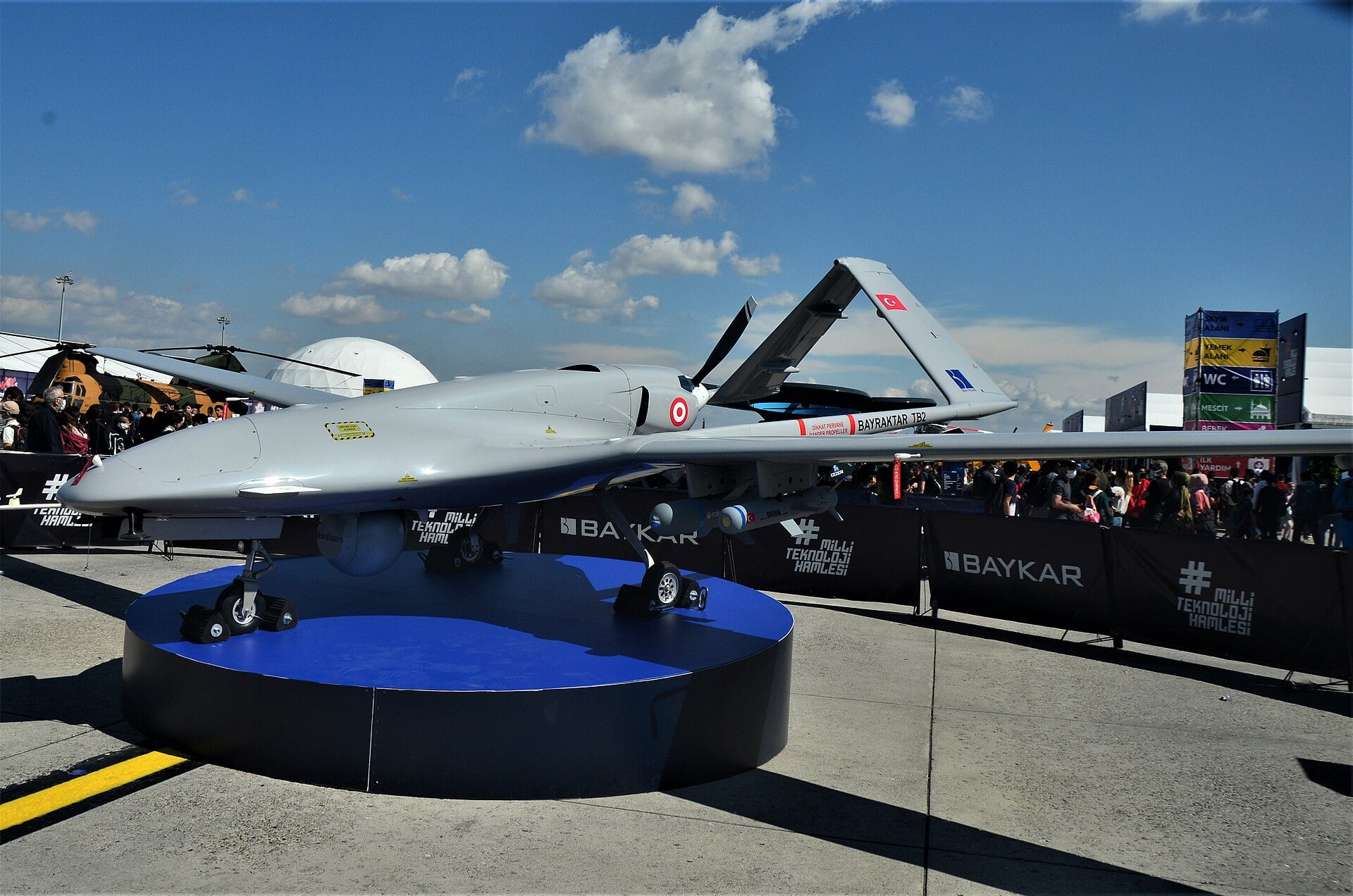
Recent live trials in Konya, Türkiye, have demonstrated a cost-effective approach to air defence suppression using unmanned aircraft equipped with advanced electronic warfare pods. Two Bayraktar TB2 drones, operated by ASELSAN, successfully detected, jammed, and imaged a live radar target during the demonstration, showcasing their potential to perform key functions traditionally handled by dedicated military aircraft.
One UAV carried a combination of the ANTIDOT 2ES 100 electronic support pod and the ANTIDOT 2EA 200 electronic attack pod, which together detected the radar, calculated its position, and then executed a jamming attack to suppress the threat. Meanwhile, the second drone deployed the FULMAR 200 synthetic aperture radar, providing detailed imaging of the target area. This integrated operation validated the interoperability of the EW systems on the UAV platform.
Implications and Strategic Significance
The demonstration indicates that cost-efficient drones equipped with advanced EW systems can contribute significantly to modern air defence strategies, particularly for countries unable to afford traditional, expensive suppression aircraft. ASELSAN emphasizes that this capability does not encompass a full SEAD mission, as the targeting phase with laser-guided weapons was not performed. The focus was on detection, classification, and electronic attack functions.
The event has also been interpreted as a strategic move to promote the sale of similar systems internationally. The capabilities shown could enable smaller nations to develop effective electronic attack defenses without substantial investment, expanding the market for the technology.
Ultimately, the trials demonstrate the growing importance of unmanned systems in modern warfare, providing versatile, cost-effective solutions for complex electronic warfare operations.

