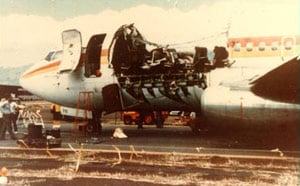
On April 28, 1988, Aloha Airlines Flight 243 suffered a catastrophic decompression at 24,000 feet over Hawaii, when an 18-foot section of the fuselage tore away. The incident involved a Boeing 737-200, which had accumulated extensive flight cycles due to short inter-island hops. Despite the severe structural failure, the crew managed an emergency descent and safe landing at Kahului Airport, with only one fatality, Chief Flight Attendant Clarabelle Lansing, who was swept out during the rupture.
This accident revealed critical issues related to metal fatigue in aging aircraft and prompted widespread industry reforms. Investigations showed that repeated pressurization cycles caused cracks to propagate at fuselage lap joints, leading to the eventual failure. The incident highlighted the importance of enhanced inspection protocols, especially for high-cycle aircraft, and resulted in the development of damage-tolerant design principles to improve aircraft longevity and safety.
Following the accident, authorities implemented stricter inspection schedules and corrosion control measures, significantly transforming maintenance practices worldwide. The accident remains a landmark case demonstrating how rigorous safety standards can prevent future tragedies akin to this extraordinary survival story.

