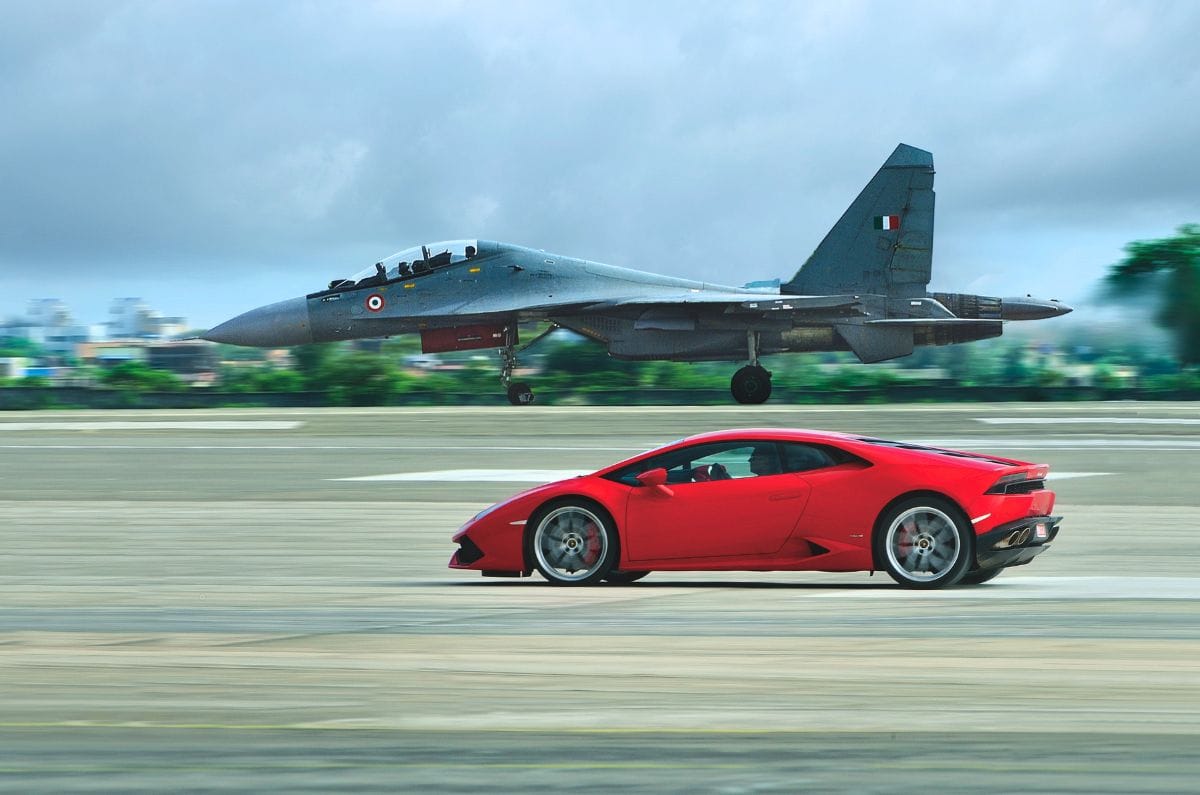
The relationship between airplanes and automobiles is deeply rooted in technological development. Many features now common in modern cars originated in military and commercial aviation. For instance, head-up displays (HUD), which help drivers keep their eyes on the road, have their blueprint in military aircraft used since the 1960s. These display systems are now standard in commercial planes like the Boeing 787 and various fighter jets.
Night-vision systems, initially developed for military aircraft in the 1960s and refined in the 1970s, found a place in luxury automobiles such as Cadillac and Mercedes-Benz. The first car to feature this tech was the Cadillac DeVille in 2000, which was co-developed with Raytheon, a major aerospace company. Such innovations demonstrate how aerospace technology has directly influenced vehicle safety features.
Global Positioning System (GPS)
The GPS technology, pivotal in navigation, was initially employed in military aviation in the 1970s. After a tragic incident involving Korean Air Lines flight 007 in 1983, the U.S. government made GPS data available for commercial use. Subsequently, GPS was integrated into airplane cockpits before becoming widely used in passenger vehicles by the 1990s.
Drive-by-wire and Steer-by-wire
Fly-by-wire technology in aircraft, used since the late 1950s, was adapted for automotive use with the BMW 750iL in 1987 as the first production car with drive-by-wire controls. This technology allows electronic signals to manage the engine and steering, replacing mechanical linkages. Notable implementations include Airbus A320’s flight control system and the steer-by-wire systems seen in vehicles like the Toyota bZ4X, Mercedes-Benz EQS, and Tesla Cybertruck, enhancing autonomous driving capabilities.
Anti-lock Braking System and Advanced Brakes
The concept of anti-skid braking systems (ABS), originating in WWII military aircraft in the 1940s and 1950s, was adapted into commercial cars by the 1970s. The Mercedes-Benz S-Class introduced the modern ABS in 1978, with aircraft using carbon brakes capable of withstanding high temperatures during deceleration, a principle that applies in high-performance vehicles today.
Electronic Stability Control and Structural Innovations
Stability control, derived from inertial measurement units (IMUs) used in fighter aircraft, became standard in cars with the Mercedes-Benz S600 Coupe in 1995. Additionally, monocoque construction, first pioneered by aircraft in 1912, has influenced modern car design, leading to lighter, more aerodynamic vehicles that incorporate carbon-fiber bodies and semi-monocoque architectures.
Active Aerodynamics and Air Ducts
Features like active aerodynamics, first seen in the Alfa Romeo 90 in 1984 and advanced in models like the Porsche 959, borrow directly from aircraft principles. Similarly, vortex generators and air ducts, initially used in military planes such as the Boeing B-47 and Gloster fighters, help improve vehicle stability and cooling by managing airflow.
Wind Tunnel Testing
Wind tunnels, vital for aircraft development since the early 20th century, have been adopted in automotive engineering since the 1920s. The Chrysler Airflow was one of the first production models tested in a wind tunnel, leading to optimized designs for performance and efficiency.
Overall, these technological crossovers from aviation to automobiles illustrate the continuous evolution and sharing of engineering innovations, enhancing safety, efficiency, and performance in both fields.

