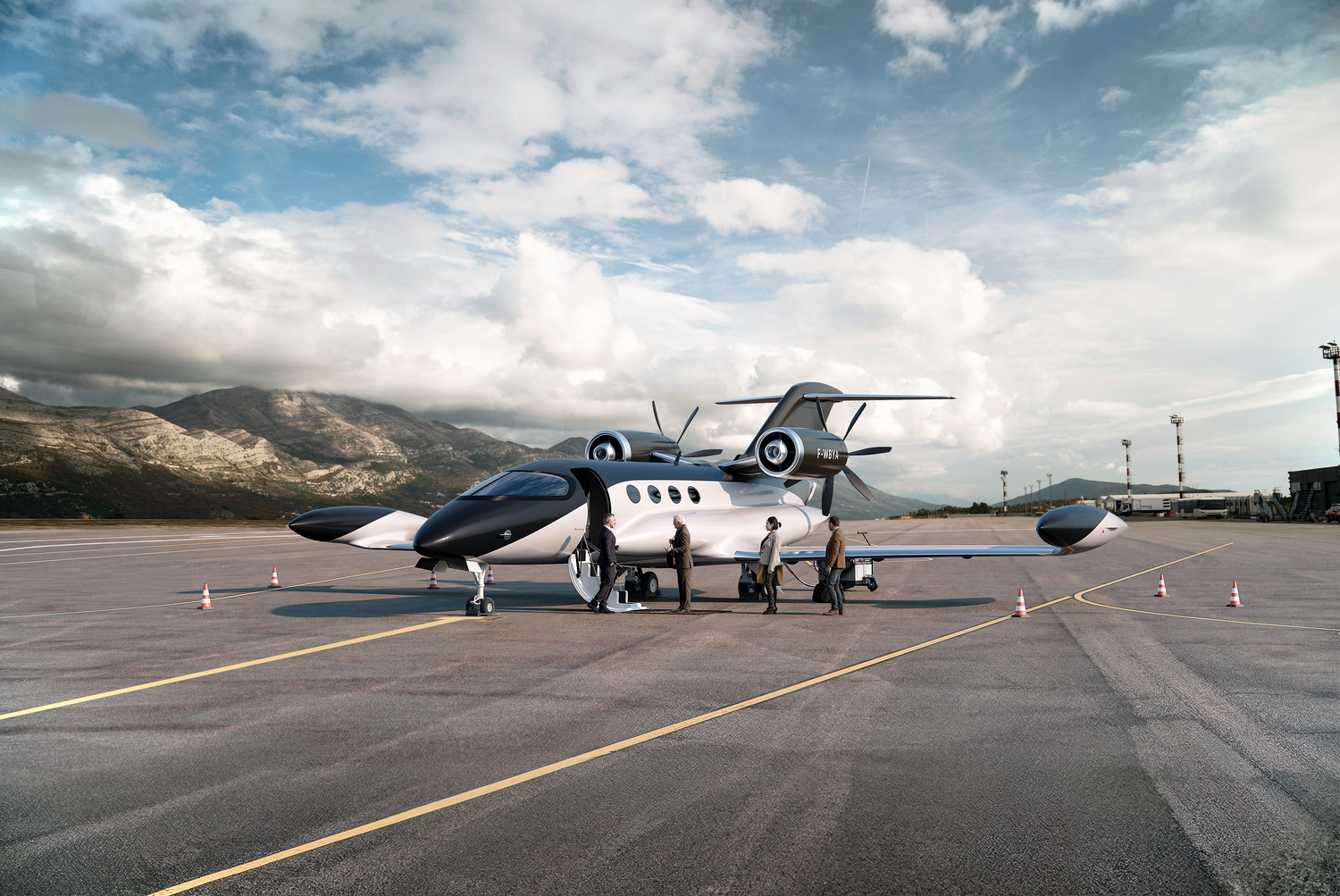
Beyond Aero has achieved a significant milestone by completing the Preliminary Design Review (PDR) for its hydrogen-electric business aircraft. This step marks the transition from early concept development toward detailed engineering and validation, confirming that key systems such as hydrogen storage, fuel-cell propulsion, thermal management, and safety architecture are now mature enough for certification planning.
The aircraft is being developed in accordance with existing regulatory standards like CS-25 and Part 25, which are used for commercial transport aircraft, to reduce vertical certification risks. Its design features a twin-prop layout powered by fuel cells, with gaseous hydrogen stored in high-pressure tanks positioned above the wing, a choice that simplifies storage and supports operational feasibility in the near term.
In addition, the design process considers infrastructure compatibility, supporting both static and mobile refueling systems while emphasizing safety through external tank placement that enables passive ventilation. Wind tunnel testing has verified aerodynamic performance, aligning experimental results with computational models, and positioning the program for its next engineering phases with minimized technical uncertainties.
The company also prioritizes certification within transport-category standards to facilitate long-term scalability. Collaboration with agencies such as the European Union Aviation Safety Agency (EASA) is ongoing, with validation efforts including flight testing of an 85 kW prototype and ground-level testing up to 1,200 kW. Industry partnerships across aerospace and engineering sectors are integral to de-risking development and fostering innovation.
Infrastructure planning is progressing through memoranda of understanding with airport operators and hydrogen suppliers, aiming to align aircraft deployment readiness with infrastructure deployment timelines. Overall, the PDR milestone underscores Beyond Aero’s commitment to advancing hydrogen-electric aviation, focusing on safety, certification pathways, and ecosystem development to support sustainable air transportation.

