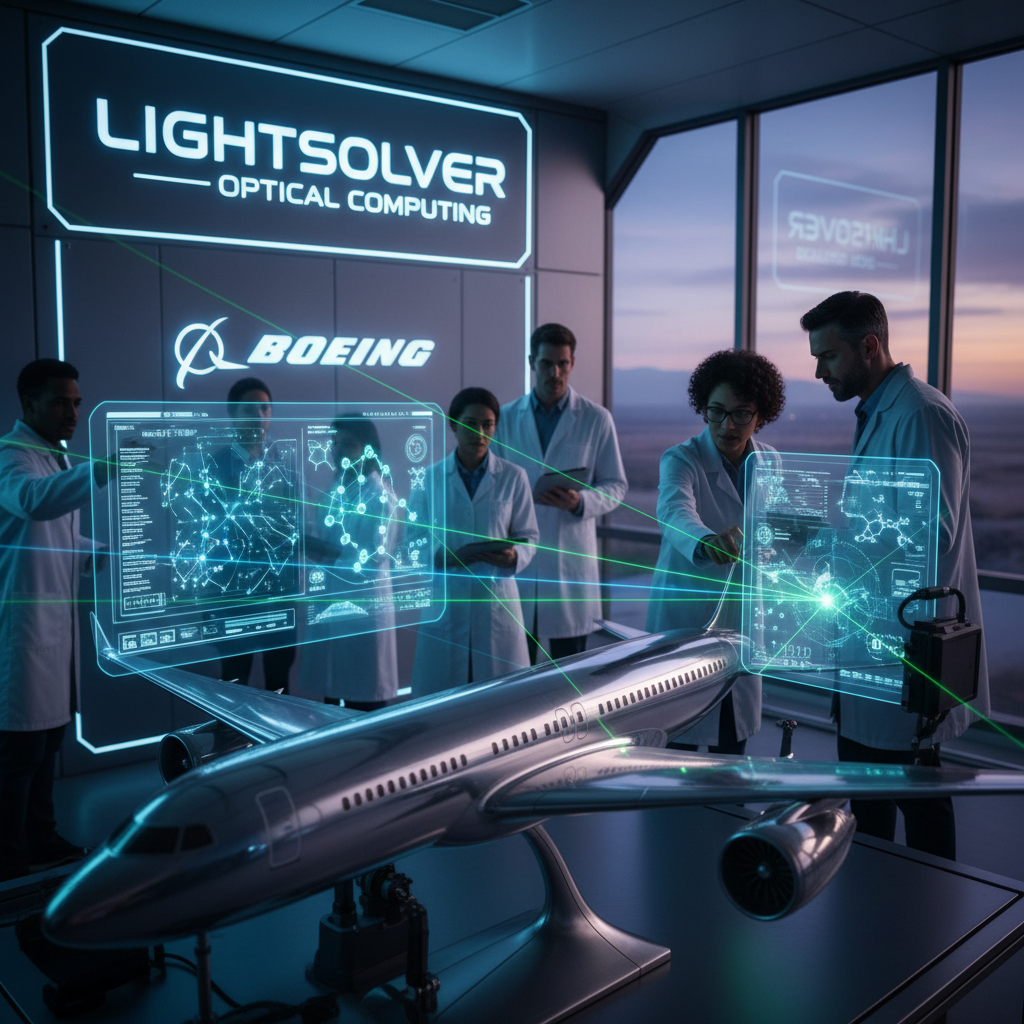
LightSolver, an Israeli startup, has developed an optical supercomputer that employs laser interference patterns to solve complex physics problems. Boeing has invested in this innovative technology to improve the simulation of structural material degradation in aircraft, which is vital for maintenance and lifespan extension. The laser-based supercomputer aims to provide more accurate and faster engineering analyses, potentially transforming aerospace R&D processes.
According to industry analysts, the application of laser interference patterns in supercomputing could significantly enhance the fidelity of simulations related to aircraft structural integrity. This investment by Boeing signifies a strategic move towards adopting advanced computational tools to address engineering challenges efficiently. The continued development of LightSolver’s technology could help aerospace manufacturers reduce costs and improve aircraft safety.
Graham Warwick, a prominent aerospace technology journalist, emphasizes the potential impact of this supercomputing approach. He states that LightSolver’s innovative use of lasers could revolutionize structural testing and materials science in aerospace, offering more precise insights into material performance under stress. As the aerospace industry increasingly relies on high-performance simulations, developments like this are expected to play a crucial role in future aircraft design and maintenance.

