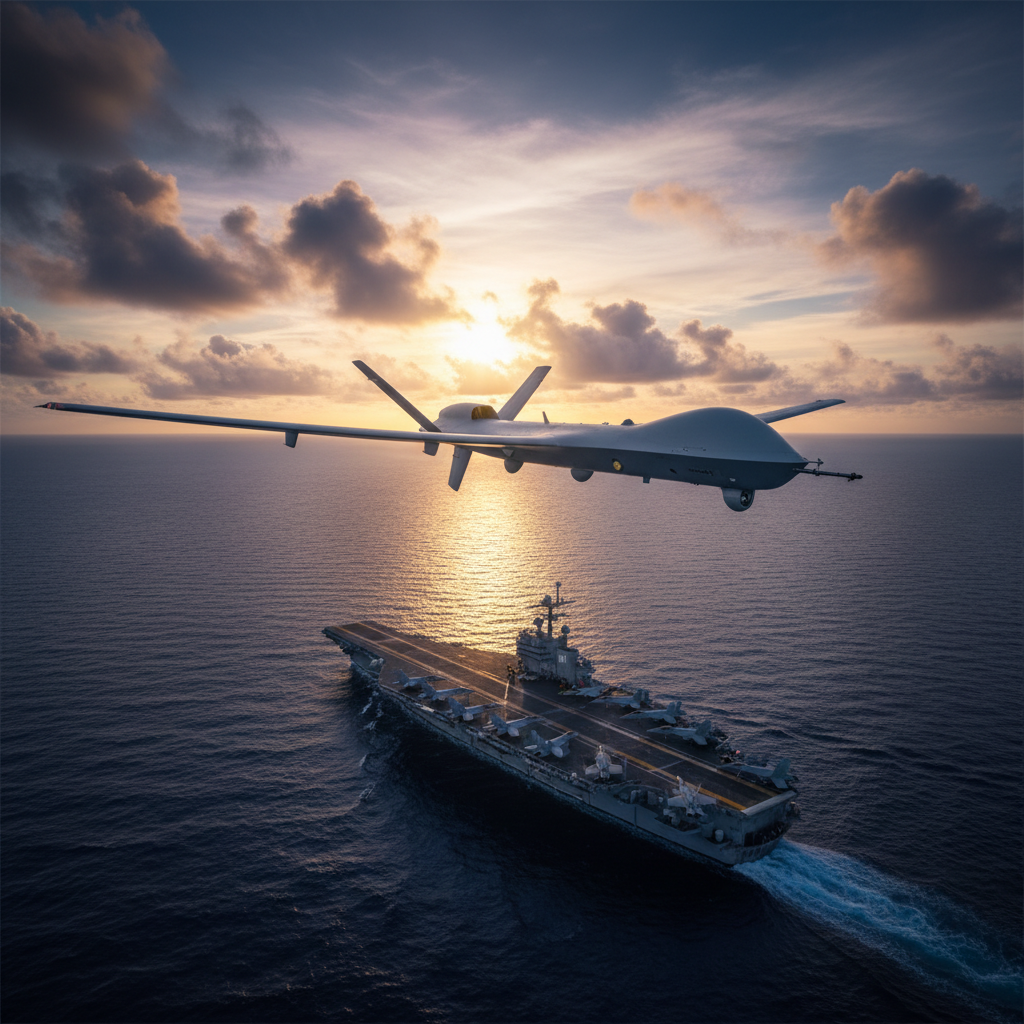
Boeing’s first autonomous MQ-25 Stingray tanker aircraft has successfully completed its initial flight, marking a significant step towards integrating the drone into U.S. Navy aircraft carrier operations. The flight took place on April 25 and is viewed as a crucial milestone in the process of deploying carrier-based refueling capabilities. Boeing’s MQ-25 is envisioned to extend the operational range of naval aircraft and reduce the workload on manned tankers.
The UAV’s development aims to expand roles beyond refueling, potentially involving surveillance and strike missions. The production-representative model of this drone has been under development for several years, with the recent flight demonstrating its readiness for further integration and testing.
Future Outlook
Steve Trimble, a military aviation analyst, highlighted that Boeing’s autonomous tanker could significantly enhance carrier strike group capabilities. Additionally, the article notes the ongoing efforts to upgrade various aircraft models, including the F/A-18 and other military platforms, to maintain fleet operational effectiveness.
This milestone comes amid broader modernization efforts within the U.S. Navy’s air wing and reflects the emerging trend of integrating unmanned systems into frontline operations. The successful flight paves the way for further testing, certification, and eventual operational deployment of the MQ-25 Stingray fleet, potentially transforming carrier aviation in the near future.

