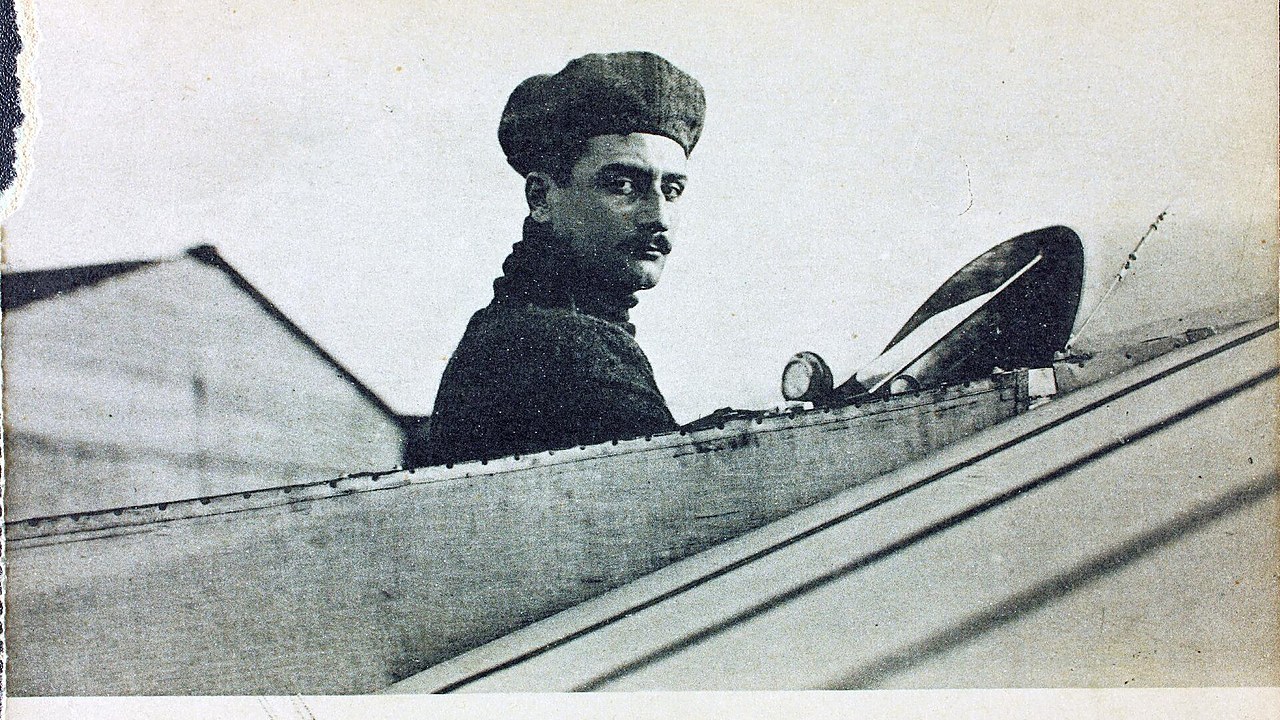
Roland Garros, born in 1888 on Réunion, was a French aviation pioneer known for the first non-stop flight across the Mediterranean in 1913. His daring crossing from Fréjus to Bizerte in a Morane-Saulnier G marked a significant milestone in early aviation history and made him a national hero. Garros's exceptional career included setting altitude records of 3,950 meters in 1911 and 5,610 meters in 1912, and pioneering the concept of firing a machine gun through a spinning propeller using deflector wedges.
During World War I, Garros became the first fighter pilot, achieving four confirmed aerial victories and playing a crucial role in early air combat development. His innovations, however, also led to his capture and imprisonment by German forces. After escaping from prison in 1918, he returned to combat, but was killed near Vouziers shortly before the war's end. His legacy extends beyond aviation; the Stade Roland Garros in Paris and the airport in Réunion bear his name, honoring his extraordinary contributions.
Legacy and Commemoration
Garros's legacy is remembered not only through historical records but also through the tennis stadium named after him, highlighting the rarity of an individual’s impact across different fields. His inscriptions and perseverance symbolize the spirit of innovation and resilience. His story continues to inspire both aviators and athletes worldwide, symbolizing victory through perseverance and ingenuity.

