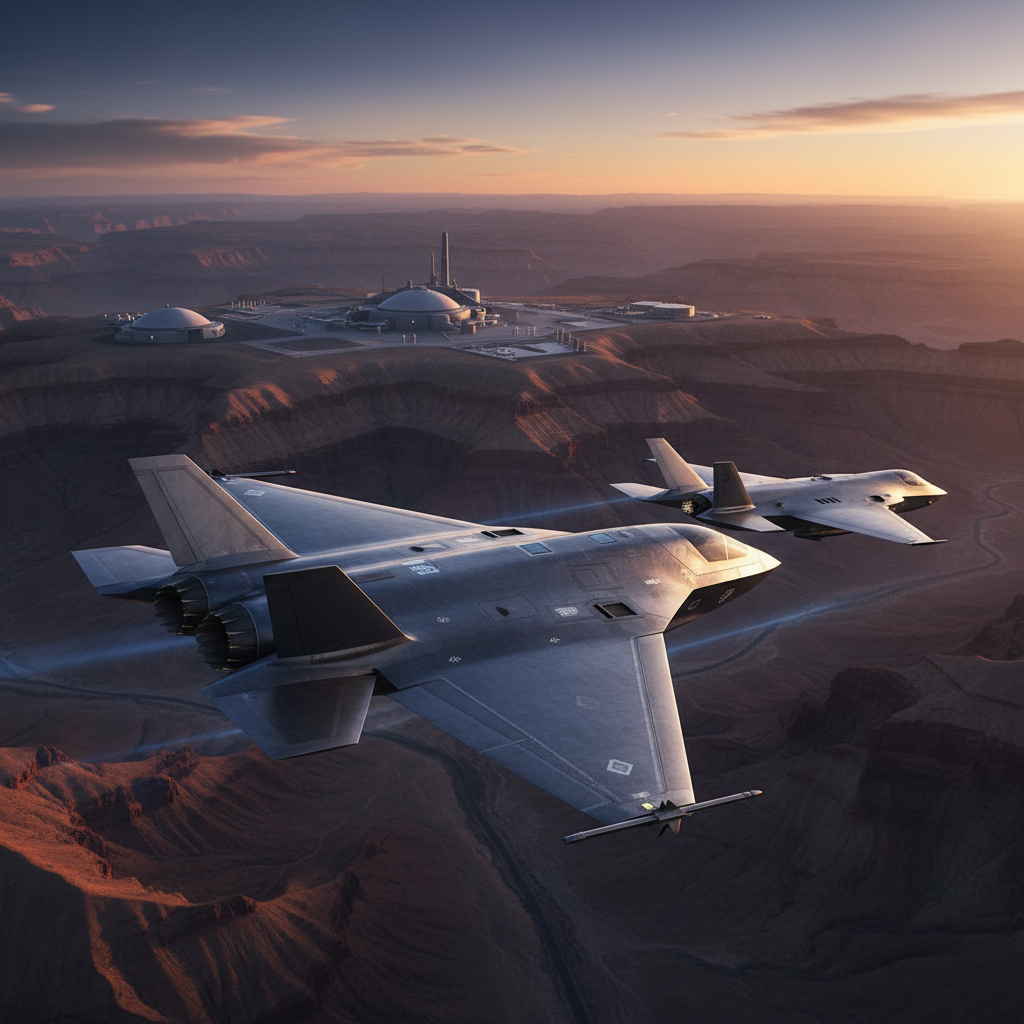
Advancements in autonomous technology are transforming military aviation, with a strong emphasis on the development of uncrewed Collaborative Combat Aircraft (CCA). Over the past five years, these systems have transitioned from conceptual to crucial elements of future air combat strategies, aiming to increase survivability, lethality, and force projection.
Industry leaders indicate that CCAs could operate collaboratively with manned aircraft, providing additional firepower and intelligence, and reducing risk to human pilots. This evolution aligns with a broader move towards automation and artificial intelligence in defense, promising to reshape tactics and operational efficiency.
Strategic and Technical Challenges
Integrating CCAs involves collaborative efforts among aerospace manufacturers and military organizations, addressing regulatory hurdles, technological integration, and operational doctrines. Experts believe that successful deployment will lead to lower costs, greater mission flexibility, and enhanced battlefield effectiveness.
The ongoing push for these aircraft underpins a strategic shift in defense planning, reflecting a future where autonomous systems play a vital role in maintaining tactical superiority. While still in development, the promise of CCAs signifies a new era in combat air power, poised to influence procurement and operational concepts in the coming decades.

