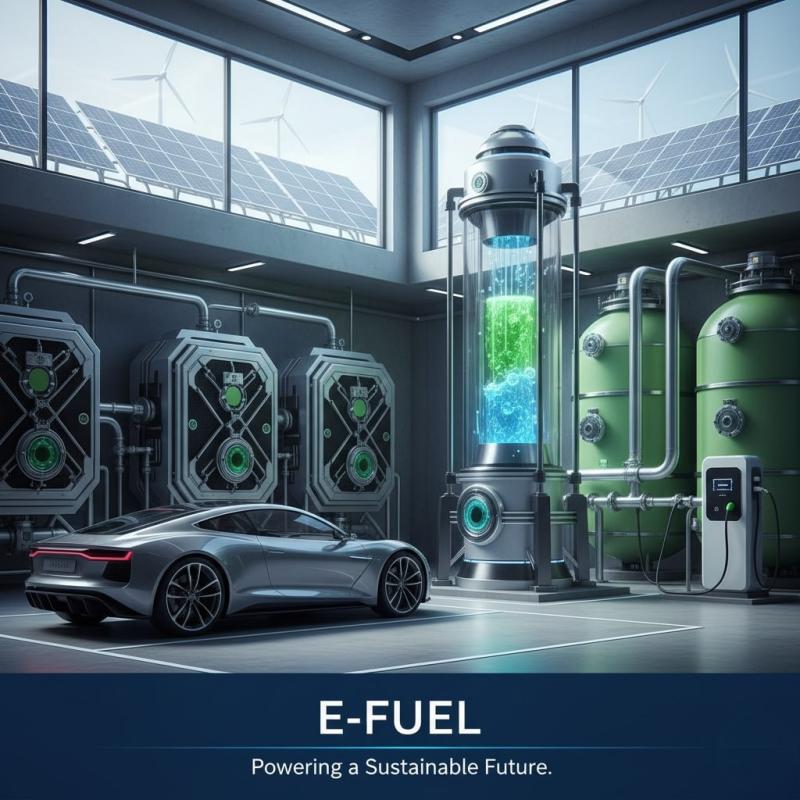
The global E-Fuel market is experiencing rapid growth, with projections indicating a rise from US$ 8.89 billion in 2024 to over US$ 215 billion by 2032. This expansion is fueled by stringent international policies aimed at reducing carbon emissions and increased governmental support for renewable energy-based fuel production. Technological advancements in electrolysis processes and Power-to-Liquid (PtL) methods are enabling scalable and drop-in compatible low-carbon fuels suitable for sectors such as aviation and shipping that are difficult to electrify.
Europe currently leads the market, with significant developments such as Norsk e-Fuel's full-scale e-kerosene production facility supported by European Union grants. Asia Pacific is recognized as the fastest-growing region, with countries like Japan, China, and India strengthening their R&D in hydrogen and e-fuels through government initiatives and regional collaborations. Major mergers include INERATEC's expansion via partnerships like the MoU with Chiyoda Corporation, emphasizing the combined focus on emerging markets and scalable production.
Key Market Drivers
Market growth is driven primarily by the implementation of emission regulations such as EU RED III, Fit-for-55, and ReFuelEU mandates requiring increased blending of sustainable aviation fuels (SAF) and e-fuels. Additionally, increased government incentives and funding, including billions in EU investments and subsidies elsewhere, are bolstering infrastructure and technology development. The generation of surplus renewable energy is being utilized through Power-to-X (PtX) technologies to diversify fuel sources, especially in aviation and maritime applications, where decarbonization remains a critical challenge.
"Technological innovations are at the forefront of reducing costs and enabling the commercialization of e-fuels on a large scale," said industry analysts.
Major corporations involved in this advancing market include Norsk e-Fuel, HIF Global, Porsche AG, Aramco, and Infinium. As the sector evolves, strategic collaborations and investments continue to play vital roles in scaling up production and technological capabilities, positioning e-fuels as a critical component in future decarbonization policies.

