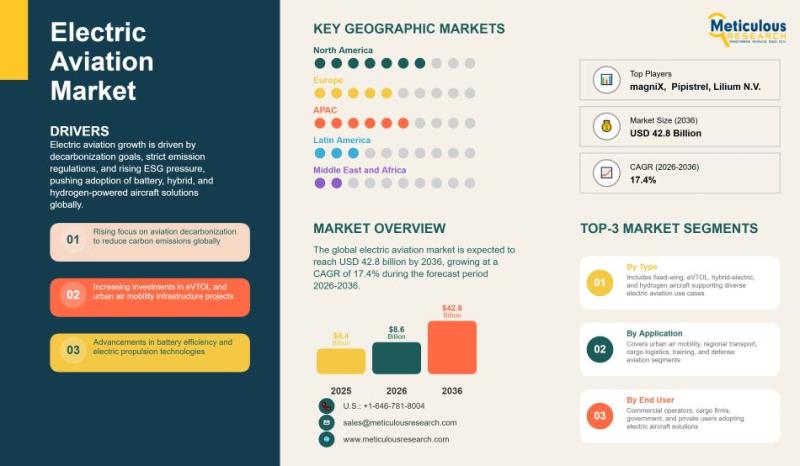
The global electric aviation market is projected to reach USD 42.8 billion by 2036, driven by increasing emphasis on sustainability and urban mobility solutions. As the industry transitions from pilot projects to commercial operations, advancements in electric propulsion, certification processes for eVTOL aircraft, and expanding infrastructure are key factors supporting this growth. The market encompasses various aircraft types, including fully electric fixed-wing planes and robotic urban mobility aircraft, which are expected to see rapid adoption in upcoming years.
Regionally, North America is leading the early phase due to its technological edge and investment activity, while the Asia-Pacific region is forecast to experience the fastest growth, fueled by urban expansion and government policies promoting air mobility. The focus on electric cargo aircraft is also increasing, with logistics companies seeking sustainable and efficient last-mile delivery options. Innovations such as hybrid-electric systems are extending aircraft operational ranges, making electric aviation more viable across different applications.
Overall, the market is entering a mature phase where broad commercialization is imminent. The combination of environmental policies, technological breakthroughs, and favorable investment climate is set to make electric flight a significant component of future air transportation networks, enhancing efficiency while reducing carbon emissions.

