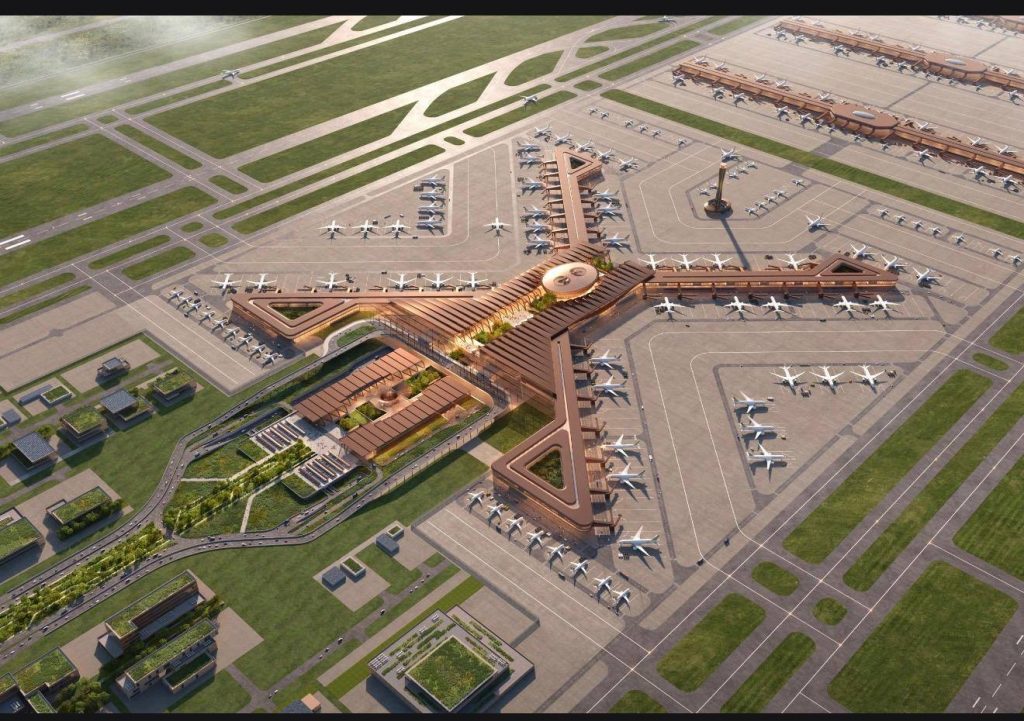
Ethiopia has officially launched its new Bishoftu International Airport, a major infrastructure project intended to bolster the nation’s transportation sector and regional connectivity. Prime Minister Abiy Ahmed inaugurated the project, which represents a $10 billion investment, with aims to relieve congestion at the existing Bole International Airport near Addis Ababa and accommodate future air traffic growth.
The new airport is designed to handle 60 million passengers annually in its initial phase, with plans to expand capacity to 110 million. This development includes the construction of multiple runways, expansive terminal buildings, cargo facilities, and a supporting Airport City comprising hotels, offices, and logistics hubs. Once fully operational, the facility is expected to manage 3.73 million tons of cargo per year. Ethiopian Airlines anticipates that international flight operations will begin by 2030, with phased operational readiness by late 2029.
Funding and Strategic Impact
The financing effort is led by the African Development Bank, which has committed $500 million, with additional funding being mobilized globally. Authorities believe the project will elevate Ethiopia’s profile as a regional aviation hub, stimulate economic growth, create jobs, and deepen integration within the African continent, especially under frameworks like the AfCFTA.
The project incorporates an integrated transport infrastructure and aims to position Ethiopia as a key player in Africa’s modernization and regional economic development efforts. The Bishoftu Airport signifies Ethiopia’s strategic push towards building sustainable, large-scale aviation infrastructure that will support economic and social development for decades to come.

