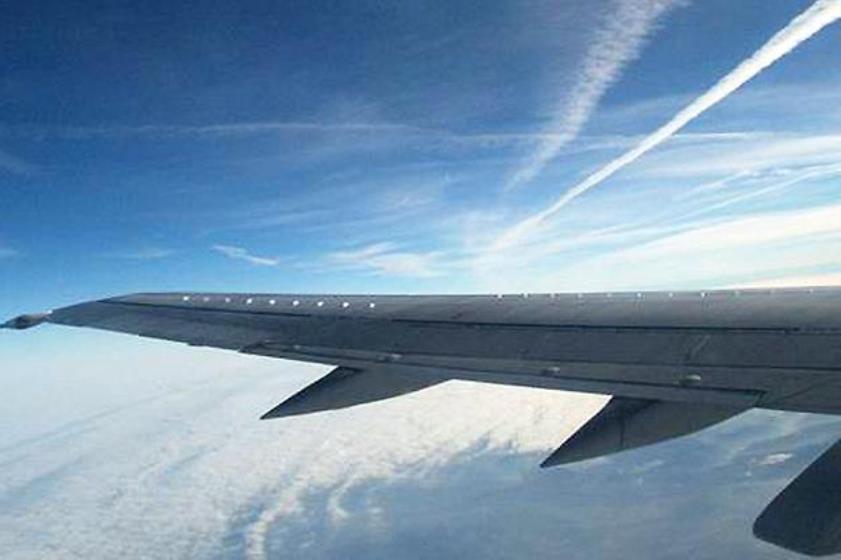
The European Union Aviation Safety Agency (EASA) has published a comprehensive report from its Aviation Non-CO2 Expert Network (ANCEN), which highlights critical uncertainties in understanding the climate impacts of non-CO2 aviation emissions. While these emissions significantly contribute to overall radiative forcing, several areas such as contrails, aerosols, and nitrogen oxides show high levels of scientific uncertainty. The report emphasizes the importance of targeted research to improve the precision of climate impact assessments and mitigation strategies.
This report, supported by the EU's Horizon Europe program and prepared by Task Group 4, includes insights from a diverse group of stakeholders, including scientists, aircraft manufacturers, fuel producers, and policymakers. The goal is to develop effective measures to reduce aviation’s overall climate footprint, considering the full spectrum of emissions and their interactions.
Key Areas of Uncertainty
The report identifies four major areas of uncertainty: contrail and cirrus cloud formation, indirect aerosol effects, NOx impacts, and small-scale forcings such as sulphur and soot. Limitations in atmospheric data, observational gaps, and climate modeling constraints contribute to these uncertainties, complicating mitigation efforts that might shift impacts elsewhere in the climate system.
To address these challenges, the report advocates prioritizing research in observational accuracy and modeling sophistication. Current contrail cloud models are acknowledged to be rudimentary, leading to large uncertainties. Improved, more detailed simulations are needed for better understanding and prediction of these climate effects.
Practically, efforts are underway to minimize contrail formation through flight rerouting technology. For example, Thales and Amelia have initiated projects modifying flight altitudes to reduce contrail formation on routes between Paris and Valladolid, estimating significant reductions in CO2 equivalent emissions. Additionally, a trial by American Airlines and partners used satellite data to optimize flight paths, achieving over 60% reductions in observable contrail formation, demonstrating operational feasibility.
The report concludes by stressing continued international collaboration among scientists, aviation industry, and regulators to develop mitigation solutions. Ongoing research, improved observational techniques, and modeling are essential to better understand and address the climate impacts of aviation's non-CO2 emissions.

