EU Court: Airlines Must Justify Delay Exemptions Beyond ATC Instructions
EU Court: Airlines Must Justify Delay Exemptions Beyond ATC Instructions
Trending
|
2 days ago
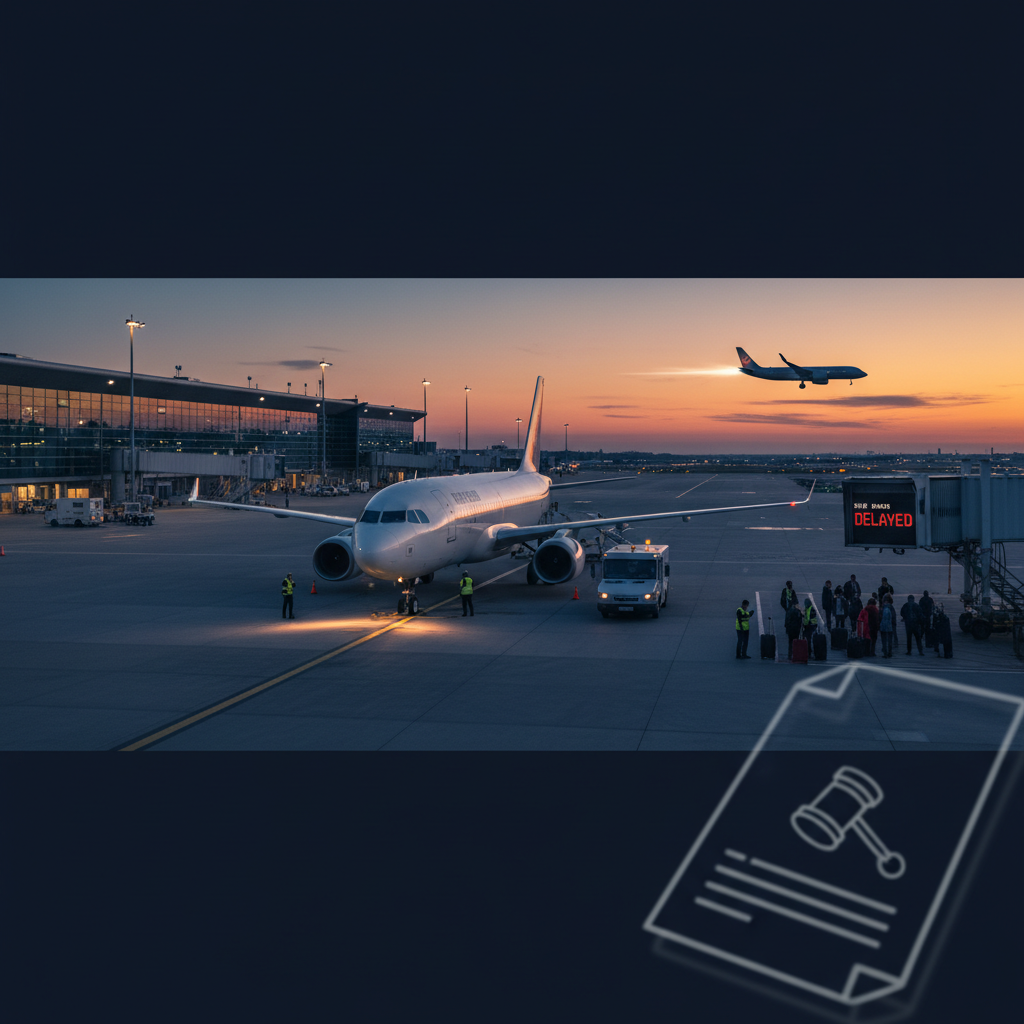
October 9, 2026 — European Union’s highest court, the Court of Justice of the European Union (CJEU), ruled yesterday that airlines cannot automatically refuse to compensate passengers for flight delays by merely attributing the cause to air traffic control (ATC) instructions. The judgment clarifies that carriers must demonstrate the underlying reason for any traffic restriction falls outside their normal operations and control to avoid payouts.
The decision came after a Warsaw court sought guidance on applying EU law regarding passenger compensation, specifically in a case involving LOT Polish Airlines.
Redefining "Extraordinary Circumstances"
The CJEU’s ruling overturns a previous interpretation by the General Court, which had allowed airlines to cite air traffic restrictions as an "extraordinary circumstance" regardless of the cause, provided the airline had not contributed to the decision. The higher court found this approach made it too easy for airlines to evade their compensation obligations under EU Regulation 261/2004.
According to the CJEU, simply following an air traffic controller’s instruction is considered an everyday part of flying. To be exempted from compensation, airlines must now demonstrate that the reason for the ATC instruction itself constitutes an extraordinary circumstance. This means the problem must be genuinely outside the airline's typical operational control.
Case Focus: LOT Polish Airlines
The specific case that led to this clarification involved DelayFix, a company that pursues passenger claims, seeking 400 euros (approximately $448) plus interest from LOT Polish Airlines for a delayed flight. The airline had attempted to avoid payment by citing air traffic control restrictions.
While the court noted that severe weather remains a valid defense as it is entirely outside an airline’s control, it stressed that the Polish judge handling the LOT case would need to verify if the weather conditions cited for that particular delay indeed qualified as an extraordinary circumstance. Furthermore, LOT must prove it took all reasonable measures to prevent or mitigate the disruption.
Implications for Passengers and Airlines
Claudia Bischof, an aviation law specialist at Lindbergh Legal, commented on the ruling, stating that it does not broadly expand passenger rights but rather ensures the correct and consistent application of existing exemptions. Passengers facing delays of three hours or more are typically entitled to compensation ranging from 250 to 600 euros under EU law, depending on the flight distance.
The judgment underscores the importance for airlines to thoroughly investigate and document the precise causes of delays attributed to air traffic control. Merely receiving an instruction to hold or delay from ATC will no longer be sufficient justification to deny compensation claims; a deeper explanation of the root cause will be required.
The ruling is available in full here.

Share to:
Latest news
powered by We Do Dev Work 
We use cookies and similar technologies to enhance your Browse experience, personalize content and ads, provide social media features, and analyze our traffic. By clicking 'Accept All' or continuing to use our website, you consent to the use of cookies as described in our Cookie Policy