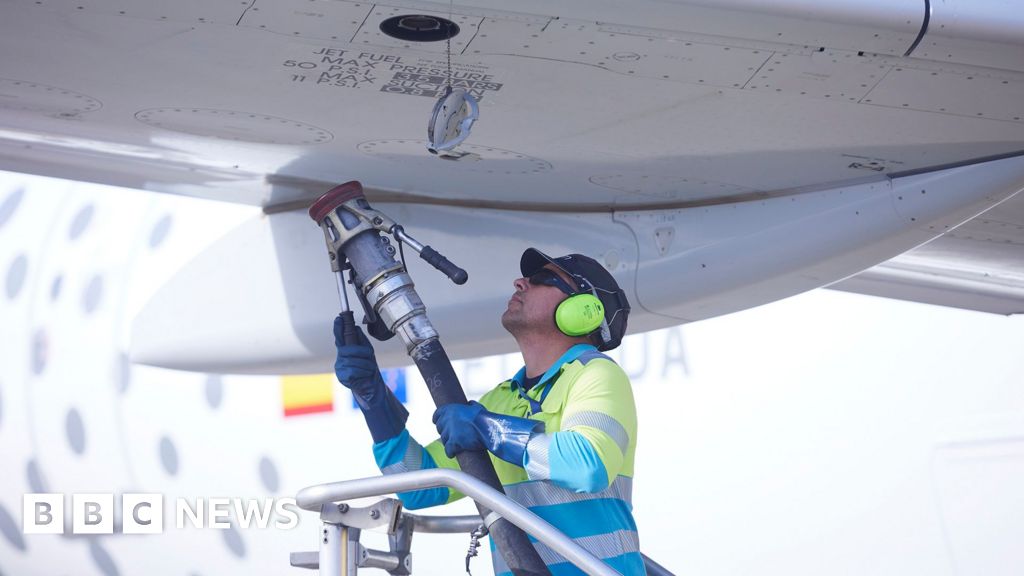
European aviation authorities have issued a warning about potential jet fuel shortages within three weeks if the Strait of Hormuz remains closed. The trade organization for European airports, Airports Council International (ACI) Europe, highlighted that the Persian Gulf region supplies about 50% of Europe's aviation fuel imports. As the summer tourism season approaches, concerns about fuel availability are mounting, especially for smaller airports that are more vulnerable to disruptions.
In a letter addressed to European energy and tourism officials, Olivier Jankovec, the director-general of ACI Europe, warned that a significant and stable reopening of the Strait of Hormuz is essential to prevent systemic shortages that could severely impact airport operations and air connectivity across the continent. The organization states that if the passage does not resume in the next three weeks, a crisis in jet fuel supplies is imminent, posing economic risks for both communities and the broader European economy.
Impacts on Airlines and Fuel Market
Several airlines worldwide have already taken measures such as cutting flights and increasing passenger charges due to fuel supply concerns. The European jet fuel price recently reached an all-time high of $1,838 (£1,387) per tonne, surpassing the pre-war price of $831, indicating rising costs and market tensions. Jankovec emphasized the need for EU intervention, criticizing the lack of coordinated assessment and monitoring of jet fuel production and availability. He called for collective purchasing strategies and temporary lifting of import restrictions to stabilize supplies.
The letter also advocates for increased support for sustainable aviation fuel (SAF) production and affordability, viewing the current crisis as a catalyst for long-term fuel strategy reforms. Jankovec noted that airports with fewer than one million passengers annually are already struggling financially, and the ongoing fuel crisis might further jeopardize their viability and exacerbate regional disparities.
European economies benefit significantly from air travel, contributing €851 billion (£741 billion) annually to GDP and supporting 14 million jobs. The resolution of the fuel supply issue is thus critical not only for industry stability but also for maintaining European cohesion and economic resilience.

