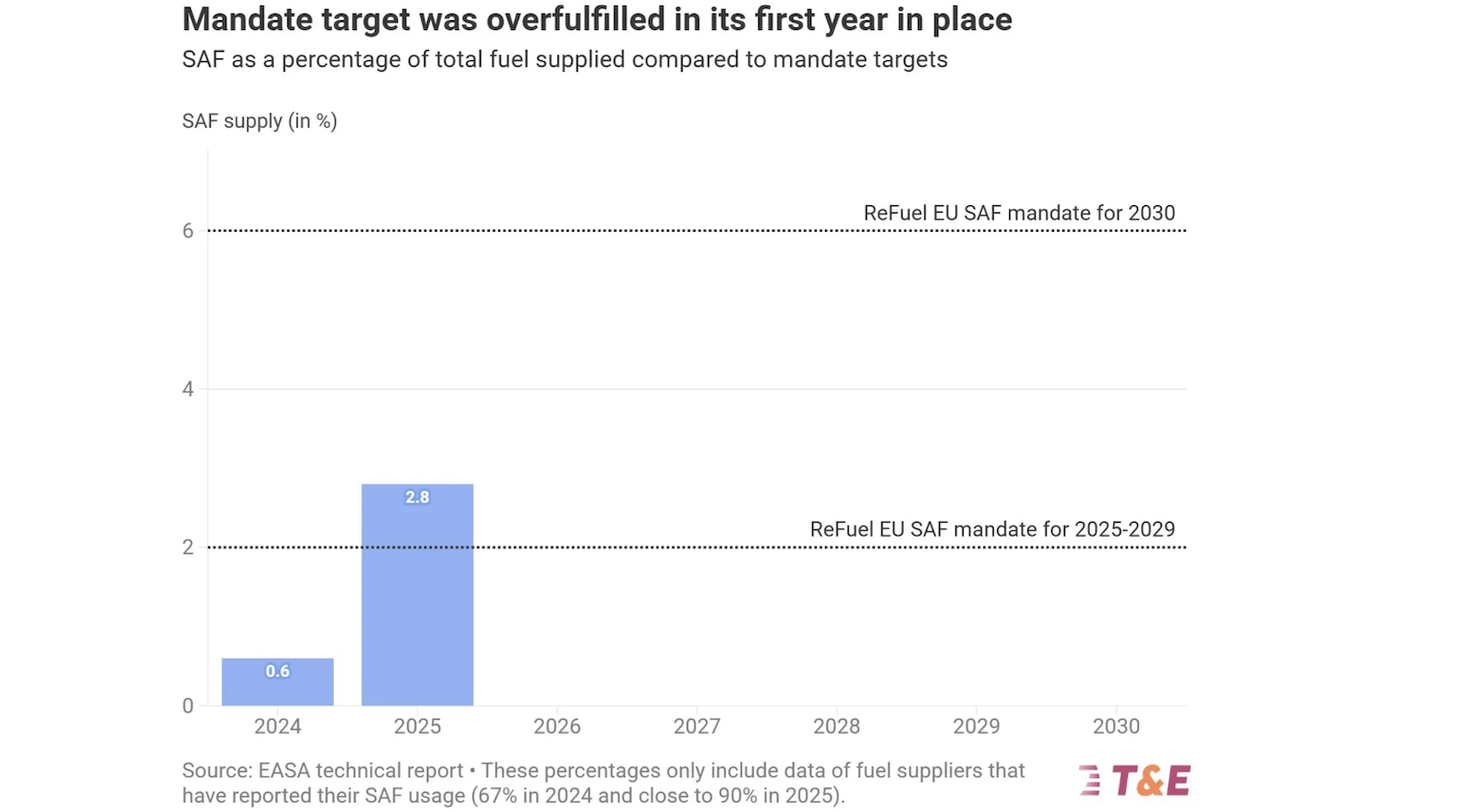
The European Union Aviation Safety Agency (EASA) released its annual technical report on ReFuelEU Aviation for 2025, providing insights into the progress of sustainable aviation fuel (SAF) in Europe. The report states that in 2025, around 1.1 million tonnes of SAF were supplied at European airports, surpassing the mandated 2% target with a 2.8% share of total aviation fuel, demonstrating the efficacy of the regulation in accelerating market adoption.
Despite this success, the report identifies significant challenges in the supply chain. The majority of SAF is produced from hydroprocessed esters and fatty acids (HEFA), predominantly utilizing waste oils and fats, with used cooking oil remaining the leading feedstock. However, the reliance on imports—mainly from China—raises concerns about supply security and sustainability. The use of other problematic feedstocks, such as animal fats and POME, adds further environmental and ethical issues.
Investment and policy gaps
The report highlights a stark gap in investment for synthetic aviation fuels (e-SAF). Although around 60 projects are under development, none has reached a final investment decision. The report recommends maintaining a stable regulatory environment, exploring de-risking measures, and fostering demand through market mechanisms to accelerate synthetic fuel production.
Overall, the findings call for strategic policy enhancements and diversified feedstock sourcing to ensure the long-term sustainability of Europe's decarbonization efforts in aviation, moving beyond reliance on imported waste oils towards truly sustainable fuel pathways.

