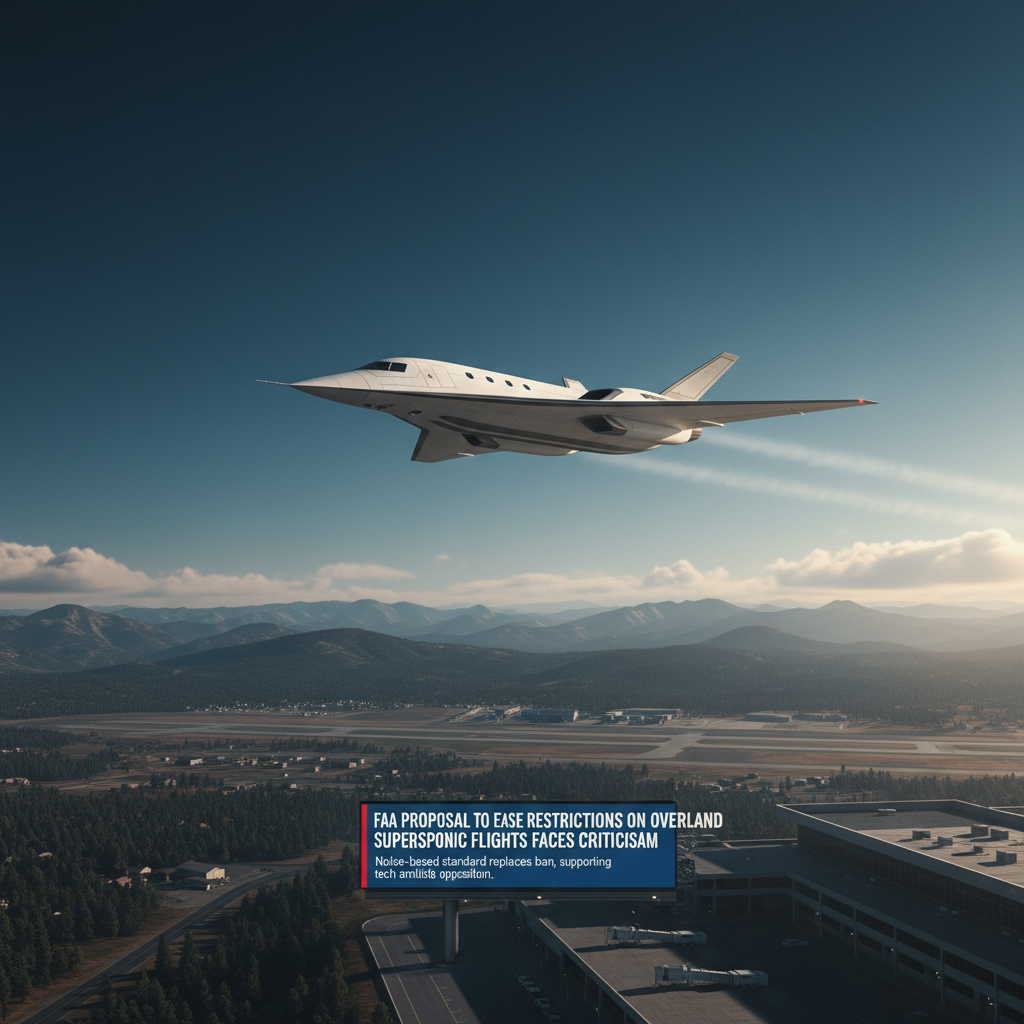
Recently, the Federal Aviation Administration (FAA) introduced a proposal to replace the decades-old U.S. ban on overland supersonic flights with a performance-based noise standard. This regulatory shift is part of an effort to support the development and operation of faster commercial aircraft by focusing on noise impact rather than speed.
Industry stakeholders such as Boom Supersonic have welcomed the proposal, viewing it as a positive move to encourage innovation in aviation. The initiative aligns with a broader governmental strategy aimed at modernizing aviation regulations and facilitating the deployment of advanced aircraft technologies.
Background and Industry Impact
The current ban, which has been in effect for over fifty years, has primarily been justified by concerns over sonic booms and noise pollution. The new standards seek to address these concerns by setting performance criteria that could allow certain supersonic aircraft to operate more freely within U.S. airspace.
"The move to noise standards instead of outright bans offers a realistic pathway for supersonic aircraft to re-enter the U.S. market," said industry experts familiar with the proposal.
While supporters see this as an opportunity to revolutionize air travel times, critics raise concerns about the potential impacts on communities affected by noise. The debate demonstrates the balancing act between technological progress and environmental and social considerations.
In summary, the FAA's proposal marks a significant policy development in aviation regulation, promising to support industry innovation while requiring careful management of community and environmental impacts.

