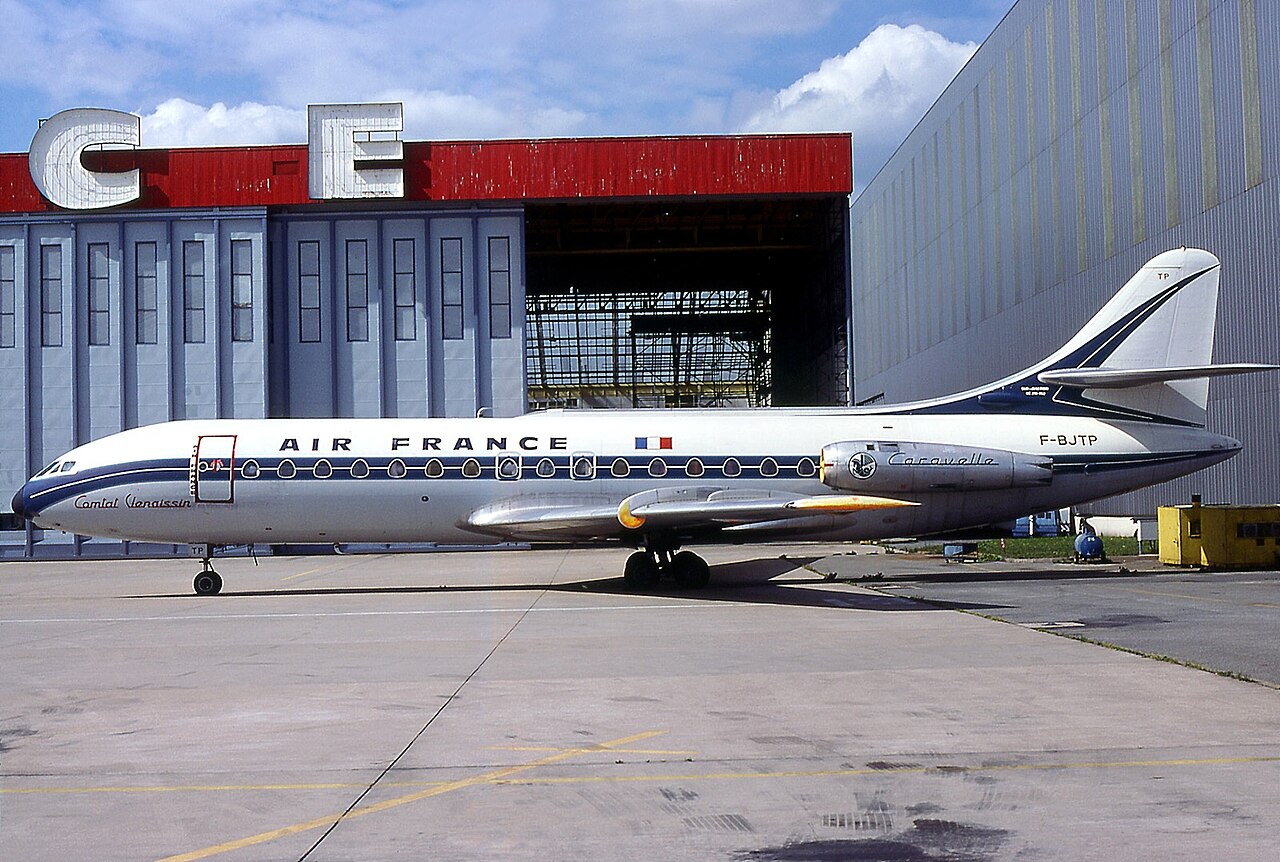
The Sud Aviation Caravelle was a groundbreaking French jetliner that marked a significant milestone in commercial aviation history. First flown in 1955 and entering service by 1959, it was the first successful short- and medium-haul jet aircraft with rear-mounted engines, a design innovation that would influence aircraft development for decades.
The aircraft's distinctive feature was the placement of two Rolls-Royce Avon turbojets at the rear fuselage, leaving the wings unobstructed and the cabin environment notably quieter. This layout allowed for a more aerodynamically efficient wing and a cleaner silhouette, setting a template widely adopted by aircraft such as the Douglas DC-9, Boeing 727, and Fokker F28.
Manufacturing a total of 282 units until 1972, the Caravelle's influence extends beyond its production numbers. It demonstrated that efficient, reliable, and elegant jetliners could be designed for shorter routes, expanding the viability of jet travel in regions previously limited to piston-powered aircraft. The aircraft's legacy endures today through the many models that adopted its rear-engine configuration, acknowledging its pioneering role in modern aviation.

