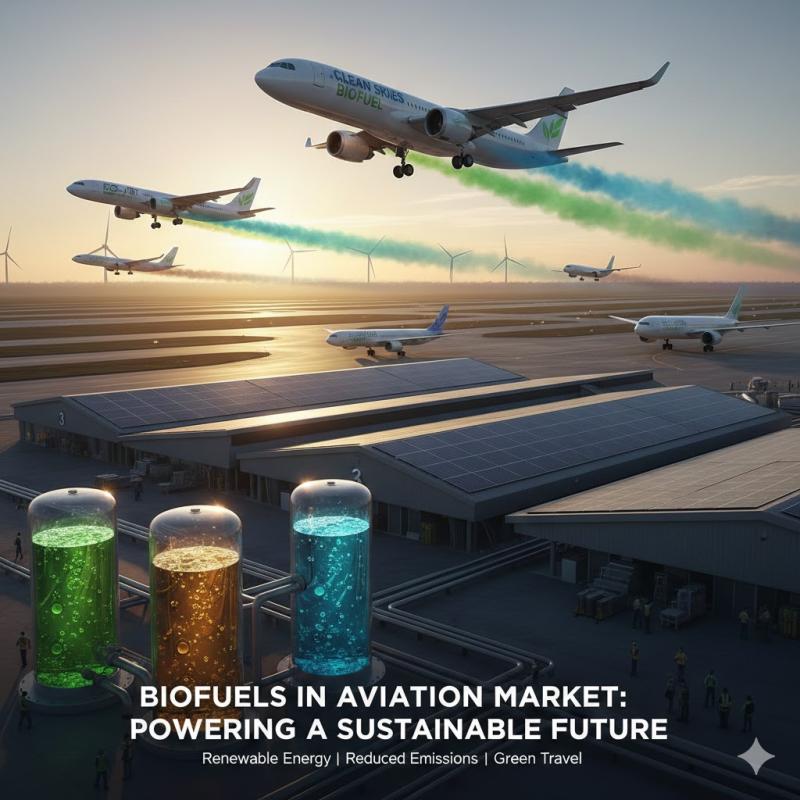
The global biofuels market in aviation has recently achieved new heights, driven by the efforts of major industry giants to develop and adopt sustainable aviation fuels (SAF). A comprehensive study conducted by HTF Market Intelligence details the market landscape from 2025 to 2032, highlighting the growth trajectory from 1.5 billion USD to an estimated 2.8 billion USD by the end of the period.
The industry’s primary focus is on SAF produced from waste oils, fats, biomass residues, and synthetic pathways, aiming to significantly lower lifecycle emissions. This shift aligns with the aviation sector’s commitments to reduce carbon footprints and achieve net-zero targets, supported by regional policies and incentives.
Market Dynamics and Key Players
Leading companies such as Neste, Velocys, Fulcrum BioEnergy, Aemetis, and Marathon Petroleum are actively investing in biofuel production, scaling HEFA (Hydroprocessed Esters and Fatty Acids) capacity and developing supply chain collaborations. The market is primarily dominated by North America, with Europe identified as the fastest-growing region, owing to increasing regulatory support and technological advancements.
"The expansion of SAF production and adoption is crucial for the aviation industry to meet its decarbonization goals," said a spokesperson from HTF market research.
Challenges include feedstock supply constraints, certification hurdles, and infrastructure gaps, yet the industry presents numerous opportunities through government incentives, regional hubs, and innovative fuel blending technologies. The report segments the market by fuel type and application, encompassing commercial, military, private, cargo, and regional operations.
As the industry navigates these trends, strategic planning and technological innovation remain essential. The detailed analysis provides stakeholders with insights into the competitive landscape, growth strategies, and future market opportunities.

