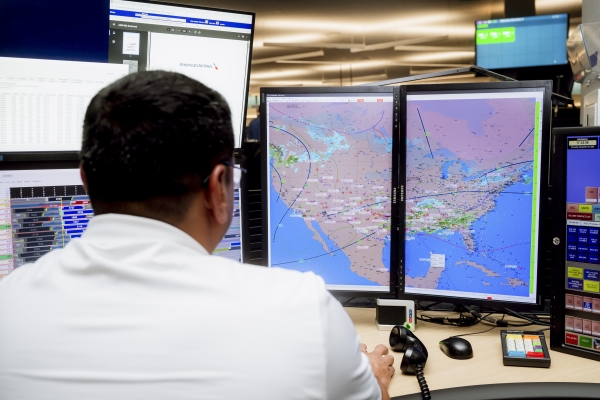
Airline operations centers are vital for managing disruptions and ensuring smooth flight operations, as exemplified by American Airlines’ Dallas-Fort Worth hub. This facility oversees real-time logistics, from handling medical emergencies on flights to reassigning crews and passengers, thereby minimizing delays and cancellations. With around 1,700 staff working 24/7, the center coordinates efforts across various teams to maintain airline punctuality and safety.
During a recent incident, a medical emergency aboard Flight 27 led the Texas operations team to divert the aircraft to San Francisco. They meticulously managed crew rest periods, passenger accommodations, and operational scheduling, exemplifying the intricate logistical planning involved in airline operation centers.
Such centers are also crucial for strategic management, including responding to software updates and handling multiple emergencies simultaneously. By leveraging advanced digital tools, these centers rapidly rebook affected passengers—up to 75% within 12 minutes—while collaborating with external entities like air traffic control and partner airlines.
American Airlines’ focus on operational efficiency reflects its aim to improve profitability and customer satisfaction amidst industry competition from Delta and United. Maintaining high standards in punctuality and minimizing cancellations remains a priority, with the operations center playing an essential role in achieving these objectives.
Overall, airline ground operations have become sophisticated entities central to the aviation industry's resilience and reliability. Their effective management ensures safety, enhances customer experience, and sustains airline profitability in a highly competitive environment.

