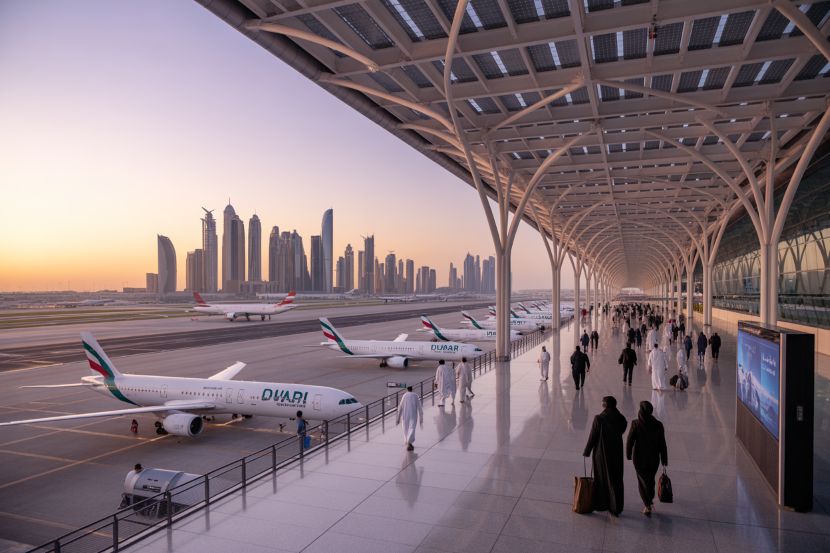
The Middle East, with Dubai, Riyadh, and Doha at its core, is emerging as a dominant force in international aviation. Regional carriers are experiencing rapid expansion, focusing on long-haul routes, advanced fleets, and digital transformation to reshape air travel worldwide. Despite accounting for a small portion of global GDP, Middle Eastern countries control a significant share of airline capacity. Major airports such as Dubai International and Hamad International in Doha serve as vital hubs that exemplify the region's expanding influence.
According to Boeing's Commercial Market Outlook, passenger traffic in the Middle East is projected to grow annually by 4.4% until 2044, far outpacing global averages. This growth underscores the region’s strategic geographic placement, substantial investments, and future-oriented vision. Dubai's Al Maktoum International is poised to become the world’s largest airport with a capacity of 260 million passengers annually, complemented by new expansions at Abu Dhabi's Midfield Terminal and Riyadh’s King Salman International Airport, which is expected to handle up to 120 million passengers by 2030. These developments aim to solidify the Middle East as a global aviation crossroads.
Central to the region’s growth are widebody aircraft, which facilitate long-haul operations from hub airports. Airlines like Qatar Airways, Emirates, and Etihad Airways utilize these aircraft to connect distant markets efficiently using a hub-and-spoke model. The influx of fuel-efficient aircraft models into their fleets will further extend their reach into new territories while improving operational efficiency.
Meanwhile, regional networks are expanding with single-aisle aircraft, mainly Boeing 737 MAX models, for point-to-point routes. Forecasts anticipate the delivery of 1,430 new single-aisle aircraft between 2025 and 2044, emphasizing both regional demand and the ability of Gulf carriers to offer high-quality services within Asia, Africa, and Europe.
Sustainability investments are also a priority for Middle Eastern airlines. The adoption of fuel-efficient aircraft, sustainable aviation fuels, and government-driven initiatives on renewable energy, hydrogen research, and carbon reduction are part of a broader strategy to lower emissions and operate more sustainably. These efforts aim to position the region as a leader in environmentally responsible aviation, balancing growth with ecological stewardship.
For travelers, these developments translate into improved hub facilities, new routes, and eco-friendly options. Major airports are continuously enhancing services, offering travelers efficient and sustainable travel alternatives. The future of Middle Eastern commercial aviation appears promising, with industry leaders setting the pace for technological innovation, infrastructure upgrades, and sustainable practices, ensuring their role as key global aviation players for years to come.

