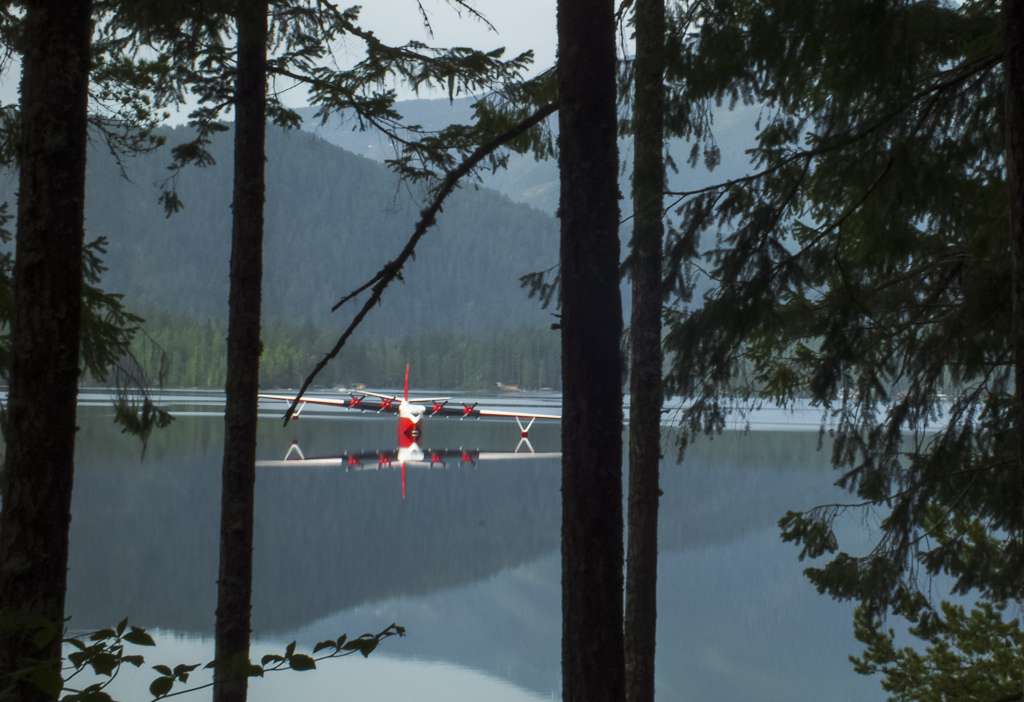
In August 2024, the Hawaii Mars, one of the last two Martin Mars flying boats, completed its final flight, marking the end of a storied 78-year career. Originally built in 1941 as a U.S. Navy patrol bomber, the aircraft was later converted into a firefighting water bomber and served extensively across British Columbia, dropping approximately 50 million gallons of water to combat wildfires.
This massive aircraft, designed with a 200-foot wingspan and powered by four radial engines, transitioned from military use to firefighting in 1960. As a water bomber, it became renowned for its ability to scoop large quantities of water from lakes and deploy them across fire-affected areas, playing a crucial role in wildfire suppression for over five decades.
On its final day, the aircraft flew a farewell circuit over Sproat Lake before being presented at the British Columbia Aviation Museum. Visitors can now view and explore the aircraft’s hull and sit at its controls, preserving its legacy for future generations.
The Hawaii Mars exemplifies the ingenuity of aeronautical engineering and the importance of versatile aircraft in emergency response efforts. Its retirement marks the conclusion of an era, but its contributions to firefighting history remain significant and enduring.

