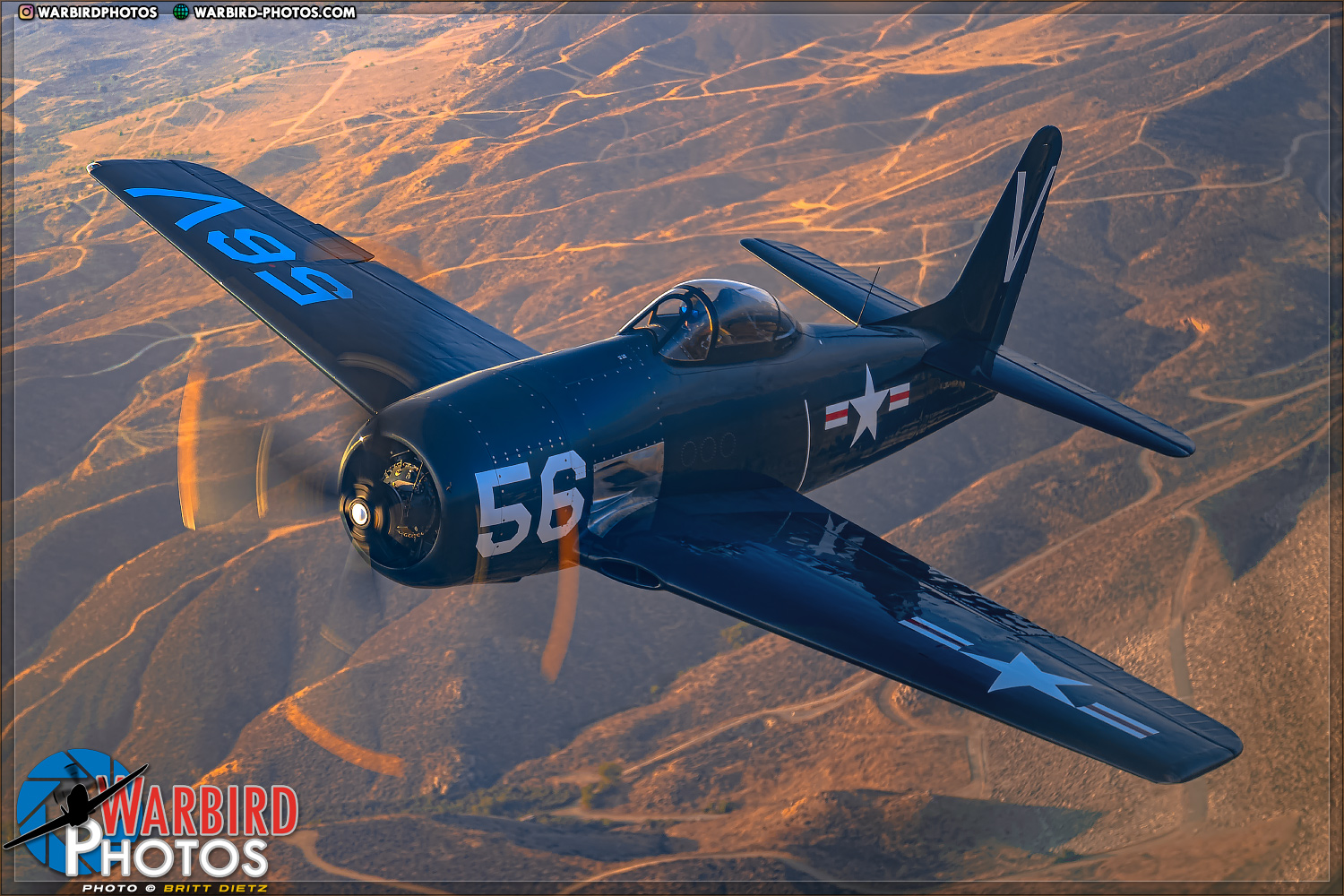
On December 31, 1944, the Grumman F8F Bearcat officially entered service with the United States Navy. Designed during World War II, the Bearcat was a single-engine carrier-based fighter developed after a meeting between Grumman vice president Jake Swirbul and veteran F4F Wildcat pilots, who stressed the need for a fighter with a superior climb rate. The prototype was first ordered in November 1943 and flew for the first time in August 1944. Though it was operational just before the war ended, it quickly gained a reputation as one of the best-handling piston fighters, with some even outperforming early jets.
The F8F saw limited combat during the French Indochina War, where it was used for ground-attack roles. Beyond military use, it became popular in civilian air racing and airshows. Powering the Bearcat was a Pratt & Whitney R-2800 radial engine, enabling speeds up to 455 mph and a climb rate of 4,465 feet per minute. Grumman manufactured a total of 1,265 units, many of which are still flying today, either in restored military configuration or as modified air racers.
The aircraft's legacy includes its role in the postwar Navy, the Blue Angels' adoption, and its status as a highly regarded piston fighter. Its agile handling and powerful engine made it a favorite among enthusiasts and collectors alike, symbolizing an important chapter in American aviation history.

