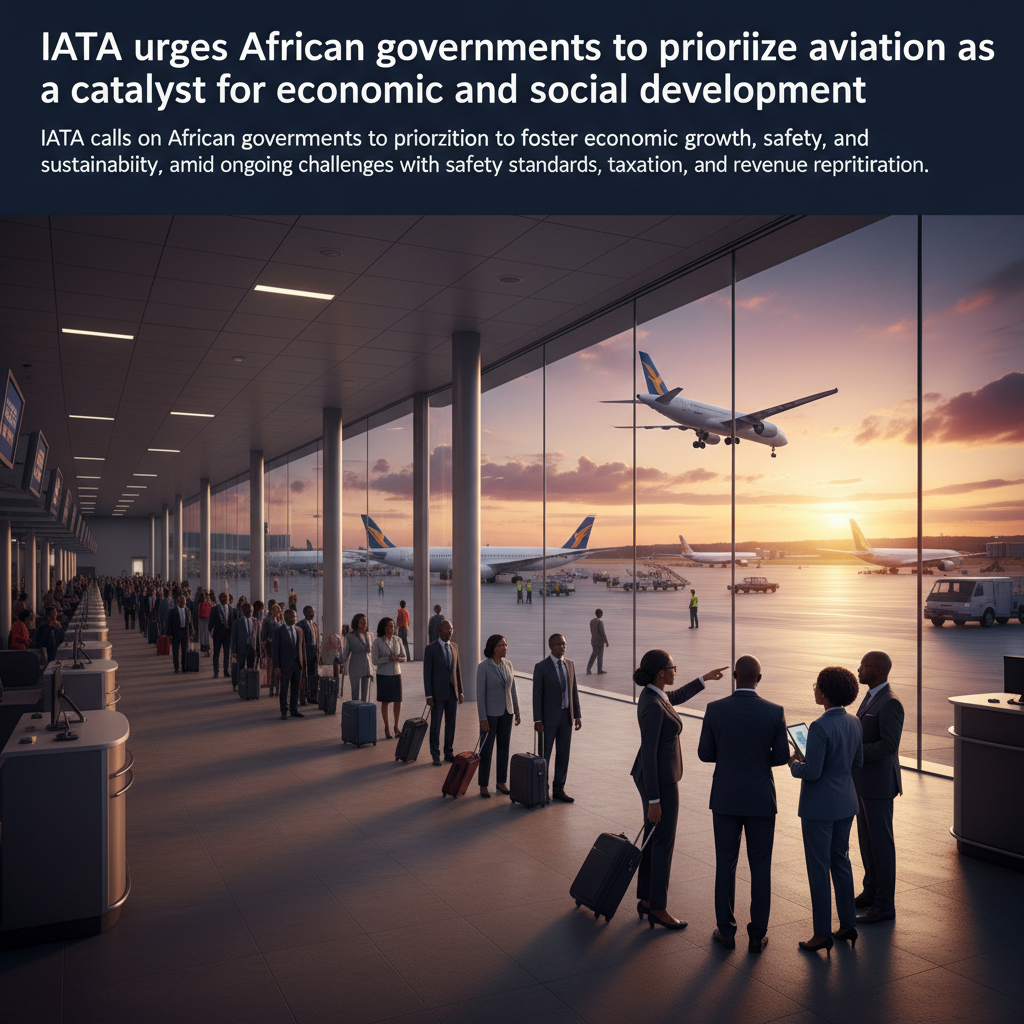
The International Air Transport Association (IATA) has emphasized the importance of aviation for Africa's economic and social progress, urging governments across the continent to prioritize the sector. Speaking during the Focus Africa Conference in Addis Ababa, Kamil Alawadhi, IATA's Regional Vice President for Africa and the Middle East, highlighted that aviation supports long-term growth by creating jobs, enabling trade, and fostering regional integration. He stressed that a comprehensive aviation strategy focusing on safety, cost-competitiveness, ease of doing business, and sustainability could unlock significant benefits.
The report notes progress in safety, with Africa’s accident rate decreasing from 12.13 to 7.86 per million sectors between 2024 and 2025, though it remains higher than the global average of 1.32. The continent is encouraged to boost the adoption of ICAO standards and improve safety oversight.
Cost challenges persist, with aviation taxes and charges about 15% higher than the global average. IATA advocates measures like reducing taxes and charges in line with ECOWAS decisions and maintaining policies to prevent double taxation, which hinder cross-border operations.
Another critical concern concerns ease of doing business, particularly regarding the repatriation of airline revenues. As of March 2026, African countries held USD 774 million in blocked airline funds globally, with Algeria holding the largest share, USD 258 million. IATA calls for urgent government action to resolve these issues to prevent connectivity disruptions.
The report also highlights that nearly half of intra-African travel still requires visas, limiting mobility and tourism. Easing visa restrictions has historically correlated with increased demand for regional air services.
On sustainability, IATA sees significant potential in Sustainable Aviation Fuel (SAF) and emission units under CORSIA. Sub-Saharan Africa could supply up to 106 million tonnes of SAF feedstock by 2050, mainly from agricultural and forestry waste. However, few nations have begun participating in CORSIA’s emissions trading, and strategic investments are needed to align with global frameworks.
In conclusion, IATA advocates for aligning sustainability efforts with policy and infrastructure investments to bolster energy security, employment, and regional aviation competitiveness.

