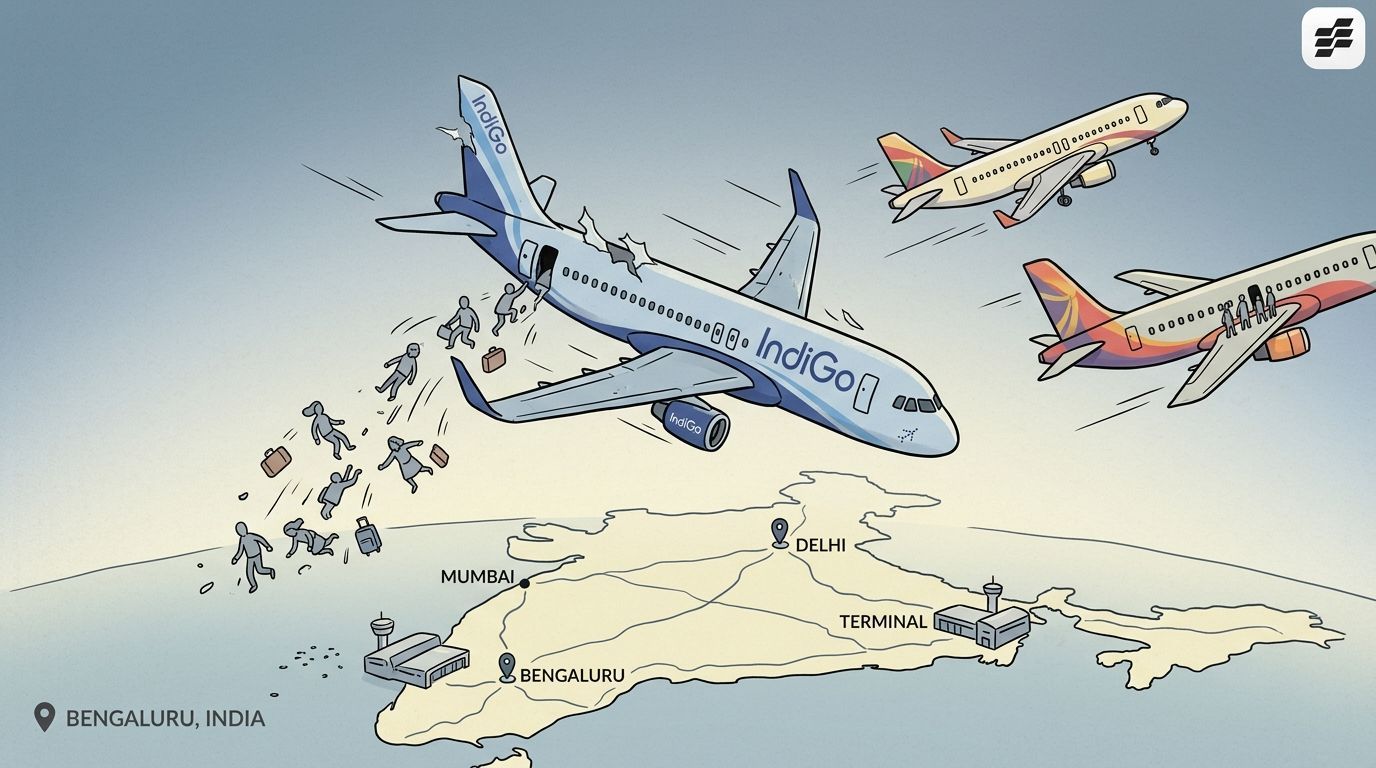
India's domestic aviation sector experienced a contraction in passenger volumes during August 2026, with traffic decreasing by 6.34% year-on-year to 121.26 lakh passengers. The decline coincides with a rise in fuel costs, as Aviation Turbine Fuel prices increased by 13.2% from October 1, 2026, prompting airlines to implement fuel surcharges and ancillary fee hikes to protect margins.
IndiGo, the market leader, saw its dominant share reduce to 65% in August 2026 from 67.4% in July, amidst ongoing capacity constraints and demand pressures. Conversely, Air India Group expanded its presence, capturing 26.7% of the market, up from the previous month. Analysts suggest that the sector's slowdown is driven by elevated operating costs and a cooling demand environment, especially in non-metro segments sensitive to fare increases.
Market Dynamics and Outlook
In response to the rising fuel prices, IndiGo announced an increase in fuel charges for flights starting October 6, 2026. Despite operational challenges, the airline continues to prioritize yields and cash flow management to navigate the current turbulence. Industry experts note that the sector's consolidation into a small oligopoly could lead to increased pricing power but also poses risks if passenger demand further weakens.
Furthermore, Airbus reported quality issues affecting some A321neo aircraft in IndiGo's fleet, though the manufacturer clarified that these are not safety-related. These developments, coupled with capacity bottlenecks and grounding of aircraft, create a complex operational landscape for Indian carriers.
Overall, the recent traffic decline and market shifts highlight the need for strategic adjustments. As the industry looks toward the upcoming festive season, airlines are likely to continue balancing fare increases with demand elasticity considerations, aiming to sustain profitability amid challenging external factors.

