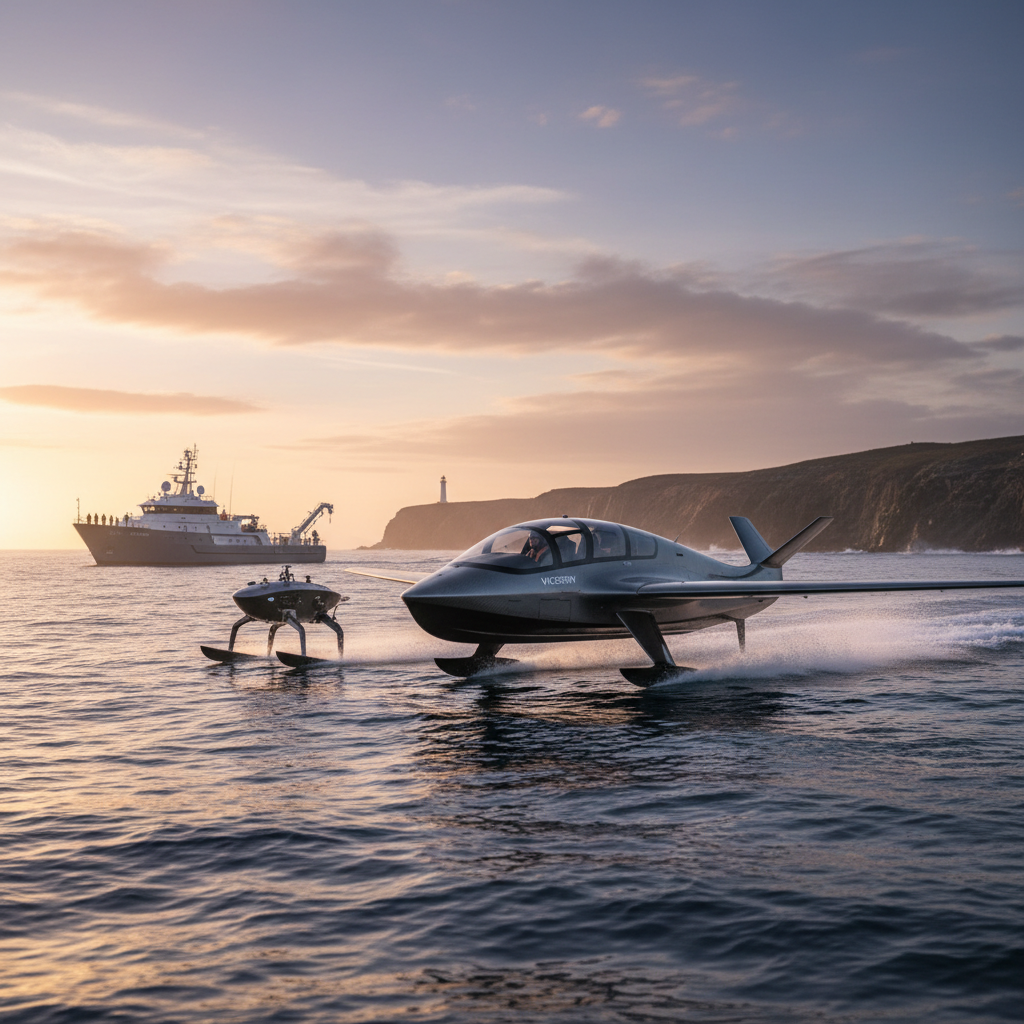
Recent demonstrations in Rhode Island have highlighted significant advancements in electric and autonomous marine vehicles. Regent Craft’s crewed seaglider prototype successfully executed a test flight, evidencing progress in wing-in-ground effect transportation and electric propulsion technology. The event attracted numerous stakeholders, including government officials and media, and underscored the growing interest in sustainable maritime transit.
Alongside the crewed seaglider, Regent introduced its unmanned vessel, the Squire, designed for diverse missions such as search and rescue and surveillance. During the test, the Squire was remotely operated, showcasing the potential of autonomous systems in maritime applications.
The Viceroy model, equipped with twelve electric propulsion units and wing-in-ground effect design, also participated. Capable of achieving speeds of 180 mph over a range of 180 miles, it employs a distributed blown-lift system to enhance stability and efficiency. The fleet's projected market value exceeds $10 billion, supported by numerous non-binding contracts demonstrating strong industry confidence.
This event marks a notable step toward integrating electric and autonomous technologies in marine transportation, with implications for reducing carbon footprints and advancing maritime safety and efficiency. Industry analysts view these initiatives as indicative of a broader transition towards electrified, automated marine transit solutions.

