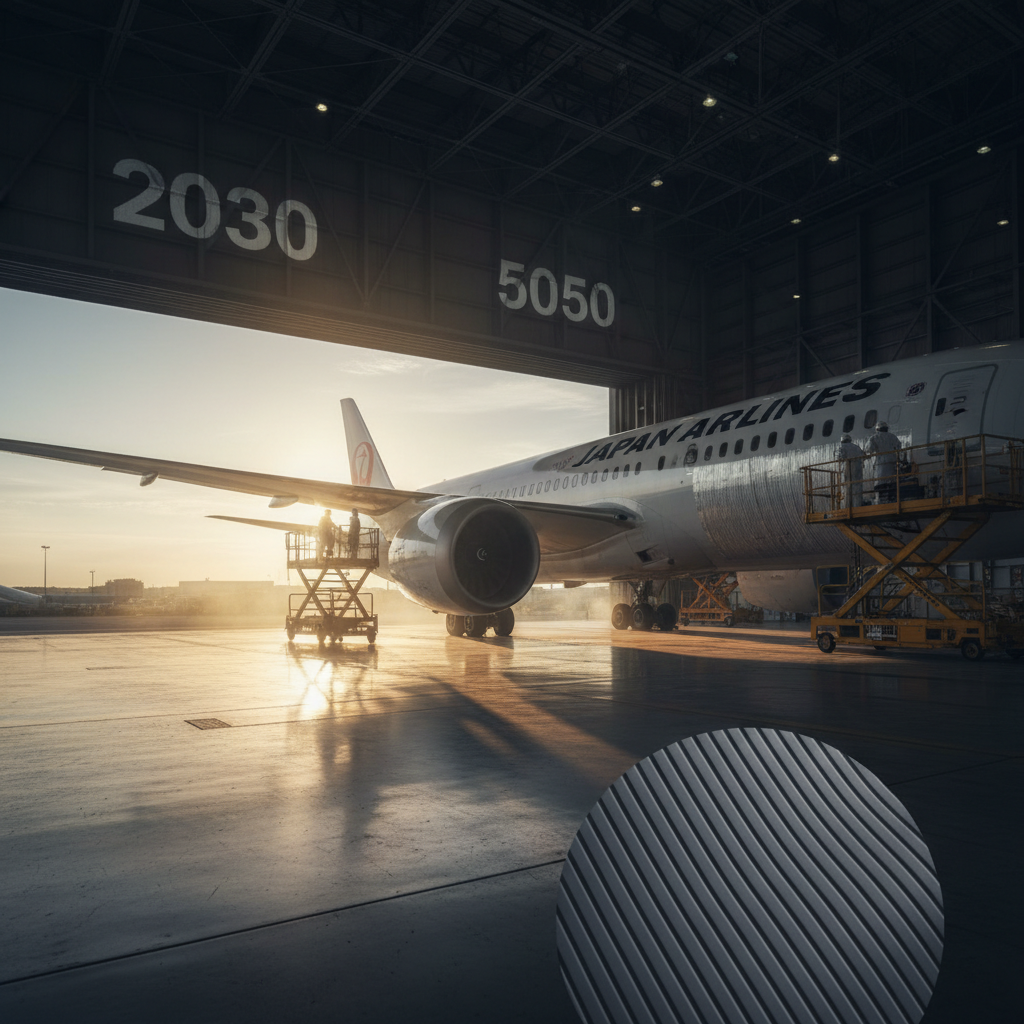
Japan Airlines (JAL) is expanding the use of drag-reducing riblets on its aircraft this year to support its environmental commitments. The airline aims to reduce carbon dioxide emissions by 10% by 2030 and reach net zero operations by 2050. The riblet technology, recently applied on a Zipair Boeing 787-8, is designed to improve aerodynamic efficiency and reduce fuel consumption.
This initiative reflects industry-wide efforts to adopt advanced surface modifications that decrease drag and greenhouse gas emissions. Riblets, which are small grooves on the aircraft surface, can significantly enhance fuel efficiency by lowering the resistance faced during flight. JAL’s deployment of this technology is part of its broader strategy to minimize its environmental footprint through fleet upgrades and operational improvements.
Officials note that the application of riblet paint has the potential to deliver substantial emissions reductions, especially as the technology becomes more widespread. The airline's efforts exemplify how innovation can contribute to global climate goals, positioning JAL as a leader in environmentally conscious aviation practices.

