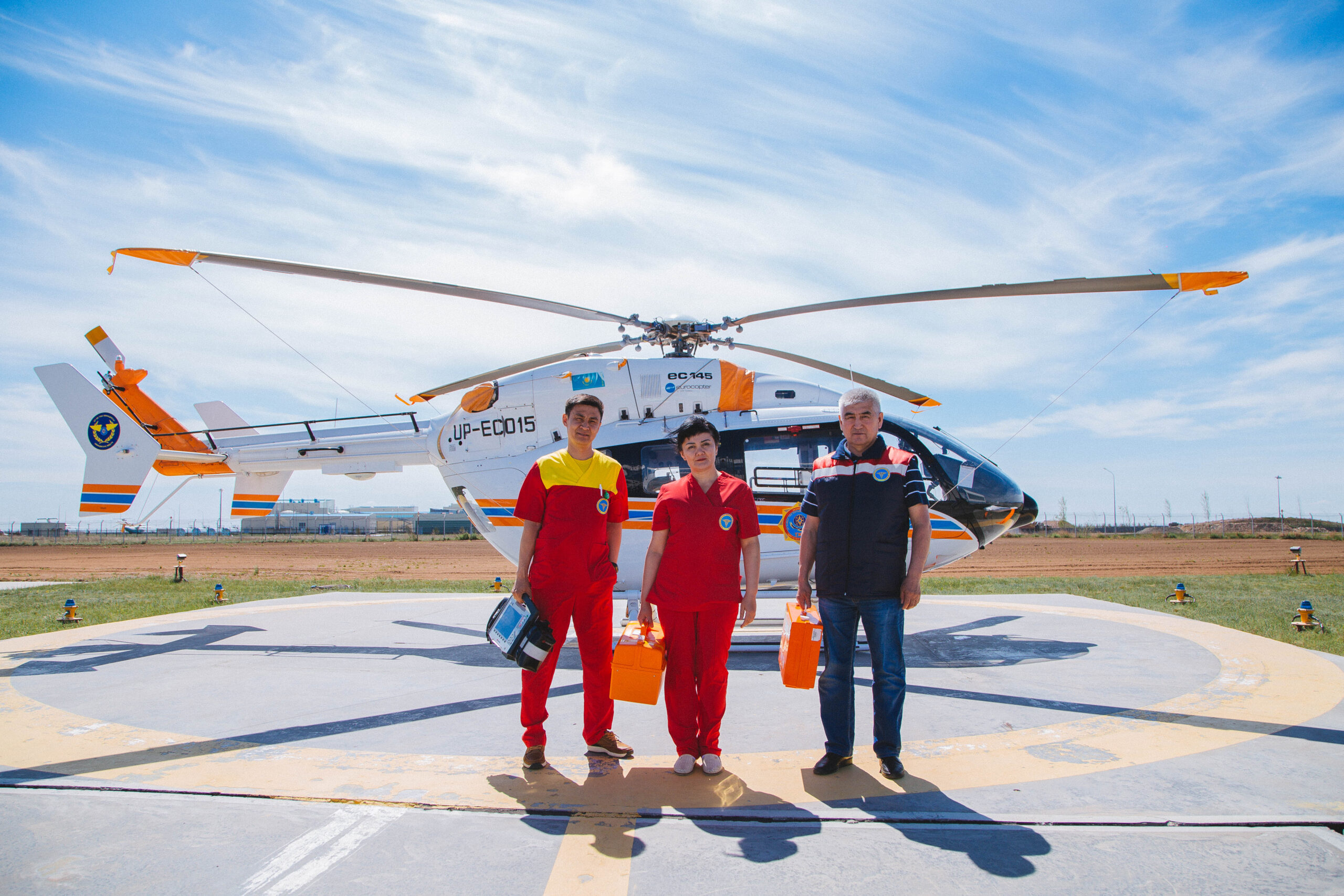
Kazakhstan has developed a comprehensive medical aviation system to facilitate emergency patient transfers across its expansive territory. Recently, a prematurely born baby was flown over 4,000 kilometers from Thailand to Kazakhstan for urgent medical care and was discharged after two months of treatment, illustrating the vital role of air ambulances in connecting remote regions to specialized healthcare facilities.
The system conducts approximately 2,000 flights per year, providing in-flight care, specialist deployment, and remote consultations. Adilbekov, head of the National Coordination Center for Emergency Medicine, highlighted that pediatric cases and trauma victims constitute a significant portion of these flights. The services help bridge healthcare gaps in regions where ground transportation may threaten patient outcomes due to long distances or difficult terrain.
International cooperation is also a key component, with flights arranged for Kazakhstan’s citizens residing in countries such as Russia, China, and Thailand. These flights are subject to rigorous review to ensure medical necessity, and funding is provided from the state budget. Despite operational challenges posed by weather, safety remains the guiding principle, with cancellations due to weather accounting for a majority of requests in 2025.
Outcome data shows that 92% of patients transported by Kazakhstan’s medical aviation system experienced positive results, underscoring its effectiveness. The country benchmarks its system against models like Norway’s publicly financed nationwide service and Australia’s Royal Flying Doctor Service, adapting and expanding its capabilities since establishing its modern fleet in 2011. Continued technological advancements and international partnerships aim to further enhance Kazakhstan’s emergency medical response.

