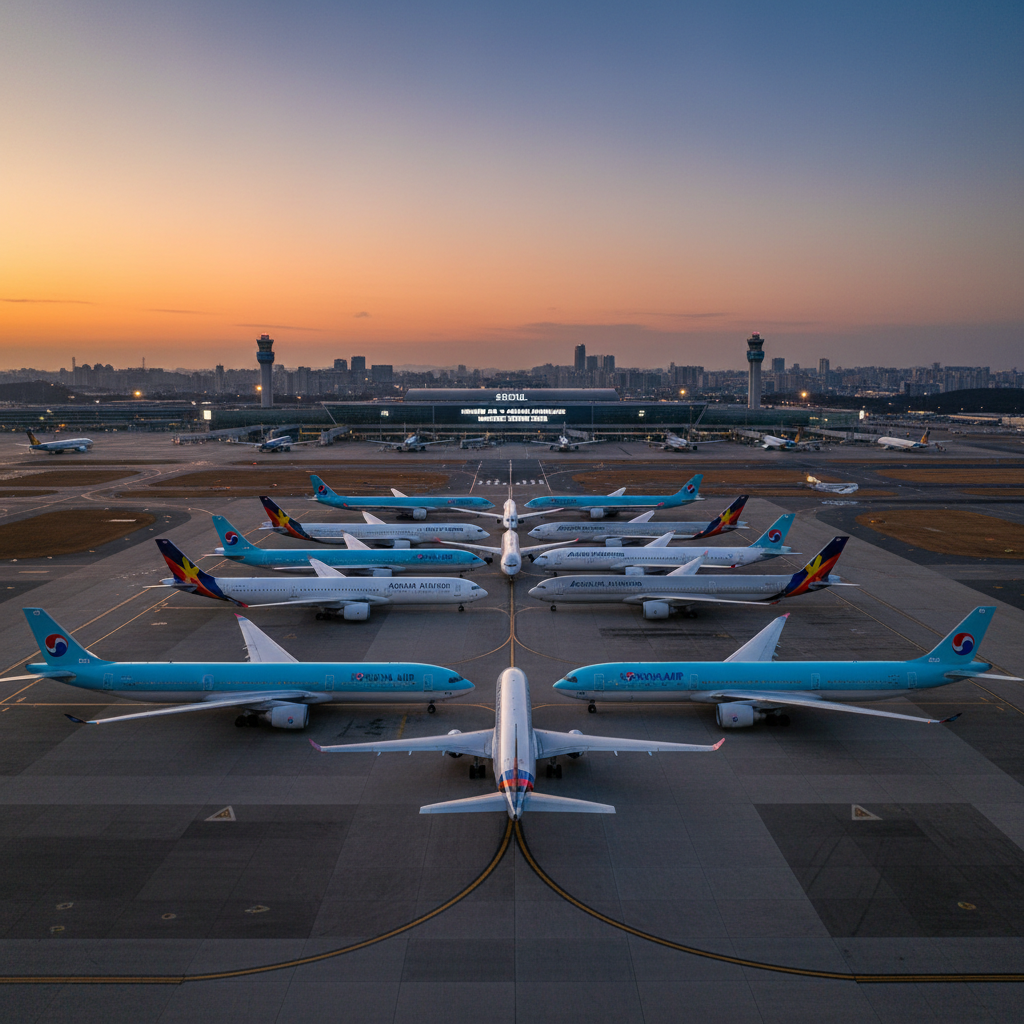
Korean Air is set to become an integrated flag carrier following the completion of its merger with Asiana Airlines on December 17, 2026. The merger process, which has been ongoing for over five years, was officially approved in May, leading to Korean Air absorbing all assets, liabilities, and personnel of Asiana Airlines.
The South Korean government and financial creditors provided KRW 3.6 trillion in liquidity support to stabilize Asiana Airlines post-pandemic. The merger ratio was determined based on recent market valuations, with Korean Air’s capital expected to increase by approximately KRW 101.7 billion as a result.
Operational and Infrastructure Integration
Post-merger, Korean Air aims to standardize its aircraft fleet and safety systems, applying for necessary regulatory approvals. Significant investments are planned, including lounge and terminal upgrades, crew training standardization, and expanded maintenance capacity near Incheon International Airport.
The strategic goal is to strengthen the airline’s global market presence, especially by positioning Incheon International Airport as a key connecting hub, and consolidating loyalty programs in collaboration with authorities. These measures are expected to enhance operational efficiency and passenger experience across the expanded network.
This full integration is poised to reinforce Korean Air’s competitive edge worldwide, fostering growth and strategic connectivity in the aviation sector.

