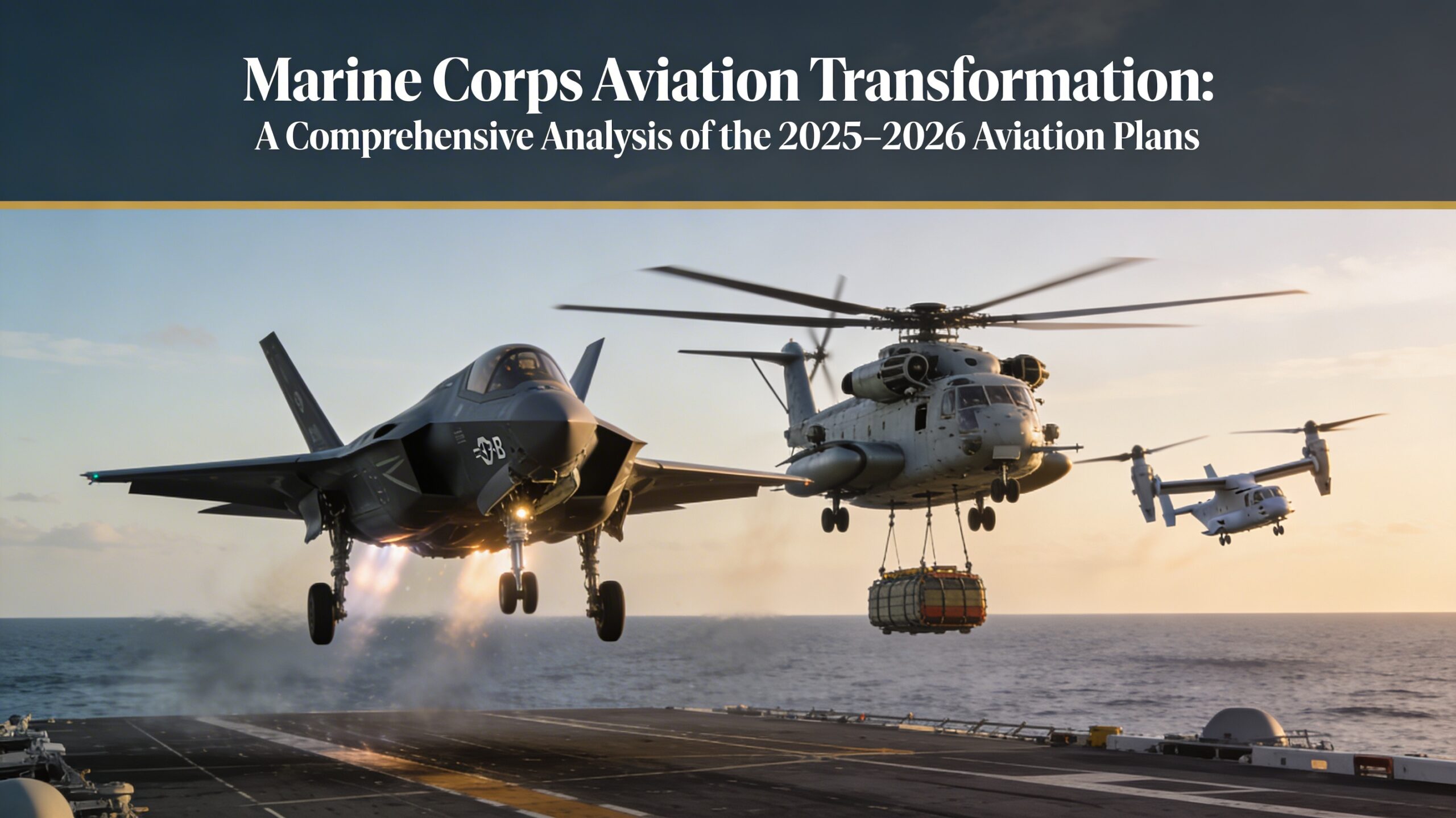
The United States Marine Corps' 2026 Aviation Plan outlines a groundbreaking strategy to incorporate artificial intelligence and machine learning into aircraft sustainment and maintenance practices. The initiative seeks to transition from traditional reactive methods to predictive, data-driven approaches across three core domains: dynamic aviation supply, predictive maintenance, and operations optimization.
Targeting distributed and austere theater operations, the plan emphasizes adaptive supply packages that leverage AI analysis of operational data to ensure critical parts are available where and when needed. This approach aims to significantly reduce logistics footprints and increase aircraft availability. Simultaneously, predictive maintenance systems utilize sensor data and algorithms to anticipate failures before they occur, enhancing safety and readiness.
Holistic Data Integration
The strategic integration of data systems such as NALCOMIS, M-SHARP, and GCSS-MC will enable comprehensive management and correlation of maintenance, safety, and supply data. This integration supports sophisticated scheduling tools that optimize flight and maintenance operations, allowing for efficient resource allocation and higher mission-capable aircraft numbers.
"By harnessing AI and machine learning, we are redefining how Marine Aviation sustains its operational power in challenging environments,"
said a Marine Corps official.
This transformation is crucial for operating from remote locations with limited infrastructure, ensuring aircraft can remain mission-capable longer, and reducing the logistical and personnel burden during high-tempo operations. The success of this ambitious effort depends on sustained technological investments, organizational adaptation, and a cultural shift toward data-centric decision-making, positioning Marine Aviation for enhanced operational capabilities in the future.

