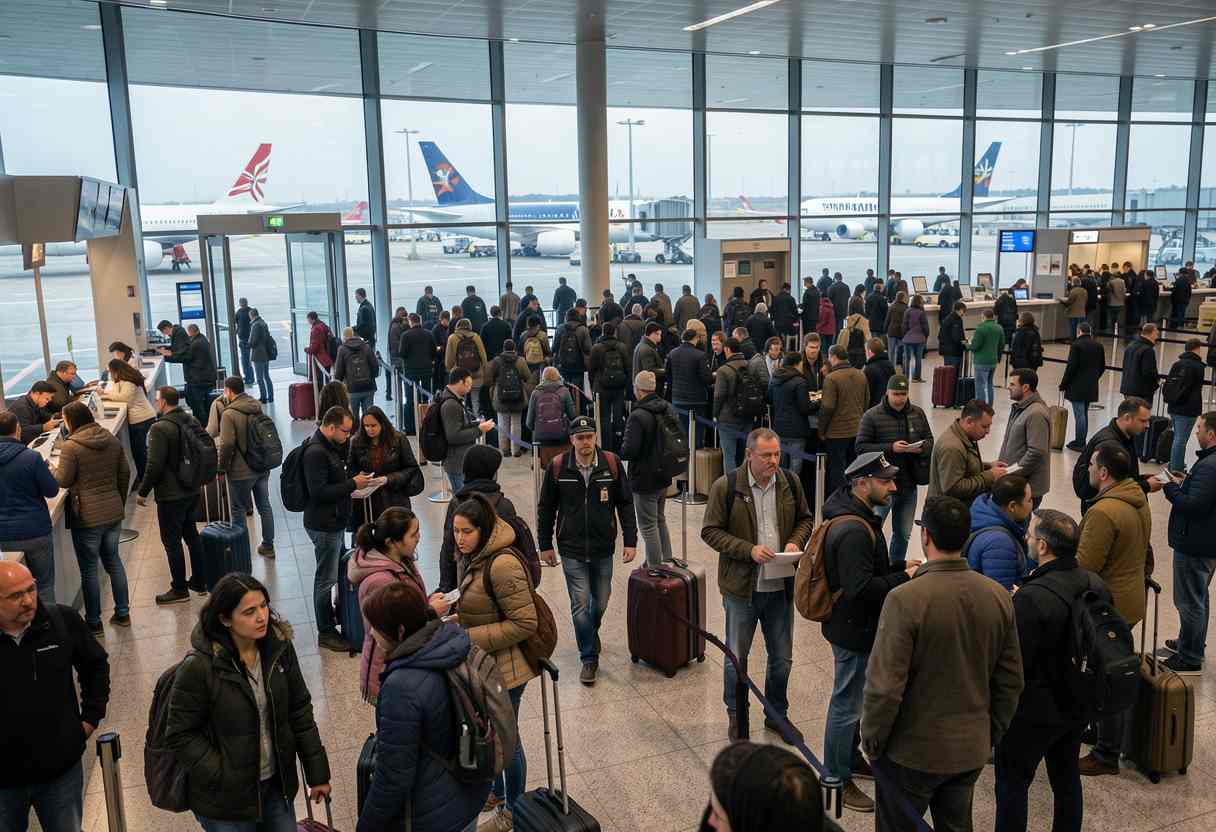
The global aviation industry experienced a minor recovery on Thursday amid increased flight operations from the Middle East, as airlines sought to rebound from recent losses caused by escalating regional tensions. The conflict, involving strikes between the United States and Israel against Iran, initially led to significant drops in airline market value, with shares plummeting by billions of dollars. However, easing restrictions and the reopening of major hubs like Dubai facilitated a partial market rebound, sparking cautious optimism within the sector.
Governments worldwide are actively managing the crisis, arranging repatriation flights for citizens stranded due to the airspace closures. Dubai International Airport, typically handling over a thousand daily flights, saw disruptions due to airspace restrictions. Airlines such as Emirates and Etihad Airways resumed limited flights using designated safe corridors. Qatar Airways, for its part, initiated relief flights from Muscat to European cities including London, Berlin, and Rome, marking a significant operational restart since its Doha hub was affected by the conflict.
In addition, U.S. and Canadian authorities have organized charter and commercial flights to evacuate their nationals. Since February 28, over 17,500 U.S. citizens have been repatriated. The turmoil has also had a notable impact on air cargo, with global capacity decreasing by more than 20% and freight rates climbing sharply, especially amid rising jet fuel prices. Asian airline stocks showed signs of recovery, although uncertainties surrounding the conflict's duration limit long-term optimism.
While some major Asian carriers, such as Cathay Pacific and Korean Air, experienced stock increases—4% and over 6%, respectively—others like Air China and China Eastern Airlines faced declines. This market volatility underscores the ongoing challenges faced by airlines operating in and through the Middle East. Moreover, rerouted flights and increased fuel consumption are raising operational costs, while stranded travelers seek alternative routes through open skies in neighboring regions.
Looking ahead, the outlook remains uncertain as the conflict continues to disrupt both passenger and freight services globally. Airlines with routes in the region face higher operational costs and potential further disruptions, depending on the conflict's progression. Despite some signs of resilience and governmental support, industry analysts emphasize that sustained recovery hinges on a swift resolution to the regional crisis, with the industry cautiously navigating these turbulent times.

