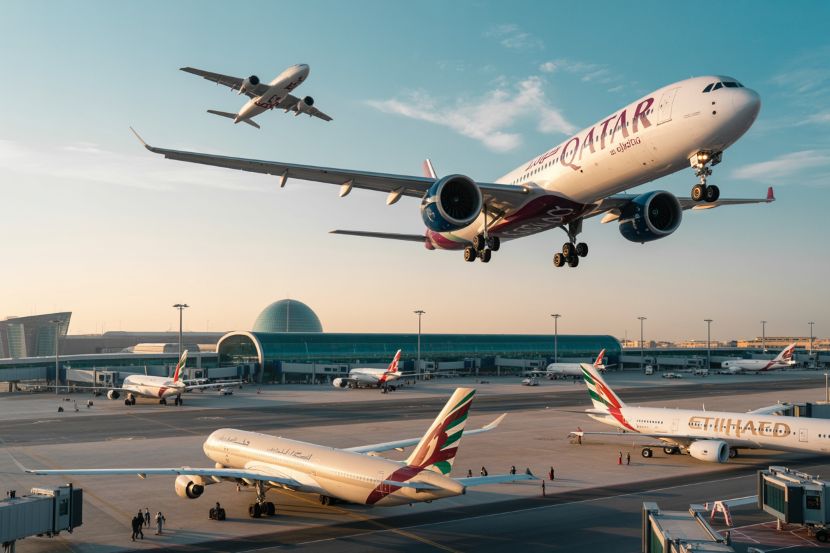
The aviation sector in the Middle East is navigating a multifaceted recovery following the pandemic's disruption. Qatar Airways has notably surpassed its 2019 flight figures, thanks to an extensive and modernized fleet that supports its global network. Emirates maintains a robust presence but faces a slower recovery rate, partly due to a strategic reduction in Boeing 777-300ERs and the phased return of Airbus A380s. Meanwhile, Saudia encounters challenges in rebuilding its pre-pandemic flight volumes, with fleet changes focused on newer aircraft models such as the A321neos replacing older models like the Airbus A330-200s.
Most notably, Etihad Airways has demonstrated unexpected resilience, with its flight operations increasing by over 15% compared to 2019, despite being smaller in size. Its efforts to fill the network gaps left by larger carriers have resulted in a significant rebound, making it a key player in the regional recovery. These varied trajectories reflect the broader complexities faced across the industry as airlines adapt to ongoing travel demands and fleet adjustments.
Opportunities for Travelers
Looking ahead, airline services are expected to expand further in 2025, offering travelers increased flight options and new routes. Qatar Airways retains its dominant position, providing a comprehensive network, while Emirates and Saudia are steadily restoring capacity. Etihad's recent growth opens additional possibilities, especially for destinations in the Middle East and beyond.
Consumers are advised to book flights early and stay informed about airline updates to secure favorable fares and route choices. The ongoing recovery signals a more optimistic outlook for international air travel within the region, benefiting both leisure and business travelers.

