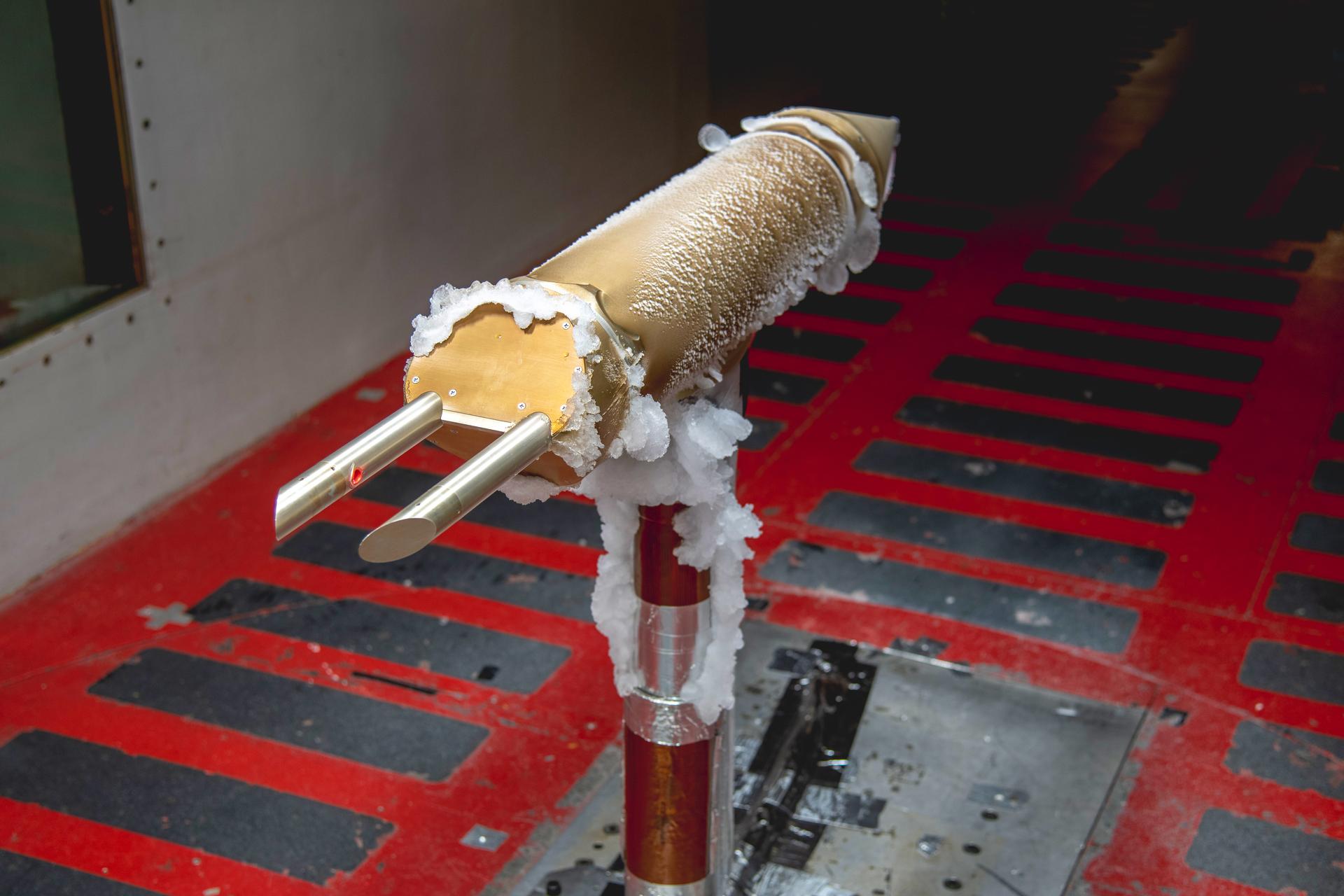
NASA is leveraging its expertise and enhancing test facilities at the Glenn Research Center to address a persistent aviation safety issue: ice formation caused by supercooled large water droplets in clouds. This phenomenon, known as "supercooled large droplet icing," occurs when aircraft encounter unusually large, cold liquid water drops that can rapidly freeze upon contact with aircraft surfaces.
Through a series of detailed experiments in the Icing Research Tunnel, NASA researchers are working to improve understanding of the physics involved. The tests examine droplet size distributions, as larger droplets—up to 2,000 microns in diameter—pose a threat to conventional ice protections, splashing onto regions behind the aircraft surfaces.
Aircraft are typically designed to cope with smaller, 2 to 100-micron droplets, but larger droplets, similar to freezing rain conditions at ground level, are less understood and can lead to dangerous ice accumulation. NASA is developing advanced probes to measure and analyze these droplet sizes in real time, helping refine industry models and design criteria for better safety margins.
The test campaign is a significant milestone for the Subsonic Flight Demonstrator project, contributing valuable data to the aerospace community and supporting the development of more robust aircraft ice protection systems. NASA's ongoing research aims to address whether existing engineering tools adequately predict the behavior of supercooled large water droplets in clouds, ultimately enhancing flight safety standards across the industry.

