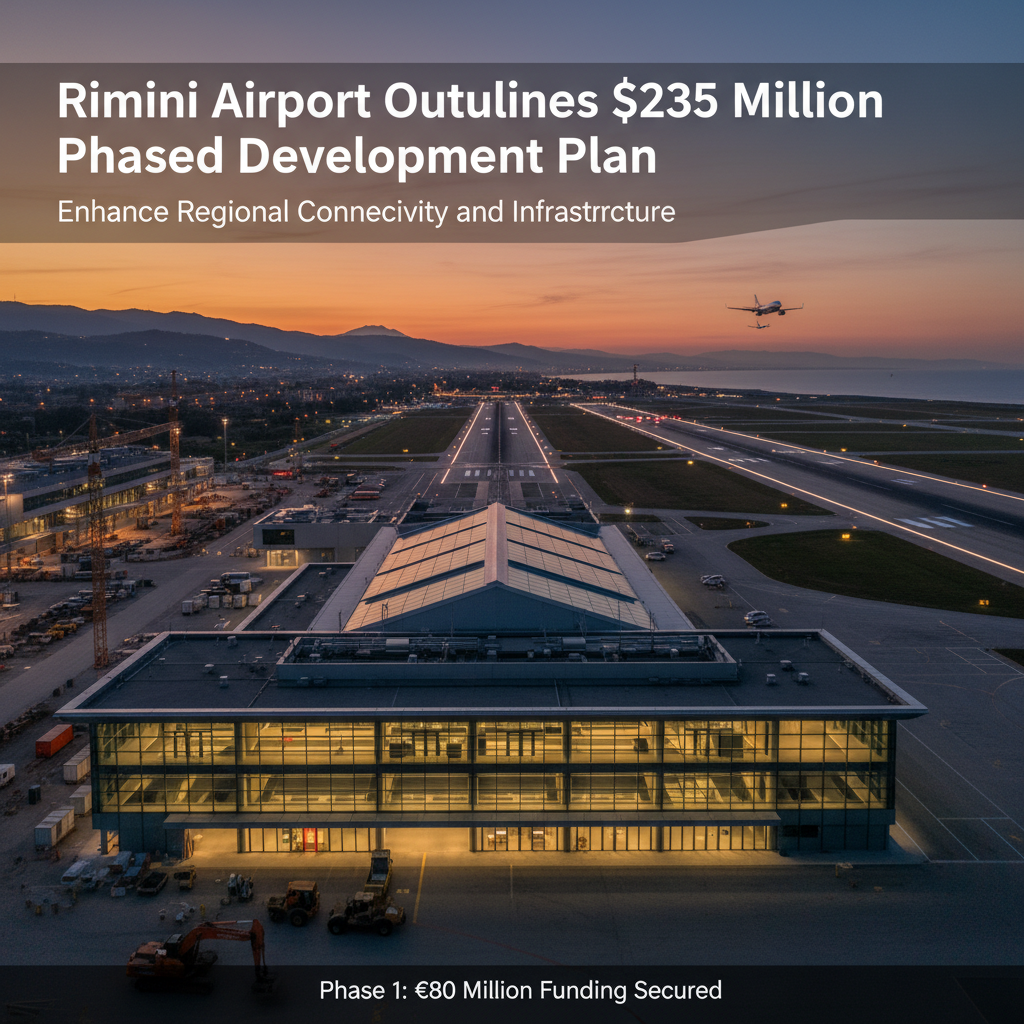
The Italian regional airport of Rimini has announced a comprehensive development strategy valued at approximately $235 million, designed to significantly upgrade its facilities and enhance connections within Emilia-Romagna. The first phase of the project, estimated at €80 million, will focus on terminal refurbishment, expanded parking capacity, new commercial areas, surface access improvements, and the creation of an integrated airport district with green spaces and sports facilities.
According to officials, the redeveloped terminal, designed by architect Massimo Roj, will serve as a catalyst for boosting passenger traffic, which is expected to grow from about 417,000 in 2025 to over 600,000 in 2026 and aiming for more than 1.26 million by 2028. The strategic plan emphasizes increasing low-cost carrier (LCC) services initially, with future international routes and higher-value markets as long-term goals.
Regional and Economic Implications
ENAC President Pierluigi Di Palma highlighted the importance of a polycentric airport system, emphasizing that the project aligns with broader national efforts to develop Italy’s regional airports into economic engines. Pending approval, construction is scheduled to begin in early 2029, with completion targeted around 2033.
The airport's growth is designed to complement Bologna Airport, with new routes expected from airlines such as Ryanair and Wizz Air, further strengthening Rimini’s regional role. The project also aims to foster stronger ties with the city and attract more tourists and business travelers, positioning Rimini as a vital hub within Italy's expanding aviation landscape.

