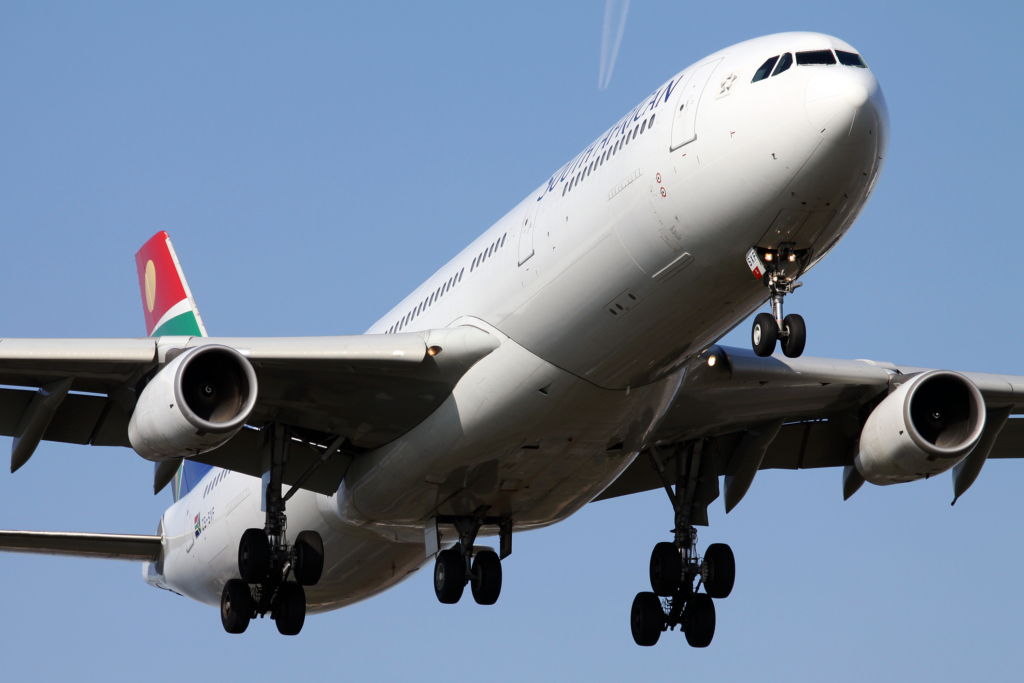
Matshela Seshibe, the 32-year-old Acting CEO of South African Airways (SAA), has expressed confidence in the airline's trajectory despite recent financial scrutiny and leadership changes. Following the departure of Professor John Lamola last month, Seshibe highlighted the airline's resilience and its efforts to improve financial reporting standards. He addressed concerns during a webinar hosted by the African Airlines Association, acknowledging that rapid expansion had outpaced the maturation of financial processes.
In April, an audit by the Auditor-General of South Africa resulted in a disclaimer opinion on SAA’s results for the fiscal year ending March 2025, citing R505 million in irregular expenditure. The airline's claim of achieving consecutive years of profit since exiting business rescue in 2021 has been challenged, prompting the airline to implement stronger governance mechanisms. Seshibe emphasized that steps, including steering and loss control committees, have been put in place to restore confidence.
Growth and Regional Outlook
Despite financial hurdles, Seshibe remains optimistic about SAA’s potential within Africa’s expanding air travel market. He noted that Cape Town has become the third-busiest airport in Africa, after Johannesburg and Cairo, and that Africa’s aviation sector is growing faster than the global average.
He cited data from the International Air Transport Association (IATA), stating that Africa’s contribution to global air traffic is only about 2%, despite its population of 1.8 billion. SAA has increased passenger traffic by over 32% in the last year and launched new routes including São Paulo to Johannesburg and Cape Town, and Johannesburg to Perth. The airline’s membership in Star Alliance and partnerships with Kenya Airways and Emirates are key to extending its network to more than 150 destinations.
Seshibe contrasted the region's high operational costs—particularly fuel prices, which are nearly 70% higher than global averages—with the airline’s strategic ambitions. He also discussed challenges such as blocked revenues due to currency restrictions and the importance of regional cooperation to mitigate these issues. The regional market’s potential is being harnessed, even as the airline faces stiff competition from low-cost carriers like FlySafair, which commands over 60% of South Africa’s domestic seat capacity.
Furthermore, the CEO addressed industry evolution, noting that the lines between legacy carriers and low-cost carriers are blurring through shared strategies. SAA is reimagining its model to adopt revenue maximization practices rooted in LCC approaches while maintaining service standards. Cargo operations are also evolving, with SAA working on partnerships to grow belly-freight capacities without operating dedicated freighters.
Geopolitical risks, notably the conflict in the Middle East, have temporarily increased jet fuel costs, but SAA has made minimal adjustments to its route network while maintaining steady demand. With a fleet of 19 aircraft serving 17 routes, the airline aims to fulfill South Africa’s ambitious goal of 42 million passengers by 2030, although significant challenges remain.

