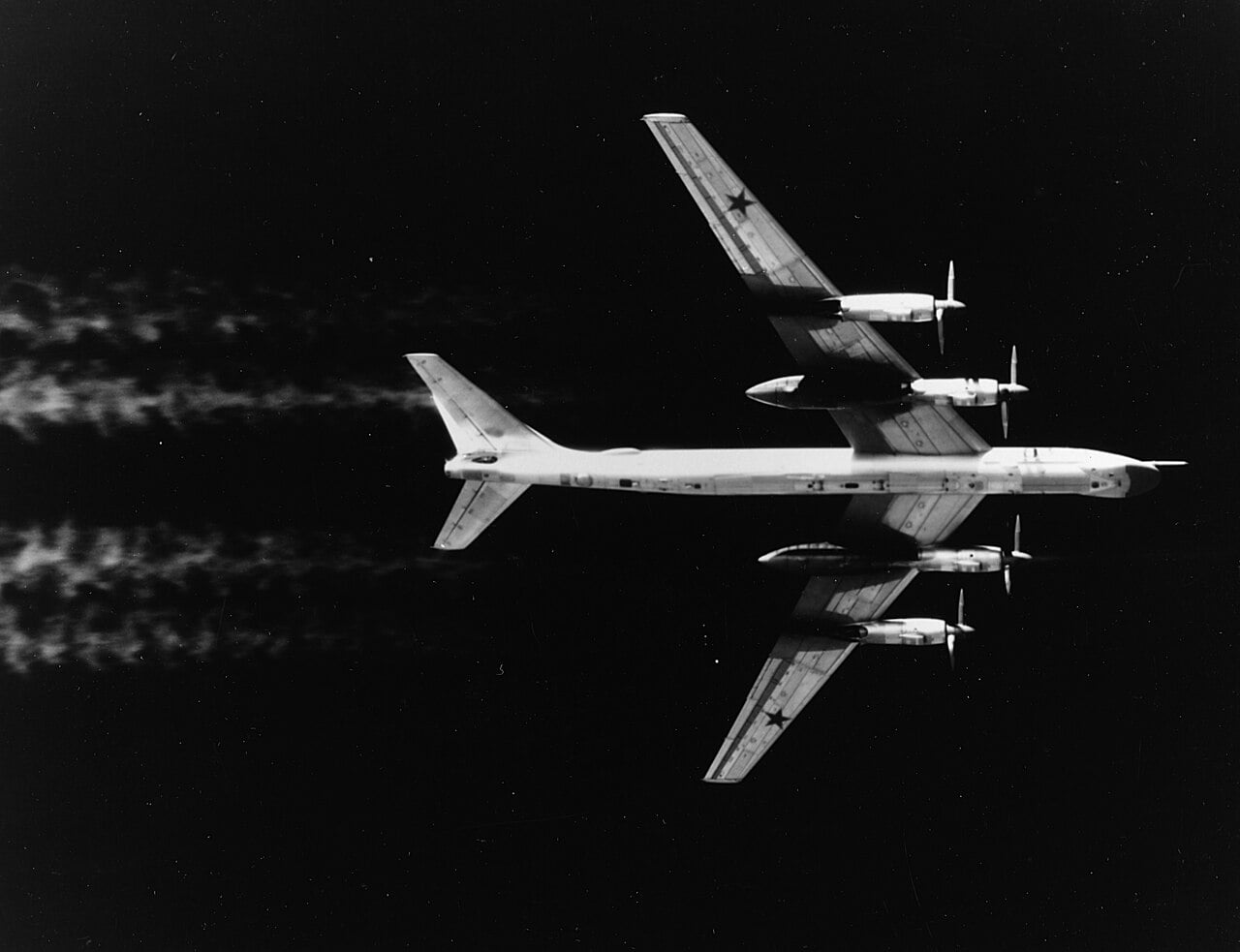
The Tupolev Tu-95 Bear, a Soviet-era strategic bomber introduced in 1952, remains in active service today, more than 70 years later, exemplifying durability and advanced engineering. Known for its distinctive loud drone, caused by its contra-rotating turboprops, the aircraft's noise level has made it legendary among military pilots and enthusiasts alike.
Powered by four Kuznetsov NK-12 turboprops, each driving contra-rotating propellers, the Tu-95 can reach speeds exceeding 500 mph with a range of over 8,000 miles. Its design was a compromise to meet Cold War strategic needs, allowing it to carry significant nuclear payloads across vast distances, including the historic delivery of the Tsar Bomba, the most powerful nuclear device ever tested.
This aircraft's noise signature is so intense that it has been detected underwater via sonar, and pilots historically report hearing it over their own jets during interception missions. Despite technological advances rendering traditional bombers less relevant, the Tu-95 has proven adaptable, evolving into a maritime patrol, anti-submarine platform, and a launcher for long-range cruise missiles. Its long service life reflects its importance to Russian military strategy, with plans to keep it operational until at least 2040, marking nearly a century of service for a single aircraft design.

