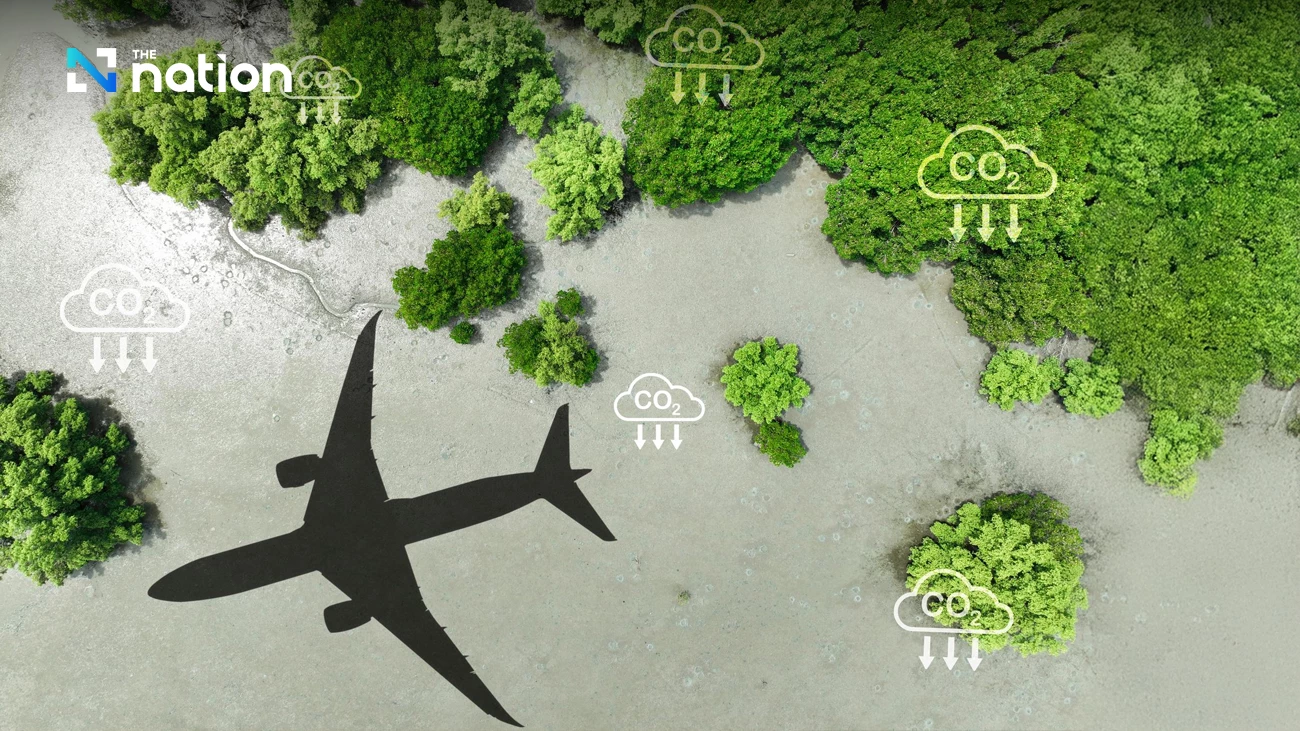
Thailand has officially joined the International Civil Aviation Organisation's (ICAO) global carbon offset scheme, known as CORSIA, after its domestic greenhouse gas reduction program received international recognition. This move allows Thai airlines operating international routes to purchase certified carbon credits from domestic projects to offset emissions during the scheme's initial phase (2024–2026). The recognition under the Premium T-VER standard underscores Thailand's commitment to global climate efforts.
ICAO aims to promote the use of sustainable aviation fuels (SAF) to reduce greenhouse gas emissions, targeting net-zero emissions by 2050. At the 42nd ICAO Assembly held in Montreal, representatives from 193 countries reaffirmed efforts to cut aviation-related CO₂ emissions by 5% by 2030. However, the global supply of SAF remains constrained, primarily due to China's significant production, leading airlines to consider carbon credits as an alternative offset option.
Certification and Market Dynamics
The Thai program certifies projects such as renewable energy production, forest planting, and waste management to generate credits. Eleven project types qualify to participate in CORSIA. Currently, Guyana’s REDD+ project is the only one fully market-ready, with additional biomass and cookstoves projects poised to join soon. The demand for carbon credits is projected to reach between 146 and 236 million tonnes of CO₂ equivalent over three years, but supply remains limited, causing an imbalance and prompting Thai airlines to explore domestic purchases.
"Futures trading data estimates carbon credit prices between US$15 and US$21 per ton of CO₂ equivalent. With five Thai airlines projecting a demand of over 400,000 tonnes, domestic purchases could prevent the outflow of between US$6 million and US$8.4 million," said the Thailand Greenhouse Gas Management Organisation.
By engaging in the scheme, Thailand not only supports environmental goals but also benefits economically by retaining capital within the country. These efforts demonstrate Thailand’s proactive stance in integrating international aviation climate initiatives while fostering sustainable development.

