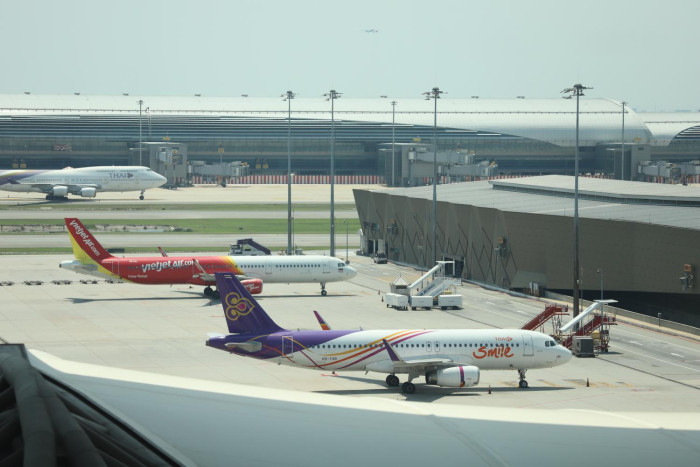
The government of Thailand is making concerted efforts to develop the nation as a major regional aviation hub, focusing on expanding maintenance, repair, and overhaul (MRO) capabilities and modernizing airport infrastructure. Transport Minister Phiphat Ratchakitprakarn highlighted the need for Thailand to build its own comprehensive MRO facilities to remain competitive in the region, especially against neighboring countries such as Singapore.
Thailand’s advantageous geographical position close to India and China, along with its role as a gateway to Indochina, offers promising prospects for aviation growth. Recent upgrades in safety accreditation by the US Federal Aviation Administration have restored the country’s Category 1 rating, allowing Thai carriers and pilots to operate freely in the United States and facilitating the return of airlines like United Airlines after an 11-year hiatus.
The country is also focusing on easing congestion at key airports, including Suvarnabhumi, Don Mueang, and Phuket, by promoting flights to less busy airports such as Krabi and Chiang Mai. Infrastructure development plans involve constructing a new south terminal, establishing an MRO zone, and developing dedicated aircraft spare parts centers. Thai Airways is expanding its routes and fleet, investing in fleet growth and joint projects such as an MRO facility at U-tapao airport.
Industry leaders underscore the importance of adopting technological advancements, including AI and automation, to augment operational efficiency. Despite a sluggish global economy, Thailand has observed an increase in international passengers, with Chinese tourists returning after a two-year decline, indicating positive momentum for the country’s aviation ambitions.

