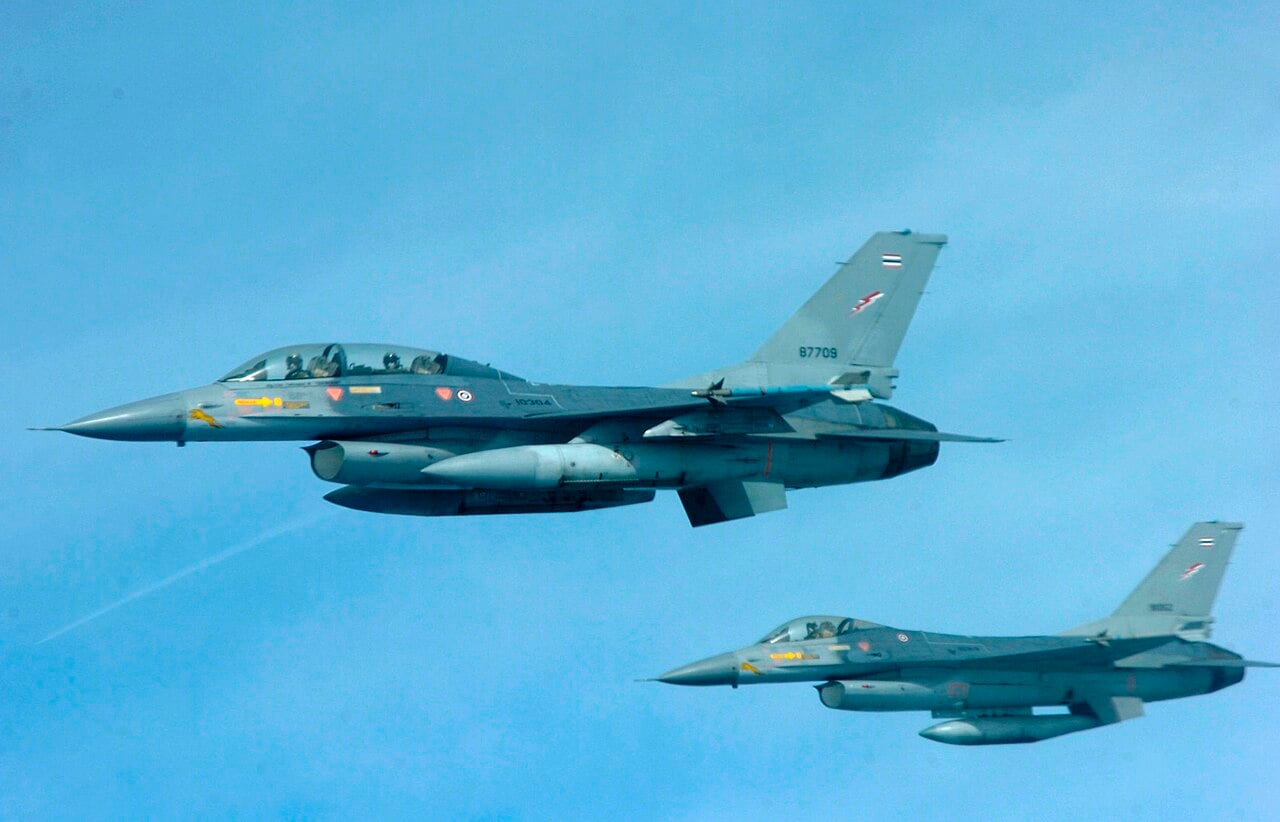
The year 2025 marked a significant escalation in the long-standing border dispute between Thailand and Cambodia, culminating in open military hostilities involving air power. The Royal Thai Air Force's F-16 fighters engaged in combat against Cambodian military targets following clashes along their shared border, focusing on Cambodian military positions with guided bombs such as Mk 82s with laser guidance kits.
The conflict was initiated on 24 July 2025, after a clash near the Khmer temples along the Dangrek mountains, with Cambodia responding with artillery and rockets. Thailand responded by deploying F-16 jets, which conducted strikes against Cambodian targets. Cambodia, lacking its own combat aircraft, relied on anti-aircraft defenses, but the Thai air force's precision-guided munitions provided a decisive edge.
Subsequent Escalations and Ceasefires
The fighting temporarily halted with a ceasefire brokered in Malaysia on 28 July 2025, but resumed in December 2025, with Thai F-16s and Gripen fighters targeting long-range artillery and strategic locations including casinos. The conflict resulted in civilian and military casualties on both sides, with reports of civilian displacement exceeding 270,000 people.
"Thailand will not tolerate violations of its sovereignty and will proceed rationally and with due regard for the principles of peace, security, and humanity,"
said Anutin Charnvirakul, Prime Minister of Thailand.
By late December, a new ceasefire was signed, and the conflict's record is reflected in the markings on the jets, which bore bomb silhouettes indicating their extensive involvement. The 2025 clashes demonstrated how existing aircraft fleets could be adapted for precision strikes using affordable guidance kits, dramatically enhancing their combat effectiveness.
Overall, the 2025 border conflict highlighted the evolving nature of regional security in Southeast Asia and underscored the importance of air power in modern border confrontations.

